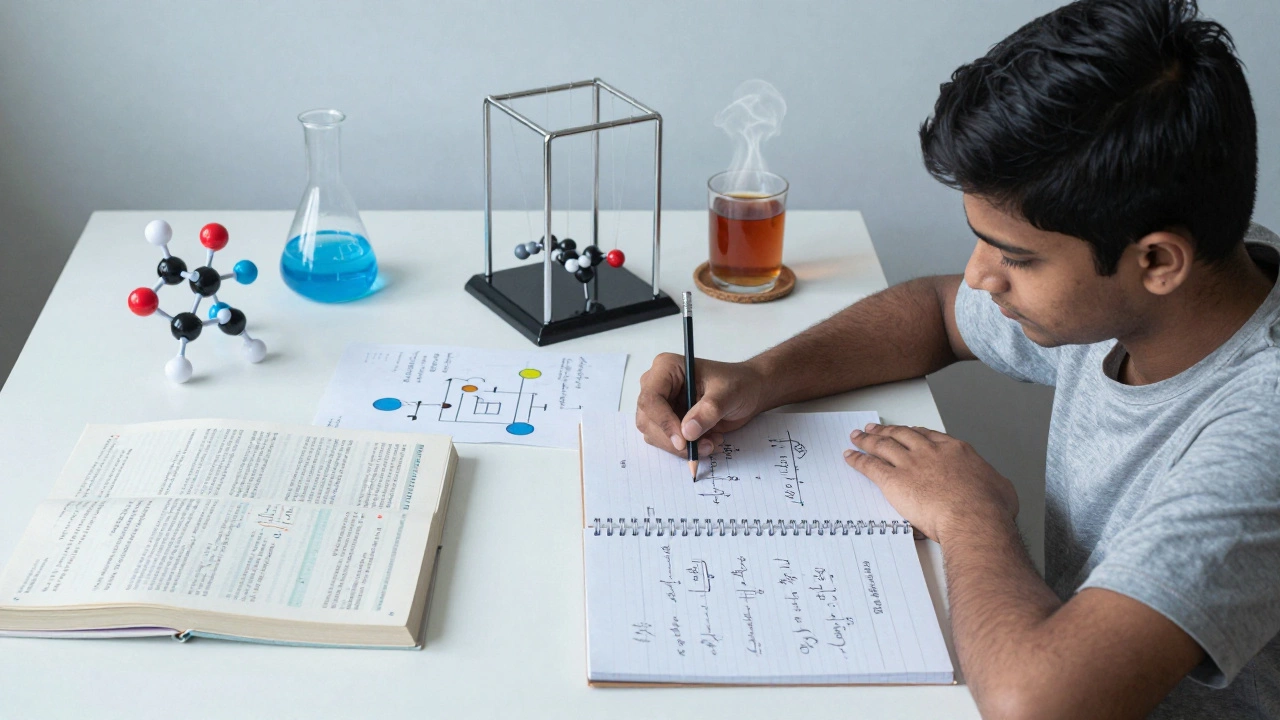
JEE Study Strategy Planner
Assess your current comfort level in each subject to generate a personalized daily time allocation based on the "Sandwich Method" and rank-booster strategies.
Requires high rigor and problem-solving practice.
Focuses on conceptual application and visualization.
High ROI through memory and pattern recognition.
Recommended Daily Split
Picking the "best" subject for the IITs is a bit of a trick question because you can't actually pick just one. To get into an Indian Institute of Technology a group of prestigious public technical universities in India known for their rigorous engineering programs, you have to tackle the entire trio: Physics, Chemistry, and Mathematics. However, the real question is usually: which subject should I prioritize to boost my score, or which one is the easiest to master?
Quick Takeaways for Your Strategy
- Chemistry is often the fastest way to score high marks due to its direct nature.
- Mathematics usually requires the most practice and time to master.
- Physics is the bridge that requires both conceptual understanding and math skills.
- Balance is key; neglecting one subject can kill your overall rank.
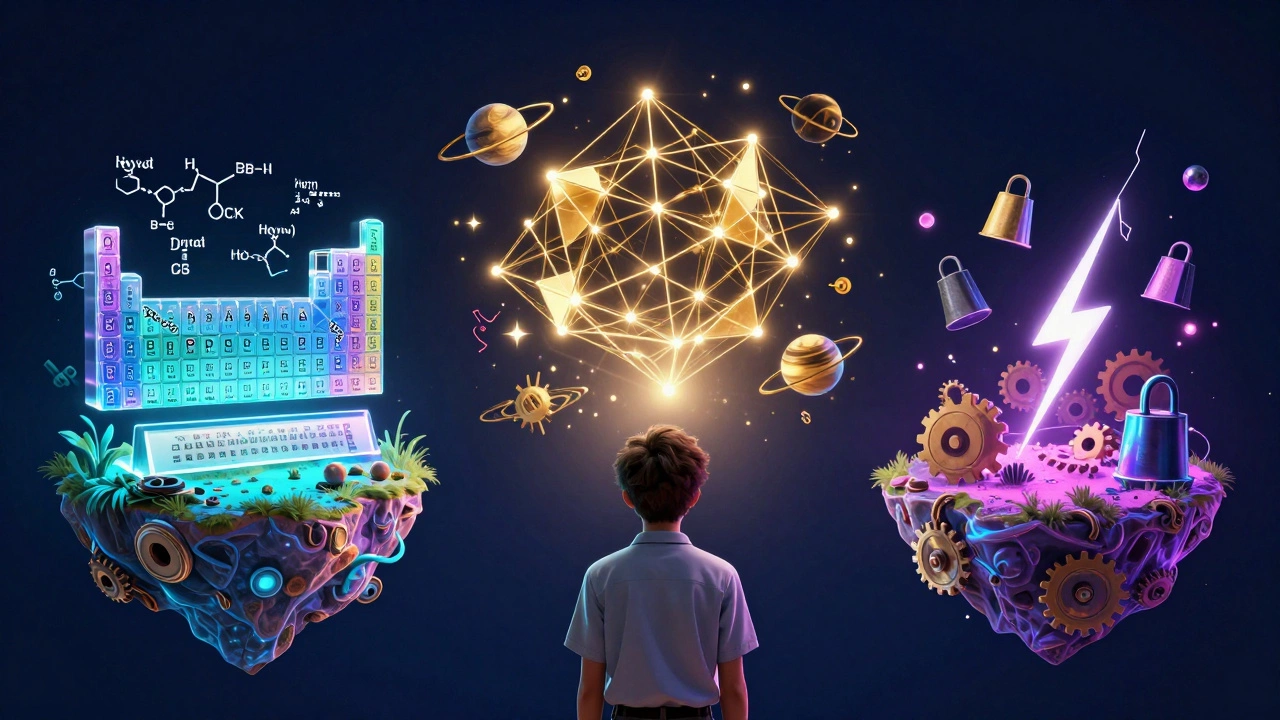
The Chemistry Shortcut: Your Secret Scoring Weapon
If you're looking for the subject that provides the highest return on investment for your time, Chemistry is it. Many toppers treat Chemistry as the "rank booster." Why? Because it's divided into three distinct flavors: Physical, Organic, and Inorganic. While Physics and Math are about solving complex problems, a huge chunk of Chemistry is about understanding patterns and memorization.
Inorganic Chemistry, for example, is almost entirely based on the NCERT textbooks. If you can memorize the periodic trends and reaction mechanisms, you can answer questions in seconds. Imagine spending 10 minutes on a single Physics problem only to realize you could have answered five Chemistry questions in that same time. That's why focusing on Chemistry first often gives students a psychological edge and a solid base of marks.
Mathematics: The Long Game of Logic
Now, if we're talking about the "best" subject for developing raw analytical power, Mathematics takes the crown. But be warned: it's also the most demanding. You can't just read a Math chapter and feel confident; you have to sweat through hundreds of problems. The IIT JEE subjects are designed to test your endurance, and Math is where that's tested most.
Topics like Calculus and Coordinate Geometry aren't just about formulas. They require a level of visualization and logical jumping that takes months to develop. If you're naturally good at numbers, Math can be your favorite subject, but for most, it's the one that requires the most discipline. The trick here isn't to find a shortcut, but to build a routine of solving at least 20-30 diverse problems every single day.
Physics: Where Concepts Meet Calculation
Physics is the middle ground. It's not as memory-heavy as Chemistry, and not as purely abstract as Math. It's about how the world works. The challenge here is the transition from "knowing a formula" to "applying it to a real-world scenario." Many students fail in Physics because they try to memorize the solution to a problem instead of understanding the underlying law.
Take Mechanics or Electromagnetism. If you understand the core concept-like how energy is conserved-you can solve a problem you've never seen before. Physics is "best" for those who enjoy curiosity and experimentation. It's the subject that makes you feel like an engineer before you even enter the campus.
| Subject | Effort Required | Scoring Speed | Primary Skill Needed |
|---|---|---|---|
| Chemistry | Medium | Very Fast | Memory & Logic |
| Physics | High | Medium | Conceptual Application |
| Mathematics | Very High | Slow | Problem-Solving Rigor |
Balancing Your Study Load
Since you need a high aggregate score to qualify for JEE Advanced, you can't afford to be a "one-subject wonder." A common mistake is spending 80% of your time on your favorite subject while ignoring the one you hate. This is a recipe for disaster because the exam has sectional cut-offs.
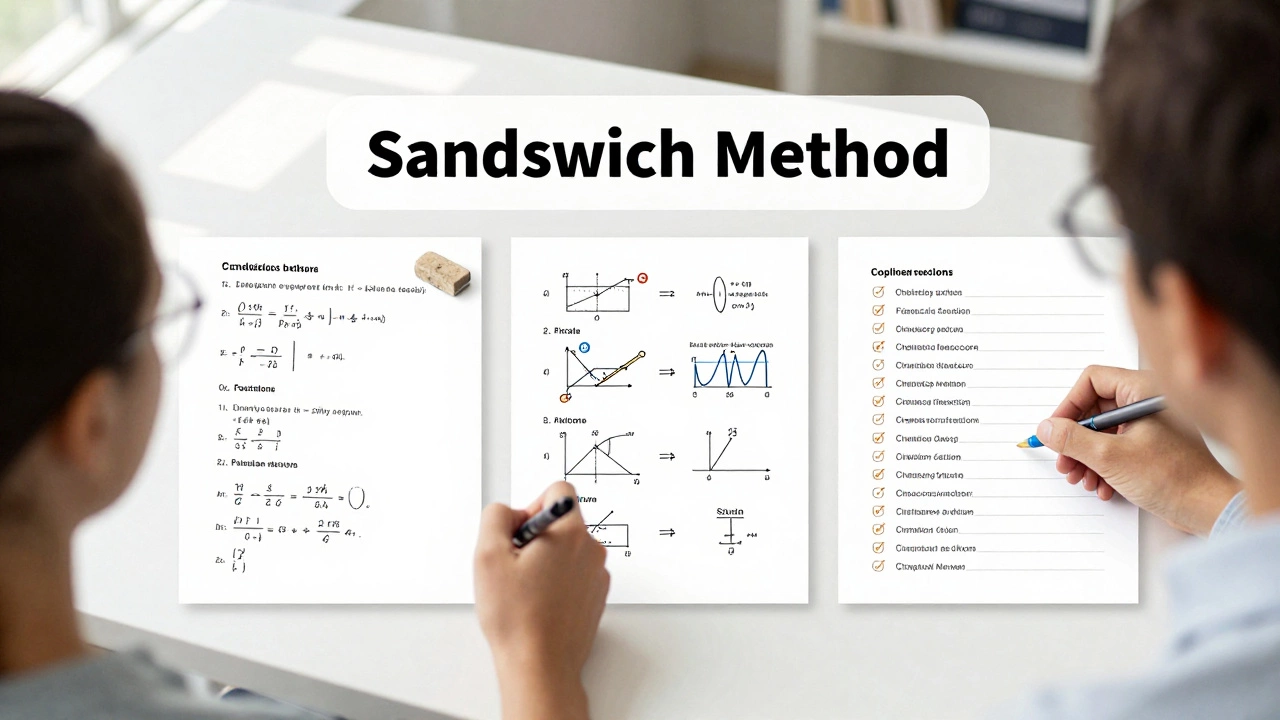
Try the "Sandwich Method." Start your day with the subject you find hardest (usually Math) when your brain is fresh. Follow it up with something lighter or more interesting (Physics). End your session with Chemistry, which allows you to feel a sense of achievement as you tick off memorization lists. This prevents burnout and keeps you engaged throughout the day.
Common Pitfalls to Avoid
Avoid the trap of using too many reference books. Many students buy every guide available, thinking more books equal more knowledge. In reality, mastering one standard textbook and a set of previous year questions (PYQs) is far more effective. For instance, relying solely on NCERT for Inorganic Chemistry is a proven strategy used by thousands of successful candidates.
Another mistake is ignoring the "easy" topics. You might be obsessed with mastering complex Rotation problems in Physics, but if you're ignoring simple Thermodynamics or Atomic Structure, you're leaving easy marks on the table. Prioritize high-weightage, low-effort topics first to secure your baseline score.
Practical Tips for Subject Mastery
- For Chemistry: Create a "Formula Sheet" for Organic reactions and stick it on your wall. Review it every morning.
- For Physics: Draw a diagram for every single problem. If you can't visualize it, you can't solve it.
- For Math: Don't look at the solution the moment you get stuck. Struggle with the problem for at least 15 minutes; that's where the real learning happens.
- General: Take mock tests specifically for one subject once a week to identify your exact weak points.
Can I get into IIT if I am weak in one subject?
It is very difficult. While you can be "exceptional" in two and "average" in one, being truly weak in one subject often leads to failing the sectional cut-off. You don't need to top every subject, but you must reach a minimum competency level in all three to ensure you aren't disqualified.
Which subject is the most scoring in JEE Mains?
Generally, Chemistry is considered the most scoring because the questions are more direct and take less time to solve. Many students use it to build a strong lead in marks before tackling the more time-consuming Physics and Math sections.
Should I focus more on NCERT or reference books?
Start with NCERT. It is the foundation for the entire exam, especially for Chemistry. Once you have a 100% grip on the NCERT concepts, move to reference books for advanced problem-solving and a deeper dive into complex topics.
How much time should I allocate to each subject?
It depends on your strength, but a good rule of thumb is 40% Math, 30% Physics, and 30% Chemistry. If you're already strong in one, shift some of that time to your weakest subject to maintain balance.
Is it possible to master these subjects in one year?
Yes, but it requires an intense, disciplined schedule. You'll need to cover the syllabus systematically, focus heavily on high-weightage chapters, and solve a massive amount of previous year questions to get a feel for the exam pattern.
What to Do Next
If you're just starting, don't obsess over which subject is "best." Instead, take a diagnostic test-a full-length paper from a previous year. See where you naturally stand. If you score well in Physics but fail in Math, you know exactly where your focus needs to be. Your goal isn't to love one subject; it's to strategically master all three to earn that seat at an IIT.