
Global Exam Difficulty Comparator
Select an exam to view detailed breakdown and generate a comparative report.
IIT-JEE Advanced
India • Engineering
Gaokao
China • University Entrance
UPSC CSE
India • Civil Services
Comparison Report
Difficulty Metrics
Key Characteristics
There is no single official title for the "hardest" test on Earth. Difficulty is subjective. It depends on your background, your country’s education system, and what you value more: raw intellectual power or sheer endurance. However, when educators, psychologists, and successful candidates discuss this topic, a few names always rise to the top. These are not just tests; they are cultural phenomena that shape millions of lives.
If you are looking for the absolute peak of academic pressure, the debate usually centers on three giants: India’s IIT-JEE (Indian Institutes of Technology Joint Entrance Examination), China’s Gaokao, and India’s UPSC Civil Services Examination. Each represents a different kind of difficulty. One tests speed and deep conceptual physics. Another tests memory and stamina. The third tests general knowledge and administrative logic over years.
The Physics Gauntlet: IIT-JEE Advanced
When people talk about pure academic rigor, the IIT-JEE Advanced often takes the crown. This is the entrance exam for the Indian Institutes of Technology, which are among the most prestigious engineering schools globally. To even sit for the advanced stage, you must first clear the JEE Main, acting as a two-stage filter.
The selection rate is brutal. In recent years, roughly 1.2 million students take the preliminary exam. Only about 15,000 to 20,000 get seats in the IITs. That is a success rate of less than 2%. But the numbers only tell half the story. The questions themselves are designed to break conventional thinking. They do not ask for rote memorization. They require you to derive solutions from first principles under extreme time pressure.
Imagine solving complex calculus problems involving multi-variable integration while simultaneously managing thermodynamics equations, all within seconds. The syllabus covers Physics, Chemistry, and Mathematics at a level that exceeds many undergraduate university courses. Students often spend ten hours a day for two years preparing solely for this one day. The mental toll is significant, leading to high stress levels and burnout among teenagers who are still developing emotionally.
| Exam Name | Country | Primary Focus | Selection Rate | Preparation Duration |
|---|---|---|---|---|
| IIT-JEE Advanced | India | Physics, Chemistry, Math | < 2% | 2-3 Years |
| Gaokao | China | All Core Subjects | ~40% for Tier 1 Universities | 12 Years (Cumulative) |
| UPSC CSE | India | General Studies & Essay | ~0.1% | Multiple Attempts (Years) |
| Bar Exam | USA | Law & Ethics | ~75-80% Pass Rate | 3 Months Intensive |
The Cultural Monolith: China’s Gaokao
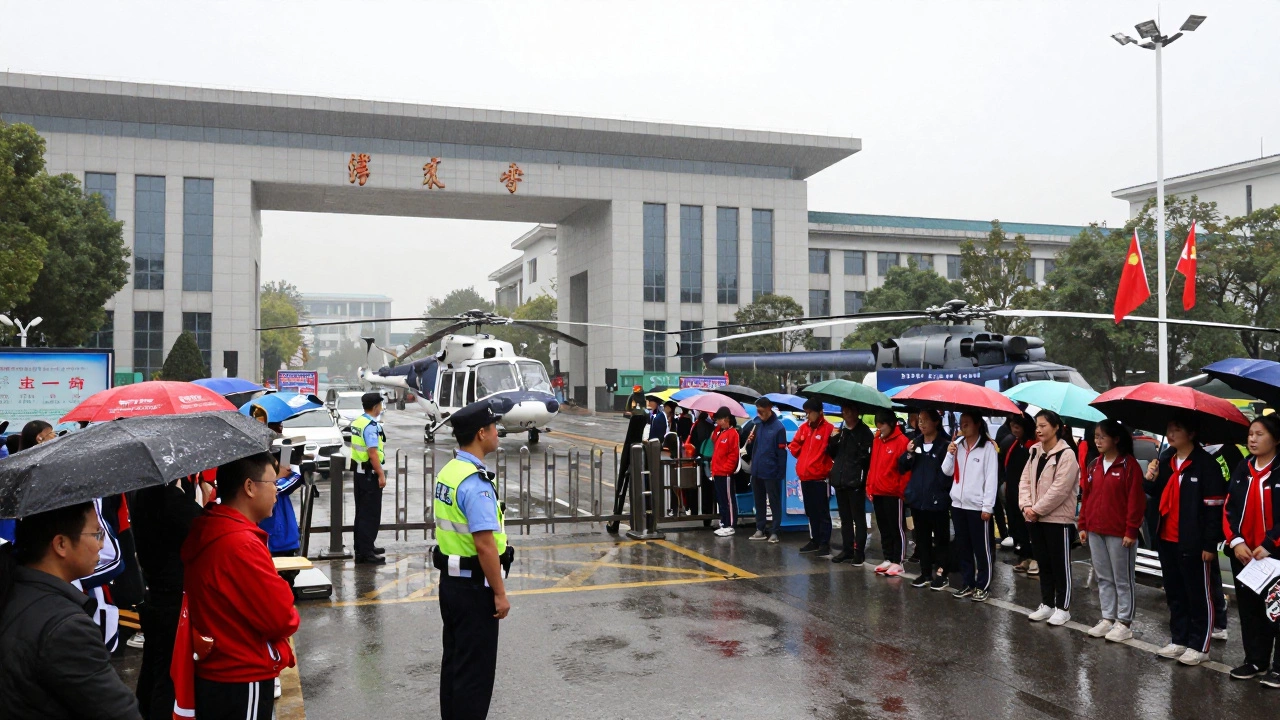
If IIT-JEE is about depth, the Gaokao is about scale and societal weight. Held annually in June, this National College Entrance Examination determines the future of nearly 13 million Chinese students. It is not just an exam; it is a national event. During the test days, flights are grounded near examination centers to ensure silence. Police escort students to their venues. Parents wait outside with food and encouragement.
The Gaokao covers Chinese language, mathematics, foreign languages (usually English), and either sciences or humanities depending on the student’s track. The difficulty lies in the perfection required. There is little room for error. A single mistake can drop a student from a top-tier university like Tsinghua or Peking University to a local college. The preparation starts effectively from kindergarten, but the intense final year involves studying from morning until late night, seven days a week.
Unlike the creative problem-solving of JEE, the Gaokao rewards precision and comprehensive coverage of the curriculum. You must know everything taught in twelve years of schooling. The pressure is immense because the social mobility associated with a good university degree in China is direct and powerful. Failing the Gaokao is often seen as a major life setback, carrying significant stigma.
The Marathon of Governance: UPSC Civil Services
For those who argue that engineering exams are too narrow, the UPSC Civil Services Examination (CSE) in India offers a different challenge. This is not a test for teenagers. It is for graduates aiming to become the highest-ranking bureaucrats in the country, including positions like the Prime Minister’s advisor or district administrators.
The structure is unique. It consists of three stages: Prelims (objective MCQs), Mains (nine descriptive papers written by hand), and an Interview. The syllabus is vast. It covers history, geography, economics, polity, ethics, and optional subjects of your choice. You must write thousands of words in handwriting under strict time limits. The physical act of writing nine papers is exhausting enough.
The real difficulty is the unpredictability and the low success rate. With hundreds of thousands of applicants and fewer than 1,000 vacancies each year, the acceptance rate hovers around 0.1%. Most candidates fail multiple times. Some prepare for five to ten years, taking breaks to work and then returning to study. It tests resilience, consistency, and the ability to synthesize information from diverse fields. It is less about being a genius and more about being disciplined, adaptable, and politically aware.
Other Notable Contenders
While the big three dominate the conversation, other exams deserve mention for specific reasons.
- The Bar Exam (USA): While the pass rate is higher (around 75-80%), the volume of material is staggering. Law students must memorize thousands of case laws, statutes, and ethical rules. The anxiety is high because failure means delaying entry into a lucrative profession.
- CFA Level III: For finance professionals, the Chartered Financial Analyst designation is notoriously difficult. It requires passing three sequential levels, each demanding hundreds of hours of study. The content covers complex investment management, portfolio theory, and ethics. It is tough because it is taken alongside full-time jobs.
- MCAT (Medical College Admission Test): In the US and Canada, this standardized test is crucial for medical school admission. It tests biological and physical sciences, critical analysis, and reasoning skills. The competition is fierce because medical schools have limited seats.
Why Do We Obsess Over "Toughness"?
Labeling an exam as the "toughest" serves a psychological purpose. It validates the suffering of those who take it. When you spend two years sacrificing social life, sleep, and hobbies for a test, you want to believe it was worth it. You want to believe the barrier was high so that your achievement feels earned.
However, this obsession can be misleading. Difficulty does not equal quality. A hard exam might test irrelevant skills. For example, some critics argue that IIT-JEE focuses too much on trick-based question solving rather than practical engineering application. Similarly, the Gaokao has been criticized for stifling creativity due to its emphasis on standard answers.
True educational value comes from how well the exam predicts future success. Does passing the IIT-JEE make you a better engineer? Often, yes, because it builds strong analytical foundations. Does passing the UPSC make you a better administrator? Yes, because it ensures broad knowledge and ethical grounding. But the correlation is not perfect. Soft skills, leadership, and emotional intelligence are rarely tested in these gauntlets.
How to Approach High-Stakes Exams
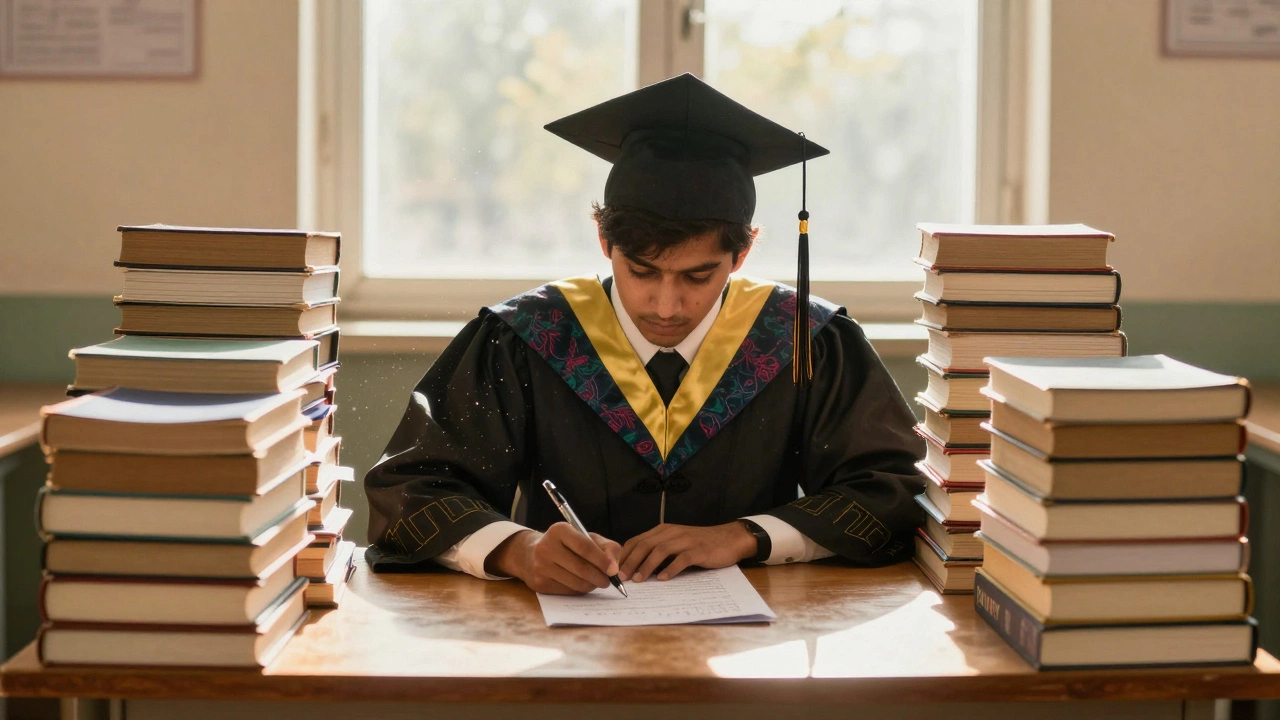
If you are facing any of these exams, understanding their nature helps you prepare better. Here are practical strategies based on expert advice.
- Analyze Past Papers: Never underestimate the pattern. Whether it is JEE or UPSC, past papers reveal the examiner’s mindset. Identify recurring themes and question types.
- Simulate Exam Conditions: Practice under timed conditions. If the exam requires handwriting, practice writing essays by hand. If it is computer-based, get used to the interface. Muscle memory matters.
- Focus on Weaknesses Early: Many students stick to comfortable topics. Real improvement comes from tackling weak areas. Use data from mock tests to identify gaps.
- Maintain Physical Health: Sleep deprivation kills cognitive function. Exercise reduces stress hormones. Eat well. Your brain is an organ that needs fuel and rest.
- Seek Mentorship: Talk to those who have succeeded. They can provide shortcuts, warn you about common pitfalls, and offer emotional support.
The Future of Competitive Exams
As we move through 2026, the landscape of competitive exams is evolving. Artificial Intelligence is changing how we learn. Adaptive testing platforms now personalize questions based on your performance in real-time. This makes exams fairer but also harder to "hack" with rote learning.
Moreover, there is a growing shift towards holistic evaluation. Universities and employers are looking beyond test scores. They consider portfolios, projects, and interviews. The era of "one exam determines your life" is slowly fading, though it remains strong in countries with large populations and limited resources.
In conclusion, there is no single "No. 1 toughest exam." The IIT-JEE challenges your intellect. The Gaokao challenges your endurance and precision. The UPSC challenges your breadth and resilience. The hardest exam is the one that aligns with your goals but pushes you beyond your current limits. Choose wisely, prepare strategically, and remember that the exam is a tool, not the destination.
Is the IIT-JEE really the hardest exam in the world?
It is widely considered the hardest in terms of academic depth and conceptual complexity in Physics, Chemistry, and Mathematics. However, "hardest" is subjective. Other exams like the Gaokao involve more students and broader societal pressure, while the UPSC CSE involves a longer duration and wider syllabus.
What is the success rate of the Gaokao?
Approximately 40-50% of students qualify for undergraduate programs overall. However, getting into top-tier universities (Tier 1) like Tsinghua or Peking University is extremely competitive, with acceptance rates often below 1% for provinces with high applicant volumes.
How long does it take to prepare for the UPSC Civil Services Exam?
Most successful candidates prepare for 1 to 3 years. However, many attempt the exam multiple times, extending the journey to 5-10 years. The preparation involves studying a vast syllabus covering history, geography, polity, economy, and ethics.
Can you retake these tough exams if you fail?
Yes, most of these exams allow multiple attempts. IIT-JEE allows up to 2 attempts in consecutive years. UPSC CSE allows multiple attempts depending on your category (up to 6 for general category). Gaokao can be retaken, though it requires repeating the final year of high school.
Are online courses effective for preparing for these exams?
Online courses have become highly effective, especially for IIT-JEE and UPSC. They offer flexibility, access to top faculty, and adaptive learning tools. However, self-discipline is crucial. Combining online resources with rigorous practice and mentorship yields the best results.