Exam Toughness Calculator
Estimate how difficult these exams are based on your preparation approach:
(e.g. 20-30 hours for UPSC, 15-18 for CPA)
How Your Score Compares
UPSC - 98.7% Toughness (Pass rate: 0.1%)
IIT-JEE Advanced - 96.2% Toughness (Pass rate: 4%)
CPA Exam - 82.4% Toughness (Pass rate: 50%)
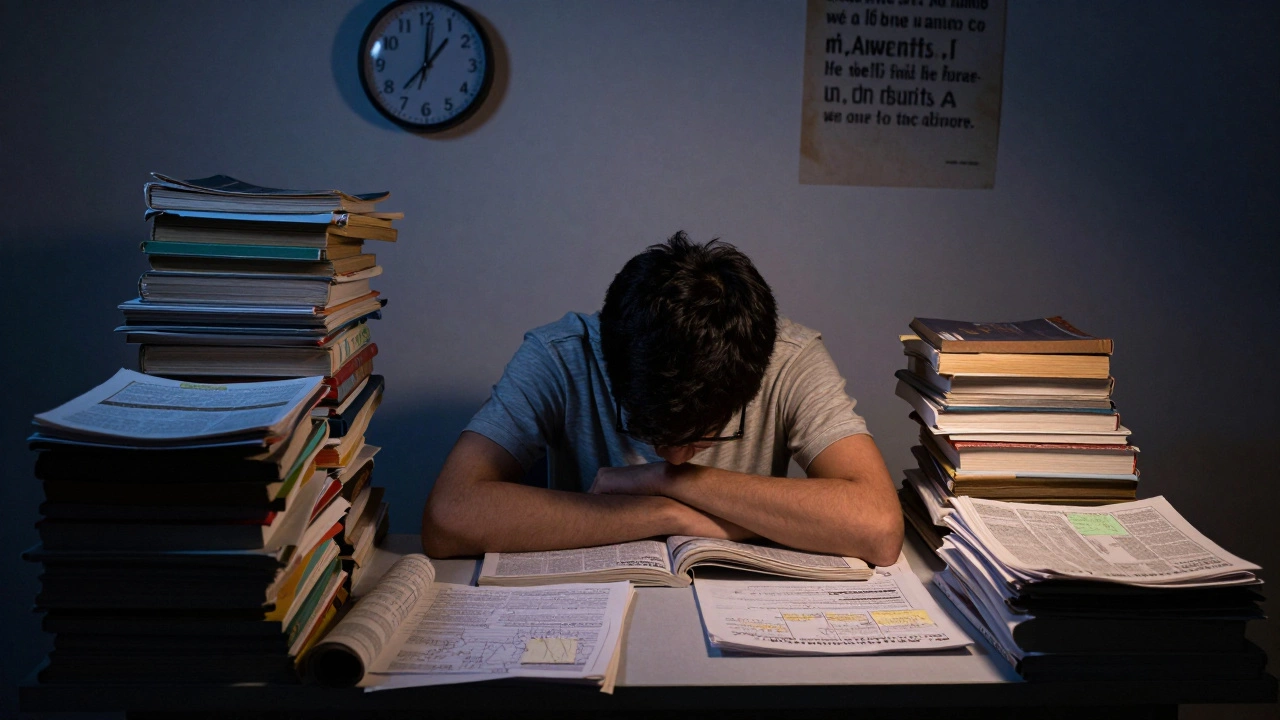
Think you’ve had a hard day studying? Try passing an exam where thousands of candidates show up, but only a few hundred walk away with success. These aren’t just difficult tests-they’re gatekeepers to entire careers, national systems, and sometimes, entire futures. The world has exams that break people, reshape lives, and separate the few from the many. Here are the three toughest exams on the planet, based on pass rates, volume of applicants, depth of content, and the sheer pressure they demand.
UPSC Civil Services Examination (India)
The Union Public Service Commission (UPSC) Civil Services Exam in India isn’t just a test-it’s a marathon that lasts over a year. Each year, more than 1.1 million people apply. Only about 800 to 900 make it through. That’s a pass rate of less than 0.1%. This exam doesn’t just check your memory. It tests your understanding of Indian history, global politics, economics, ethics, law, and current affairs-all while requiring you to write detailed, analytical essays in Hindi or English.
The exam has three stages: Prelims (multiple-choice), Mains (nine written papers), and the Personality Test (interview). The Mains alone takes nine days to complete. Candidates often spend two to three years preparing, sometimes quitting jobs or putting personal lives on hold. Many take it multiple times. The success stories are legendary: IAS officers who passed on their sixth attempt, or those who studied 16 hours a day while working part-time. This isn’t just about knowledge. It’s about endurance, mental resilience, and the ability to stay focused under extreme pressure.
What makes it unique? The syllabus is vast and unpredictable. You could be asked about the history of tribal land rights in Odisha one day, and the impact of climate change on Arctic shipping routes the next. There’s no single textbook. You need to read newspapers, government reports, academic journals, and international policy documents. And the interview? It’s not a Q&A-it’s a live stress test. Panelists probe your values, logic, and emotional control. One candidate was asked: “If you saw a child drowning in a river, but your uniform was getting wet, what would you do?” The answer isn’t about rescue. It’s about character.
IIT-JEE Advanced (India)
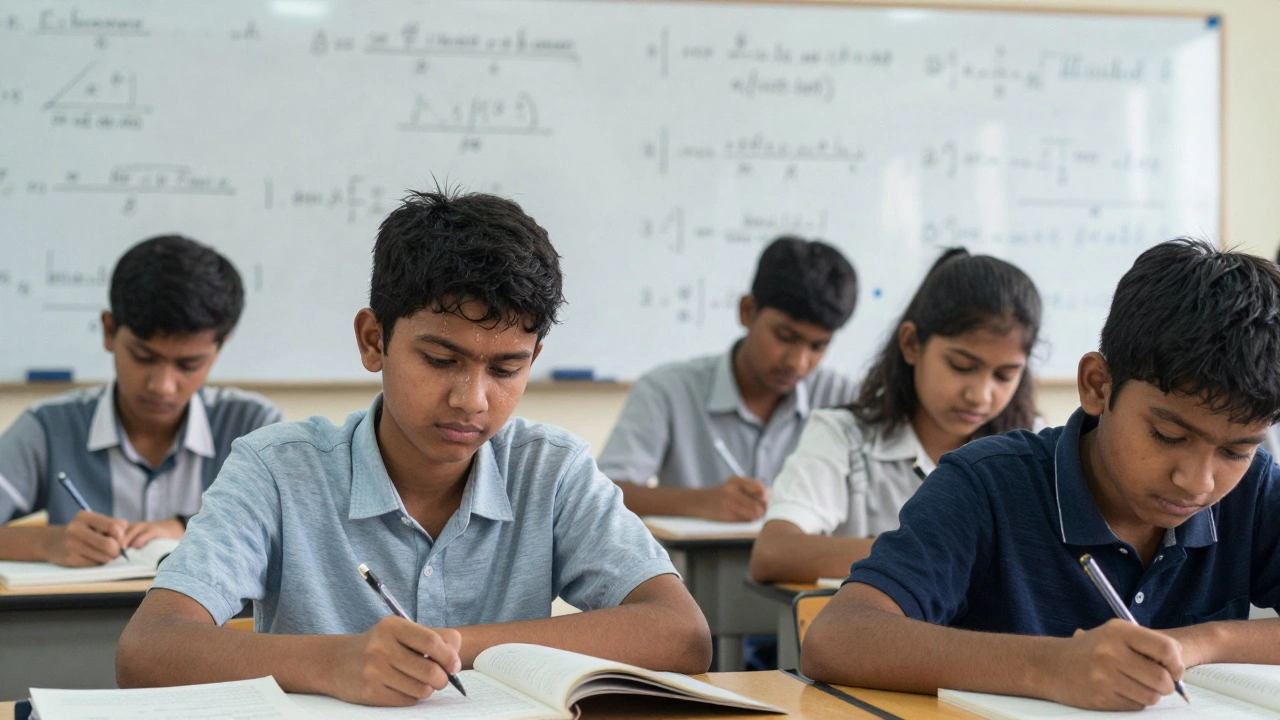
If you think college entrance exams are hard, meet the IIT-JEE Advanced. This is the final hurdle to get into India’s Indian Institutes of Technology-the most elite engineering schools in Asia. Over 250,000 students qualify for this exam after clearing the JEE Main. But only around 10,000 get admitted across all IITs. That’s less than a 4% success rate.
The exam covers physics, chemistry, and mathematics at a level far beyond high school. Questions aren’t just tough-they’re designed to make even top students doubt themselves. A 2023 physics question asked students to calculate the motion of a charged particle in a non-uniform magnetic field with time-varying boundary conditions. That’s graduate-level material. The math section includes complex calculus problems that require multiple steps of reasoning with no formula sheet allowed.
Students typically start preparing in 9th or 10th grade. Many attend coaching centers for 6-8 hours a day, six days a week. Some spend up to 12 hours a day studying. Sleep is a luxury. Social life? Gone. The pressure is so intense that mental health crises among aspirants are common. In 2022, over 30 student suicides were reported across India in the months leading up to the exam. The system doesn’t just test ability-it tests survival.
Success here doesn’t just mean getting into a top university. It means a guaranteed high-paying job, social status, and family pride. But the cost? Many students never recover emotionally. Those who do often say: “I passed, but I lost a part of myself.” The IIT-JEE Advanced isn’t just an exam. It’s a cultural phenomenon-and one of the most brutal filters in modern education.
CPA Exam (United States)
While UPSC and IIT-JEE are known for their volume and cultural weight, the CPA Exam is the toughest professional certification in the accounting world. Each year, over 70,000 candidates take it in the U.S. alone. Only about 50% pass all four sections on their first try. The pass rate for each section hovers between 45% and 55%-and you must pass all four within 18 months or start over.
The CPA Exam is divided into four parts: Auditing and Attestation (AUD), Business Environment and Concepts (BEC), Financial Accounting and Reporting (FAR), and Regulation (REG). Each section is four hours long. That’s 16 hours of non-stop testing. You can’t use a calculator for everything. You need to know how to manually compute depreciation schedules, interpret GAAP standards, and apply tax codes to real-world business scenarios.
The exam is computerized and adaptive. If you answer early questions wrong, the difficulty spikes. One candidate described it as: “You’re not just being tested on what you know. You’re being tested on how well you handle pressure when every question feels like it’s designed to fail you.” The FAR section alone covers 1,000+ pages of accounting rules. You need to memorize revenue recognition standards, lease accounting changes, and governmental fund reporting-all while juggling a full-time job.
Most candidates study 300-400 hours total. Many work 40+ hours a week and study 15-20 hours on weekends. Some take years to pass. The average age of a CPA is 28, but many are 30+, having taken the exam multiple times. Unlike college exams, there’s no second chance if you fail one section. You have to retake it within 18 months. One accountant from Texas passed after five attempts over four years. “I cried after each failure,” she said. “But I kept going because I knew I couldn’t live with the thought of giving up.”

Why These Three Stand Out
What makes these exams harder than others? It’s not just difficulty. It’s the combination of scale, stakes, and structure.
- UPSC demands breadth, depth, and moral clarity under pressure.
- IIT-JEE Advanced crushes technical ability with relentless complexity.
- CPA forces professionals to master dense, ever-changing rules while working full-time.
Other exams are tough too. China’s Gaokao has millions of takers. The Bar Exam in the U.S. has low pass rates in some states. Japan’s National Public Service Exam is brutal. But none combine the same level of volume, duration, psychological toll, and real-world consequence as these three.
These aren’t just tests. They’re rites of passage. Passing one doesn’t just mean you’re smart. It means you’re stubborn, disciplined, and willing to sacrifice more than most people ever will.
What It Takes to Even Try
If you’re thinking of taking one of these exams, know this: preparation isn’t about cramming. It’s about building a lifestyle around the goal. Successful candidates don’t study harder-they study smarter, longer, and with more consistency.
- Start early. Don’t wait until the last year.
- Build a support system. Isolation kills motivation.
- Track progress, not hours. Knowing what you’ve mastered matters more than how long you sat at your desk.
- Accept failure as part of the process. Most winners failed at least once.
- Protect your mental health. Sleep, movement, and breaks aren’t luxuries-they’re survival tools.
There’s no magic trick. No shortcut. No app that will get you through. Just grit, time, and the quiet belief that the cost is worth it.
Are these the only tough exams in the world?
No, but they’re among the most extreme in terms of scale, pressure, and consequences. Exams like China’s Gaokao, the French Baccalaureate, and the Japanese National Medical Licensing Exam are also incredibly difficult. However, UPSC, IIT-JEE Advanced, and the CPA Exam stand out because they combine massive applicant numbers with extremely low pass rates, multi-year preparation cycles, and life-altering outcomes.
Can you prepare for these exams on your own?
Yes, but it’s rare. Most who succeed use structured resources-coaching centers, study groups, mentorship, or official prep materials. Self-study requires extreme discipline. For UPSC, many use NCERT textbooks and The Hindu newspaper. For IIT-JEE, coaching materials from Allen or Resonance are common. For CPA, Becker or Wiley are industry standards. But even with these, most candidates still struggle without accountability.
How long should you study for these exams?
For UPSC, most candidates study for 12-24 months full-time. For IIT-JEE Advanced, 2-3 years starting in high school is typical. For CPA, candidates usually spend 300-400 hours total, spread over 6-18 months while working. The key isn’t just time-it’s consistency. Studying 3 hours daily for a year beats cramming 10 hours once a week.
Is there an age limit for taking these exams?
UPSC allows candidates up to age 32 (with relaxations for reserved categories). IIT-JEE Advanced has no official age limit, but most take it between 17-20. The CPA has no age limit in the U.S.-you can take it at 50 if you meet education and experience requirements. Age isn’t the barrier. It’s the energy, focus, and support system you still have.
What happens if you fail these exams?
Failing doesn’t end your future. Many UPSC candidates clear it on their third or fourth try. IIT-JEE repeaters often get into other top engineering schools. CPA failures usually retake and pass within a year. The real danger isn’t failing-it’s letting failure define you. Those who keep going, even after multiple attempts, are the ones who ultimately succeed.