
Bar Exam Difficulty Comparator
Select a State
Select a state to view details
Click on any state from the list on the left to compare its bar exam difficulty factors, pass rates, and unique challenges.
Key Challenges & Factors
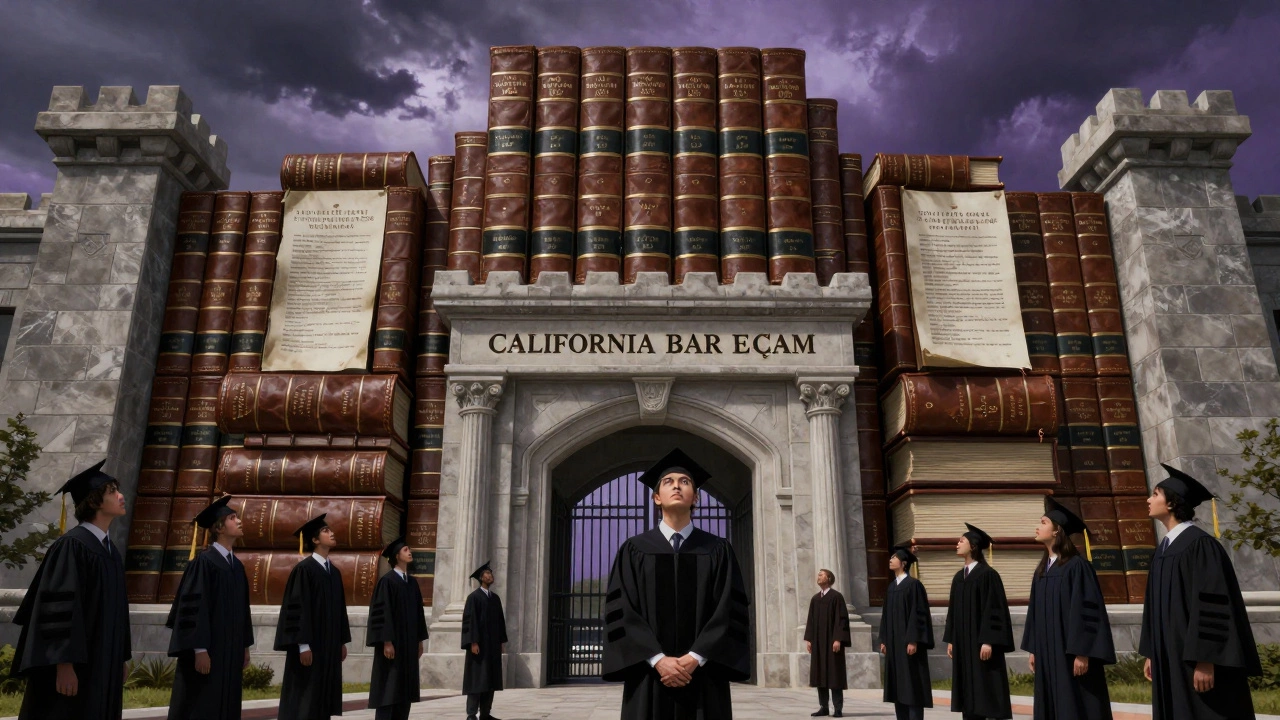
Bar exam difficulty varies wildly across the United States, but if you are looking for the single hardest hurdle, the California Bar Exam is widely considered the most difficult in the country. It combines the lowest first-time pass rates with a massive volume of questions, strict grading curves, and unique essay requirements that trip up even top graduates. However, "hard" means different things depending on whether you look at raw statistics, scoring standards, or the sheer physical endurance required to survive the testing period.
The Statistical Champion: Why California Reigns Supreme
When people ask which state has the toughest bar exam, they usually point to California. The data backs this up. In recent years, California’s first-time pass rate has consistently hovered around 40% to 45%, significantly lower than the national average, which often sits above 60%. For context, passing the California bar is statistically harder than getting into many Ivy League law schools.
The difficulty isn't just about knowing the law; it's about how the state tests you. The California Bar Exam consists of two days of testing. Day one includes five performance tasks (essays) and multiple-choice questions. Day two features three long-form essays and more multiple-choice questions. The sheer volume is exhausting. You must write thousands of words under intense time pressure while simultaneously recalling specific statutes that other states might provide in a reference manual.
Furthermore, California uses a "curve" grading system for its essays that is notoriously tough. Unlike some states where you can score well by writing a comprehensive answer, California graders often look for precise, concise applications of black-letter law. Missing a single element in a torts or contracts question can cost you points that are hard to recover. This creates a high-stakes environment where perfection is expected, not just competence.
The Uniform Bar Exam (UBE) and National Consistency
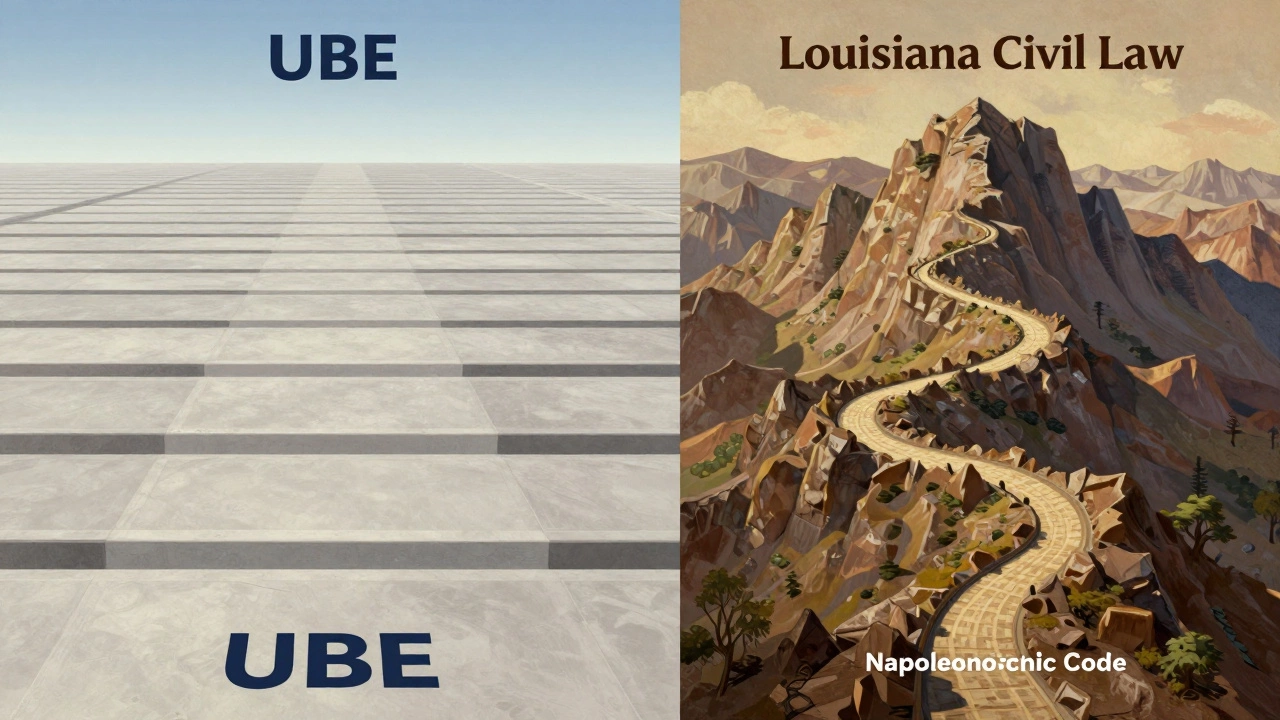
To understand why California stands out, you have to look at the rest of the country. Most states now use the Uniform Bar Exam (UBE), administered by the National Conference of Bar Examiners (NCBE). The UBE includes the Multistate Bar Exam (MBE), the Multistate Essay Examination (MEE), and the Multistate Performance Test (MPT). Because these components are standardized, your score is portable across participating states. If you pass in one UBE state, you can often transfer that score to another without retaking the exam.
This standardization makes comparing difficulty easier. States using the UBE generally have higher pass rates because the grading is more consistent and the material is predictable. For example, states like New York and Illinois have robust UBE scores, but their overall pass rates remain higher than California’s because they don’t add extra, non-portable hurdles. The UBE essentially levels the playing field, making California’s deviation from this model an outlier in terms of difficulty.
Other Notoriously Difficult States
While California takes the crown, several other states present significant challenges. New York is often cited as a top contender. While it uses the UBE, New York adds its own separate essay section and a skills-based assessment called the New York Uniform Bar Exam (NYUBE) supplement. These additional components test practical legal skills that aren’t covered in the standard MBE or MEE, adding complexity and study time.
Louisiana is another unique case. As the only civil law jurisdiction in the U.S., Louisiana’s legal system is based on the Napoleonic Code rather than common law. This means the bar exam covers entirely different subjects, such as civil code obligations and succession, which are unfamiliar to most American law students. If you didn’t take specialized courses in Louisiana civil law during law school, you are essentially learning a new legal system while preparing for the exam.
Maryland and Texas also frequently appear on lists of difficult bars. Maryland has historically had lower pass rates due to its rigorous grading of essays and a strong emphasis on local procedural rules. Texas requires candidates to master both the MBE and a substantial number of Texas-specific essays, covering areas like family law and community property that differ significantly from federal norms.
| State | Exam Type | Avg. First-Time Pass Rate | Key Difficulty Factor |
|---|---|---|---|
| California | State-Specific + MBE | ~40-45% | Lowest pass rate, strict curve, high volume |
| New York | UBE + NY Supplement | ~60-65% | Additional skills assessment, large candidate pool |
| Louisiana | Civil Law Specific | ~55-60% | Unique civil law curriculum, unfamiliar to most |
| Maryland | UBE + State Essays | ~50-55% | Rigorous grading, focus on local procedure |
| Texas | UBE + State Essays | ~60-65% | High volume of state-specific content |
Factors That Make a Bar Exam "Hard"
Difficulty is subjective, but we can break it down into measurable factors. First is the passing score. Most UBE states require a scaled score of 266 out of 400. California requires a scaled score of 1440 out of 2000, which translates roughly to the same proficiency level, but the distribution of scores makes it harder to achieve. Some states have higher cut scores, meaning you need to perform better relative to peers to pass.
Second is the grading curve. In curved exams, your score depends on how others perform. If everyone does poorly, the curve might help you. If everyone does well, it hurts you. California’s curve is particularly unforgiving because it rewards precision over breadth. A perfect but verbose answer might score lower than a concise, perfectly applied one. This forces candidates to adopt a specific writing style that differs from typical law school essays.
Third is the volume of material. The MBE covers seven subjects: Contracts, Torts, Criminal Law, Evidence, Constitutional Law, Real Property, and Civil Procedure. But state-specific essays often add Family Law, Wills, Trusts, and Estates, plus local procedures. California alone expects you to know dozens of statutes by heart. The mental load is immense, requiring months of dedicated memorization.
Preparation Strategies for the Hardest Exams
If you are aiming for California, New York, or any high-difficulty state, generic prep won’t suffice. You need a targeted approach. Start by using commercial bar prep courses like BarBri, Themis, or QuidPro. These services offer structured curricula that align with state-specific requirements. For California, ensure your course includes extensive practice with performance tasks and essay grading feedback.
Practice writing under timed conditions. Many candidates fail not because they lack knowledge, but because they run out of time. Simulate the actual exam environment: sit for eight hours straight, take short breaks, and write continuously. This builds the stamina needed for the real test. Additionally, seek feedback on your essays from experienced attorneys or graders who understand the local grading rubric.
Finally, manage your mental health. Bar exam preparation is isolating and stressful. Burnout is a real risk, especially in states with low pass rates where failure feels inevitable. Join study groups, maintain a regular sleep schedule, and engage in activities outside of studying. A clear mind performs better than an exhausted one, regardless of how much you’ve memorized.
Alternatives to the Traditional Bar Exam
Not everyone needs to take the traditional bar exam. Some states offer reciprocity or admission on motion. If you are already licensed in another state, you may be able to transfer your license without taking the full exam. For example, New York allows attorneys licensed in certain other states to apply for admission after meeting experience requirements. This bypasses the difficulty of the exam entirely, though it comes with its own bureaucratic hurdles.
Another option is the Law School Graduation Requirement waiver in some jurisdictions. A few states allow recent graduates from accredited law schools to practice under supervision before taking the bar, though this is rare. Most still require the exam within a year of graduation. Understanding these alternatives can save you time and stress if you’re flexible about where you practice.
Is the California Bar Exam really the hardest?
Yes, statistically speaking. California consistently has the lowest first-time pass rates among all U.S. states, often hovering around 40-45%. Its combination of strict grading curves, high volume of questions, and unique essay requirements makes it more challenging than the Uniform Bar Exam used by most other states.
What is the easiest state to get a lawyer license?
States like Wyoming, Alaska, and Montana often report higher first-time pass rates, sometimes exceeding 70-80%. These states typically have smaller candidate pools and less competitive grading environments. However, "easier" doesn't mean trivial; the material remains rigorous, but the statistical likelihood of passing is higher.
How does the Uniform Bar Exam (UBE) affect difficulty?
The UBE standardizes testing across many states, making preparation more predictable. Since the MBE, MEE, and MPT are identical nationwide, candidates can focus on mastering core subjects without worrying about unique state quirks. This consistency generally leads to higher pass rates compared to non-UBE states like California or Louisiana.
Can I transfer my bar exam score from one state to another?
If you took the Uniform Bar Exam (UBE), yes. Most UBE-participating states allow you to transfer your score for up to five years. However, states with unique exams, like California or New York, do not accept UBE transfers directly unless they have specific reciprocity agreements. Always check the latest rules with the target state's bar association.
Why is Louisiana's bar exam different?
Louisiana follows a civil law system derived from the Napoleonic Code, unlike the common law system used in the rest of the U.S. This means the bar exam covers distinct subjects like civil code obligations and succession, which are not part of standard American legal education. Candidates must take specialized courses to prepare effectively.