Vocational vs. Academic Path Simulator
Select a field of study below to see how the vocational route compares to the traditional academic route in terms of time-to-hire, total cost, and starting salary.
Healthcare Support
EMT, Medical Assistant, Dental Hygiene
Skilled Trades
Electrician, Plumber, Welder, Carpenter
Information Technology
Coding Bootcamp, Network Admin, Cybersecurity
Creative Arts
Graphic Design, Video Editing, Photography
Business Services
Bookkeeping, Paralegal, Project Management
Vocational Route
- Duration:
- Total Cost:
- Avg. Starting Salary:
- Time to Earning:
Academic Route
- Duration:
- Total Cost:
- Avg. Starting Salary:
- Time to Earning:
Have you ever seen the word vocational on a course brochure or a job description and wondered exactly what it means? It’s more than just a fancy label for "job training." Understanding the full meaning of vocational education helps you make smarter choices about your future, whether you are a student picking a path or a professional looking to pivot.
In simple terms, vocational refers to anything related to a specific trade, craft, or profession. It focuses on teaching practical skills rather than just theory. If you want to become an electrician, a nurse, or a graphic designer, you are entering the vocational world. This guide breaks down the definition, types, and real-world value of vocational paths in 2026.
The Core Definition of Vocational
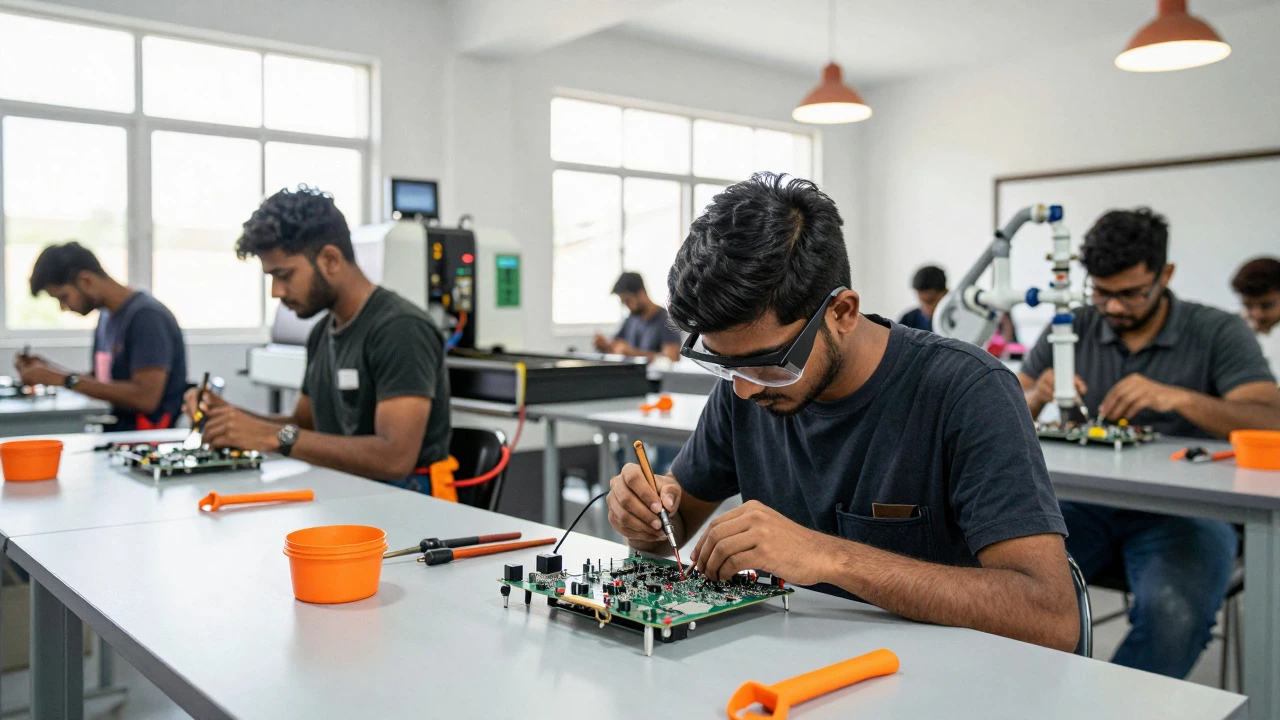
Vocational education is a type of education that prepares individuals for specific trades, crafts, or careers at various levels. Unlike traditional academic degrees which focus on broad theoretical knowledge, vocational programs are hands-on. They teach you how to do a job, not just talk about it.
The term comes from the Latin word vocare, which means "to call" or "to name." Historically, it referred to one's calling or vocation. Today, it has evolved to mean specialized instruction in a particular field. When we say a school is "vocational," we mean it offers direct pathways into employment with minimal academic detours.
Key attributes of vocational learning include:
- Practical Focus: Learning by doing, using tools, software, or equipment relevant to the job.
- Short Duration: Programs often last from a few months to two years, much shorter than four-year university degrees.
- Certification-Based: You earn a certificate, diploma, or license upon completion, proving your competency.
- Industry-Aligned: Curricula are updated regularly to match current industry standards and technology.
Vocational vs. Academic Education
A common confusion exists between vocational and academic education. They serve different purposes and suit different learners. Academic education (like a BA in History) builds critical thinking and general knowledge. Vocational education (like a Certificate in HVAC Repair) builds specific technical competence.
| Feature | Vocational Education | Academic Education |
|---|---|---|
| Primary Goal | Job readiness and skill acquisition | Theoretical understanding and critical analysis |
| Duration | 3 months to 2 years | 3 to 5 years (undergraduate) |
| Cost | Generally lower tuition fees | Higher tuition fees and living costs |
| Outcome | Certificate, Diploma, or License | Degree (BA, BS, etc.) |
| Learning Style | Hands-on, practical, applied | Lectures, reading, research, essays |
Choosing one over the other depends on your goals. If you want to start earning quickly and don’t mind physical or technical work, vocational is likely the better fit. If you aim for roles requiring deep theoretical research or management positions that demand a degree, academic might be the way to go. However, many people combine both, starting with a vocational qualification and later pursuing a degree.

Common Types of Vocational Courses
Vocational training covers a massive range of industries. In 2026, demand is particularly high in healthcare, technology, and skilled trades. Here are some of the most popular vocational fields:
- Healthcare Support: Includes medical assisting, dental hygiene, and EMT training. These roles are essential in hospitals and clinics and often require only a short-term certification.
- Skilled Trades: Electricians, plumbers, welders, and carpenters. These jobs are physically demanding but offer high job security and strong wages, especially with experience.
- Information Technology: Coding bootcamps, network administration, and cybersecurity certifications. These are fast-paced programs that prepare you for entry-level tech jobs without a CS degree.
- Creative Arts: Graphic design, video editing, and photography. Digital media skills are in high demand for marketing and content creation.
- Business Services: Bookkeeping, paralegal studies, and project management. These provide administrative support in corporate environments.
Each of these fields has its own set of prerequisites. For example, becoming a registered nurse typically requires an Associate Degree in Nursing (ADN), which is a vocational program, followed by a licensing exam. On the other hand, becoming a web developer might only require a six-month coding bootcamp and a strong portfolio.
Why Choose a Vocational Path?
There are several compelling reasons why vocational education is gaining popularity. First, speed. You can enter the workforce in as little as six months. Second, cost-effectiveness. Since the programs are shorter, you spend less on tuition and avoid the high debt associated with four-year degrees. Third, employability. Employers often prefer candidates who already know how to use the specific tools required for the job.
Consider the case of a young person in Oxford who wants to work in renewable energy. Instead of spending four years studying environmental science, they could complete a two-year vocational course in solar panel installation. By the time their peers are finishing their undergraduate degrees, this individual could already have two years of on-the-job experience and a steady income.
However, vocational paths do have limitations. Some advanced roles may still require a bachelor’s degree. Additionally, certain vocational jobs can be physically strenuous or involve repetitive tasks. It’s important to research the day-to-day reality of the job before committing to the training.

How to Find Quality Vocational Programs
Not all vocational schools are created equal. To ensure you get a good education, look for accreditation. Accreditation means an independent body has reviewed the curriculum and facilities to ensure they meet industry standards. In the UK, for instance, check if the provider is recognized by bodies like the Institute for Apprenticeships or specific professional associations.
Ask potential providers these questions:
- What is the job placement rate for graduates?
- Do you offer internships or work placements as part of the course?
- How often is the curriculum updated to reflect new technologies?
- What kind of financial aid or scholarships are available?
Also, look for reviews from past students. Online forums and social media groups can give you honest feedback about the teaching quality and support services. A good vocational school should act as a bridge to your first job, not just a place where you learn theory.
Frequently Asked Questions
Is vocational education considered "real" education?
Yes, absolutely. Vocational education is a formal type of post-secondary education. It leads to recognized qualifications such as certificates, diplomas, and licenses. Many employers value vocational credentials equally or more than academic degrees because they prove practical competence.
Can I get a job after completing a vocational course?
In most cases, yes. Vocational programs are designed with employability in mind. Many include apprenticeships or work placements. While no job is guaranteed, the skills you gain are directly applicable to entry-level positions in your chosen field.
What is the difference between a certificate and a diploma in vocational training?
A certificate is usually shorter, focusing on a specific skill or tool (e.g., Excel for Accounting). A diploma is longer, covering a broader range of topics within a trade (e.g., General Carpentry). Diplomas often lead to higher starting salaries and more complex job roles.
Are vocational courses expensive?
They are generally cheaper than university degrees. Costs vary by field and institution. Healthcare and tech programs tend to be more expensive due to equipment and software costs. Always check for government grants, employer sponsorship, or installment payment plans.
Can I switch from an academic degree to a vocational path?
Yes, many professionals do this. If you feel stuck in a desk job and want something more hands-on, vocational training can help you pivot. Your previous degree may still help with communication and problem-solving skills, even if the subject matter is different.