CBSE Preferred: Why CBSE Syllabus Dominates Indian Education
When it comes to school education in India, CBSE, the Central Board of Secondary Education, a national-level board that governs curriculum and exams for thousands of schools across India and abroad. Also known as Central Board of Secondary Education, it is the most widely followed system for students aiming for competitive exams like JEE, NEET, and civil services. More than 20,000 schools in India and over 200 abroad follow CBSE, not because it’s the easiest, but because it’s the most predictable. It’s the syllabus that colleges and coaching centers build their entire prep systems around.
What makes CBSE preferred isn’t just its reach—it’s how it connects to what comes next. The CBSE syllabus is designed with clear progression: concepts in Class 9 and 10 lay the foundation for Class 11 and 12, which directly mirror the depth needed for engineering and medical entrance exams. Unlike state boards that vary wildly in content or the IB that emphasizes critical thinking over rote recall, CBSE gives students a standardized, exam-focused path. This is why families in small towns and big cities alike choose it—they know exactly what they’re signing up for. It’s the system that works with coaching institutes like Allen, FIITJEE, and Aakash, which design their study plans around CBSE’s textbook structure and exam pattern.
It’s also the system that rewards consistency. CBSE papers are predictable. Questions come from NCERT textbooks. If you master those, you’re already halfway there. Compare that to ICSE, which demands broader reading, or state boards, where the syllabus changes every few years. CBSE doesn’t change its core structure often, making it easier for parents, teachers, and students to plan ahead. And when it comes to mobility—moving cities, changing schools, or applying to national colleges—CBSE is the universal language. It’s the one syllabus that gets recognized instantly by admissions officers across the country.
But it’s not perfect. Students often say the pressure is intense. The NCERT textbooks, the official, government-published books that form the backbone of CBSE curriculum and are mandatory for all affiliated schools are concise, but the exams demand deep memorization. That’s why so many students end up in coaching centers by Class 8. The system doesn’t always encourage creativity—it rewards accuracy. Yet, for millions, that trade-off is worth it. Because if you’re aiming for IIT, AIIMS, or a government job, CBSE isn’t just a choice—it’s the starting line.
What you’ll find below are real stories, comparisons, and practical guides about how CBSE shapes learning, stress, and success in India. From why it’s the go-to for JEE aspirants to how it stacks up against international boards, these posts cut through the noise and show you exactly what CBSE means on the ground—for students, parents, and teachers.
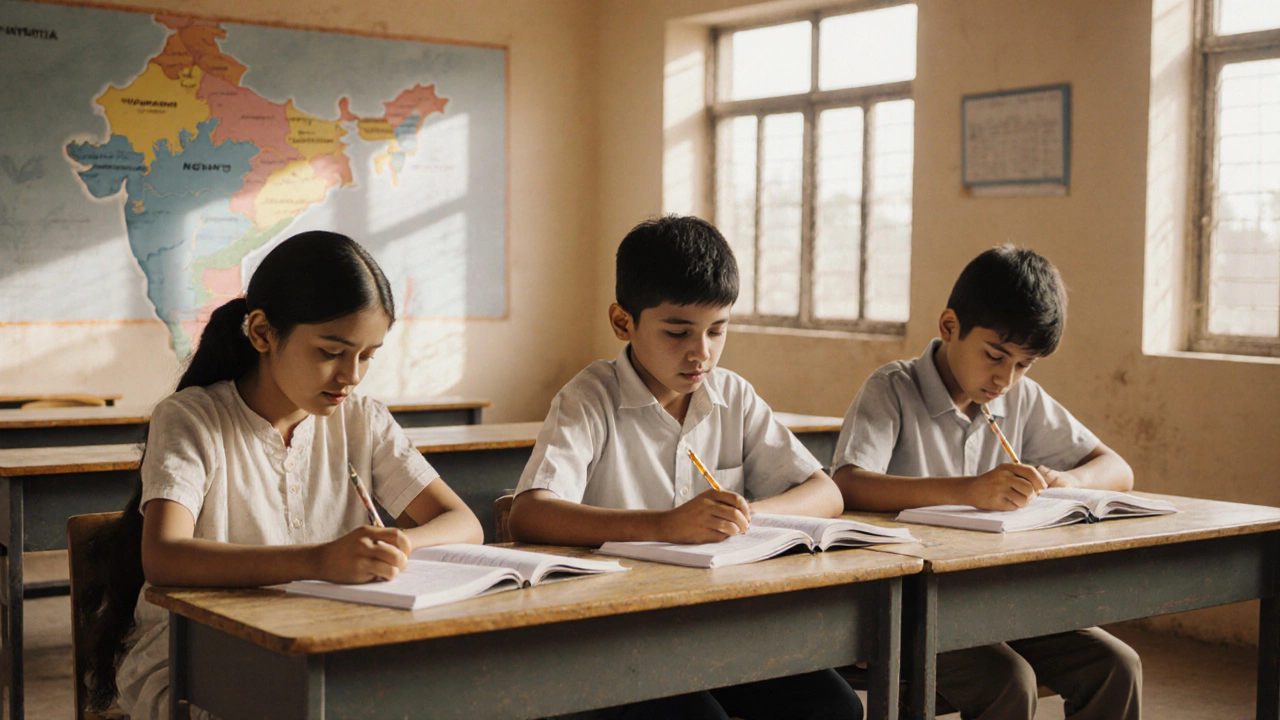
Why CBSE Is Preferred: Benefits of the CBSE Syllabus for Students
Explore why CBSE is the go‑to board in India, from its concept‑driven syllabus and NCERT textbooks to its alignment with NEET and JEE, plus real‑world advantages and FAQs.
read more...