CBSE Advantages: Why India’s National Curriculum Works for Students and Parents
When it comes to school education in India, the CBSE, the Central Board of Secondary Education, is the most widely followed school board in the country, managing over 20,000 schools across India and abroad. Also known as the Central Board of Secondary Education, it’s not just a syllabus—it’s a system designed for consistency, scalability, and exam readiness. Unlike state boards that vary wildly from region to region, CBSE keeps things uniform. That means a student in Delhi, Chennai, or Dubai follows the same textbooks, same exam pattern, and same grading scale. This isn’t just convenient—it’s a game-changer for families who move often or plan to take national-level exams like JEE or NEET.
The CBSE syllabus, a streamlined, NCERT-based curriculum focused on conceptual clarity over rote memorization, gives students a solid foundation for competitive exams. It doesn’t just teach science or math—it teaches how to think through problems, which is exactly what JEE and NEET demand. Teachers in CBSE schools are trained to align lessons with these exams, and the board itself updates its pattern regularly based on feedback from universities and industry. That’s why CBSE students often perform better in national entrance tests—they’re not just learning facts, they’re learning how to apply them under pressure.
Another major CBSE advantage is its nationwide recognition. Colleges, coaching centers, and even employers know what a CBSE certificate means. It’s not just about marks—it’s about predictability. If you’re applying to an engineering college in Bangalore, they’ve seen hundreds of CBSE applicants. They understand the grading, the exam structure, and the kind of preparation it takes. Compare that to state boards, where syllabus depth and marking schemes differ so much that some colleges struggle to compare applicants fairly. CBSE cuts through that noise.
It also works well for parents. The board provides clear guidelines, sample papers, and official resources—all free and easy to access. No guesswork. No confusion about what’s important. And with digital tools like Google Classroom increasingly adopted by CBSE schools, learning doesn’t stop at the school gate. You’ll find plenty of posts here that show how CBSE students use online apps, YouTube channels, and self-study plans to stay ahead—because the system doesn’t just expect you to keep up, it gives you the tools to lead.
Of course, CBSE isn’t perfect. Some say it’s too rigid, too exam-focused, or too heavy on science and math. But when you look at the data—how many top rankers in JEE, NEET, and civil services come from CBSE schools—it’s clear the system delivers results. It’s not about being the most creative or the most holistic. It’s about giving millions of students a fair, clear, and proven path to opportunity.
Below, you’ll find real stories and practical guides from students and parents who’ve navigated the CBSE system—whether they’re cracking IIT JEE in two years, comparing CBSE with IB or Cambridge, or figuring out how to handle the pressure of board exams without burning out. This isn’t theory. It’s what works, right now, for real people.
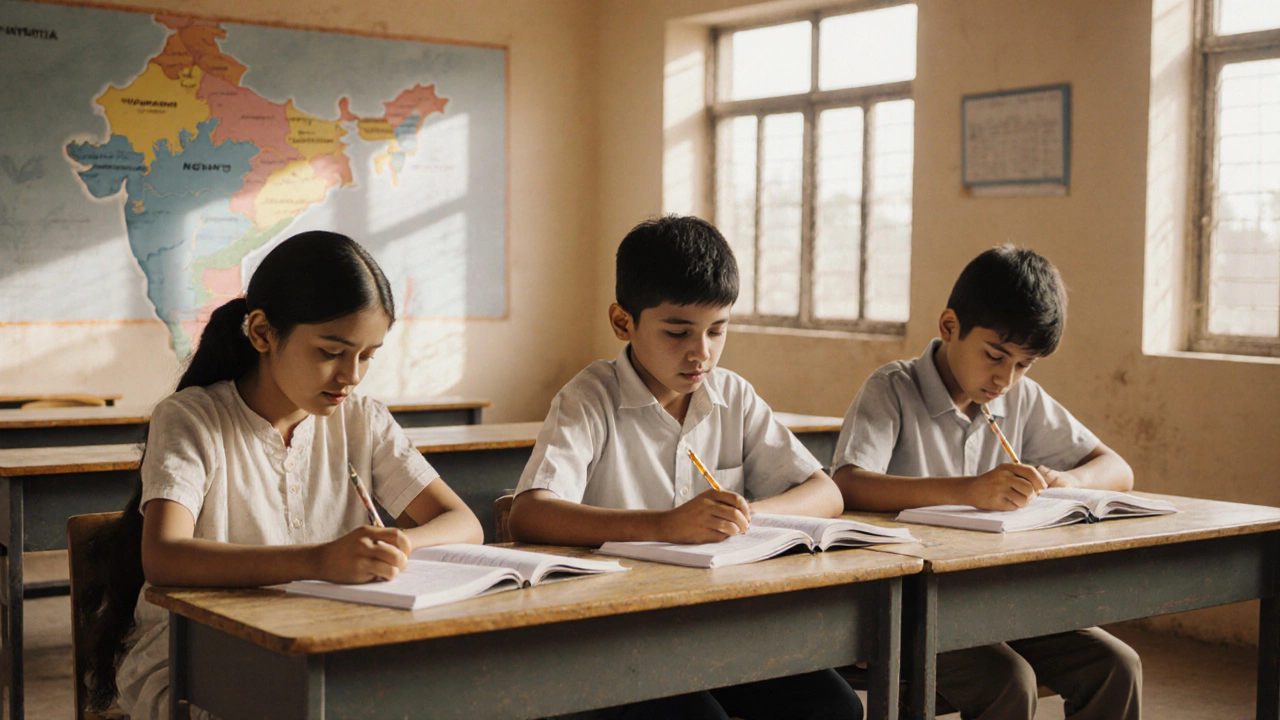
Why CBSE Is Preferred: Benefits of the CBSE Syllabus for Students
Explore why CBSE is the go‑to board in India, from its concept‑driven syllabus and NCERT textbooks to its alignment with NEET and JEE, plus real‑world advantages and FAQs.
read more...