Cambridge Curriculum: What It Is, Who Uses It, and How It Compares
When you hear Cambridge curriculum, a rigorous, exam-based international education program developed by Cambridge Assessment International Education. Also known as Cambridge International Examinations, it's used by over 10,000 schools worldwide to prepare students for university and global careers. Unlike local boards like CBSE or state systems, it doesn’t just test memorization—it asks students to think critically, solve problems, and write clearly under pressure. It’s not just for elite schools; it’s the backbone of education in countries like India, Pakistan, South Africa, and Singapore, where families want their kids to compete on a global stage.
The Cambridge curriculum, a structured pathway from primary to pre-university levels breaks down into three stages: Cambridge Primary (ages 5-11), Cambridge Lower Secondary (ages 11-14), and Cambridge Upper Secondary (IGCSE, ages 14-16), followed by Cambridge Advanced (A-Levels, ages 16-19). Each stage builds on the last with clear benchmarks. For example, IGCSE students take subject-specific exams in English, Math, Sciences, and Humanities—no vague internal assessments here. A-Levels let students focus on just 3-4 subjects they’re strong in, unlike the broad CBSE syllabus. That’s why universities in the UK, US, Canada, and Australia treat Cambridge qualifications as equally credible as local high school diplomas.
Many parents compare it to the IB (International Baccalaureate), a holistic, project-heavy curriculum focused on inquiry and global citizenship. The difference? IB asks students to write essays, do community service, and complete a 4,000-word research paper. Cambridge is more direct: learn the content, master the exam, move on. It’s less about personal growth and more about measurable academic skill. If your child thrives on structure, clear goals, and standardized testing, Cambridge fits better. If they need creativity and reflection woven into every subject, IB might be the pick.
It’s also not the same as the CBSE syllabus, India’s national curriculum designed for domestic university entrance. CBSE aligns tightly with JEE and NEET, pushing students toward engineering and medicine. Cambridge doesn’t push toward any single career—it gives you the tools to pick your own path. A student in Delhi taking Cambridge A-Levels in Physics, Chemistry, and Math can still apply to IITs, but they can also apply to Oxford, MIT, or NUS with the same credentials. That flexibility is why thousands of Indian families choose it, even if they’re not planning to leave the country.
What you’ll find in the posts below isn’t theory—it’s real advice. From apps that help students manage Cambridge assignments, to how to prep for IGCSE without coaching, to whether studying under this system really helps you get into top universities abroad. There’s no fluff. Just what works for students actually taking these exams, teachers running these programs, and parents trying to make sense of it all.
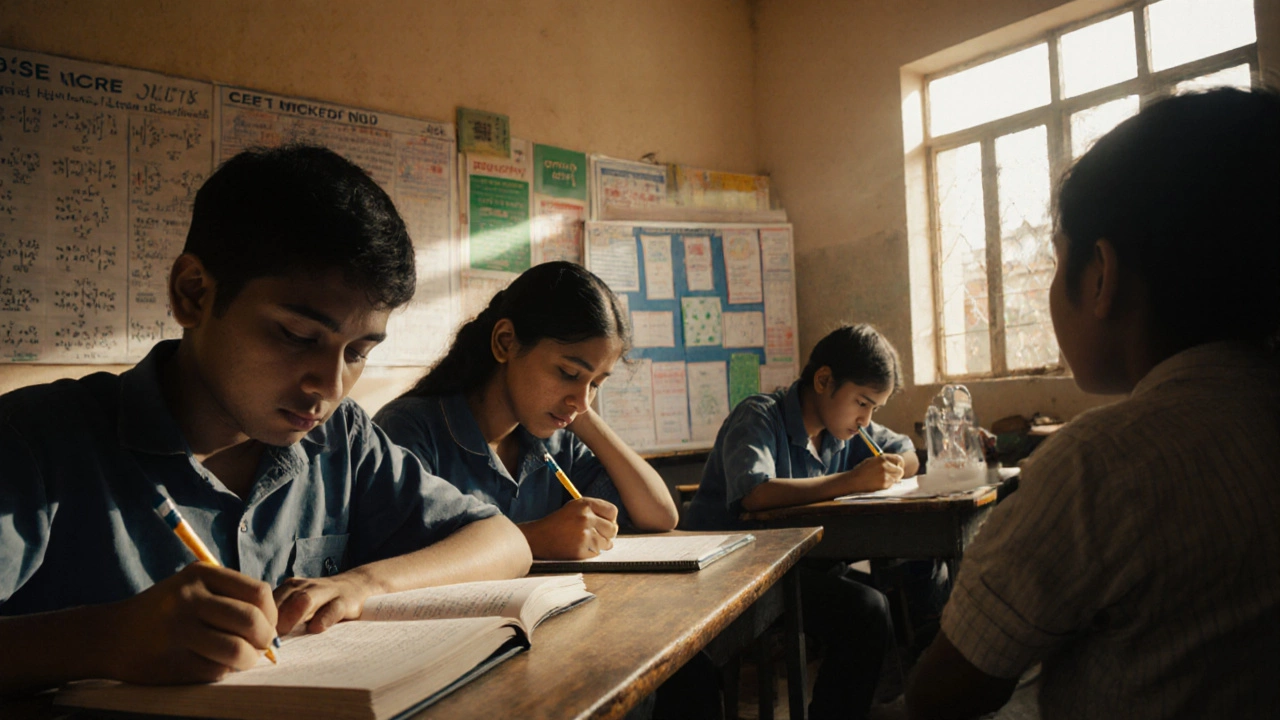
Which syllabus is best in the world? CBSE vs IB vs Cambridge vs State Boards
There's no single best syllabus in the world - CBSE, IB, or Cambridge each serve different goals. This guide compares them for Indian families deciding on school education paths.
read more...