
MBA ROI Calculator for Professionals Over 30
This calculator helps you estimate the potential return on investment for an MBA program based on your current career situation. Inputs: current salary, program type, and expected career trajectory.
ROI Analysis
Financial Break-even
Time to break even:
Annual salary increase:
Return Metrics
ROI:
Payback period:
Key Insights
Based on current data: - Part-time/online programs typically show ROI within 3-5 years - Full-time programs have higher upfront costs but greater salary potential - The 38% average salary increase (per 2024 GMAC survey) is used as baseline - Time to break-even is calculated using your projected salary increase
Please check your inputs:
Let’s cut through the noise: if you’re 30 or older and thinking about an MBA, you’re not alone. But you’re also not the typical student. Most MBA brochures show 22-year-olds in suits holding coffee, but the real story is different. People in their 30s, 40s, and even 50s are going back to school - not because they’re lost, but because they’re strategic. The question isn’t whether an MBA is worth it after 30. It’s whether MBA is worth it for you.
What you’re really buying
An MBA after 30 isn’t about learning how to balance a spreadsheet. You’ve probably been doing that for years. It’s not about networking with fresh grads either. You’re buying access to three things: a credential that opens doors you can’t knock on, a network of leaders who’ve been where you are, and time - real, structured time - to rethink your next move.
Take Sarah, 34, a marketing manager in London. She’d hit a ceiling. Her company didn’t promote from within unless you had an MBA. She didn’t want to wait five more years to get promoted. She enrolled in a part-time MBA at Oxford. Two years later, she moved into a regional strategy role with a 42% salary bump. She didn’t become a CEO. But she became someone who could influence decisions at the table.
The MBA isn’t a magic wand. It’s a lever. And if you’re 30+, you’re not looking for a new start - you’re looking for a better trajectory.
The real cost: money, time, and opportunity
Let’s talk numbers. A full-time MBA in the UK costs between £30,000 and £50,000. That’s not just tuition. It’s lost income. If you’re earning £60,000 a year and quit your job, you’re walking away from £120,000 in salary over two years. Add living costs, books, travel, and you’re looking at a total investment of £170,000 or more.
That’s terrifying - unless you’re doing it part-time or online.
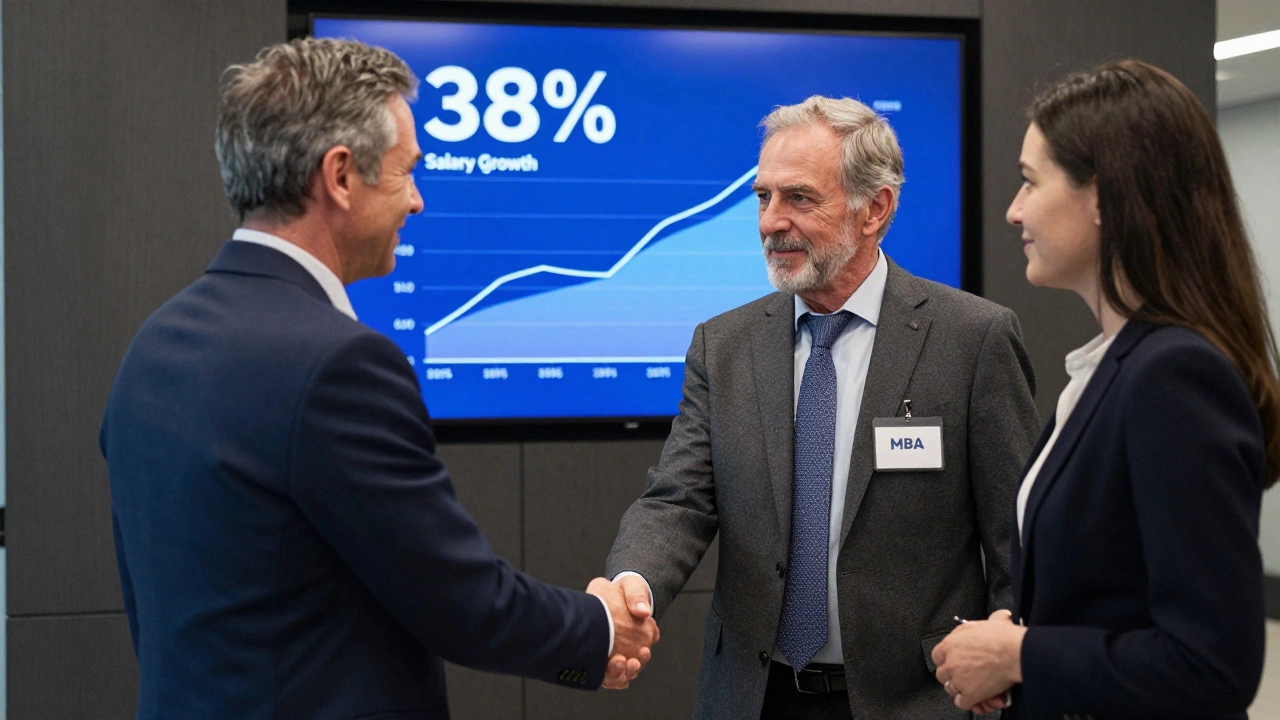
Most people over 30 choose part-time, executive, or online MBAs. These programs cost less - often £15,000 to £25,000 total - and let you keep your job. You’re not quitting. You’re upgrading. The return isn’t about immediate salary jumps. It’s about long-term mobility. A 2024 survey by the Graduate Management Admission Council found that professionals who earned an MBA after 30 saw an average 38% increase in earnings within three years. That’s not a guess. That’s data from 12,000 graduates across 30 countries.
Time is the hidden cost. You’ll work full-time, study nights and weekends, and miss family dinners. It’s exhausting. But here’s the twist: people over 30 are better at this. They’ve learned how to manage time. They know when to say no. They don’t waste hours in pointless group chats. They show up, get the work done, and move on.

Who benefits most - and who doesn’t
Not everyone gains the same value. The MBA after 30 works best for three types of people:
- Mid-level managers stuck in a silo - You’ve got experience, but no formal business training. You’re managing budgets, teams, or projects but can’t move into strategy because you lack the credential. An MBA gives you the language to speak at the executive table.
- Career changers - You’re in tech, healthcare, or the arts and want to move into finance, consulting, or leadership. An MBA gives you credibility. It says: “I’m not just trying a new field - I’ve trained for it.”
- Entrepreneurs with traction - You’ve built a small business but need to scale. An MBA gives you frameworks for growth, funding, and operations. It also connects you to investors and mentors.
Who doesn’t benefit? People who think an MBA will magically fix their career. If you’re unhappy with your job because you hate your boss or your industry, an MBA won’t fix that. It won’t make you likable. It won’t make you confident. It won’t replace experience. It just gives you more tools to use what you already have.
Part-time vs. full-time: which path makes sense
Full-time MBAs are designed for people who can disappear for two years. That’s rare after 30. Most have mortgages, kids, aging parents, or responsibilities that can’t be paused.
Part-time and executive MBAs are built for people like you. They run evenings or weekends. They’re often taught by the same professors as full-time programs. The curriculum is nearly identical. The difference? You’re still working. You’re applying what you learn on Monday to your job on Tuesday.
Online MBAs? They’ve gotten better. Top schools like London Business School, Cranfield, and Warwick now offer online programs that are just as rigorous. You still get access to alumni networks, case studies, and live discussions. You just don’t get the campus life. And honestly? After 30, most people don’t miss it.
Here’s a simple rule: if you can afford to quit your job and take a pay cut for two years, go full-time. If you want to keep earning, grow your network, and avoid debt - go part-time or online.
The hidden advantage: your experience matters
Here’s something schools don’t advertise: your age is your superpower.
Younger students learn theory. You bring real-world examples. In a class on supply chain management, you’ve dealt with supplier delays. You’ve handled angry clients. You’ve managed teams under pressure. That’s gold. Professors love it. Classmates learn from you. You’re not a student. You’re a resource.
Companies recruiting for MBA grads after 30 know this. They’re not looking for the brightest 24-year-old. They’re looking for someone who can lead teams, manage budgets, and make decisions under pressure. You’ve already done that. The MBA just gives you the title to back it up.
One hiring manager at a London-based consulting firm told me: “We’ve hired 12 people over 35 with MBAs in the last three years. Every single one was promoted within 18 months. They didn’t need to be taught the basics. They needed to be validated.”
Is it worth it? The verdict
Let’s be clear: an MBA after 30 isn’t for everyone. But for the right person, it’s one of the smartest career moves you can make.
It’s worth it if:
- You’re ready to invest time, money, and energy - not just for a degree, but for a new chapter.
- You have a clear goal: promotion, career switch, or scaling a business.
- You’re willing to do the work - even when you’re tired.
- You’re not looking for a quick fix, but a long-term upgrade.
It’s not worth it if:
- You think it’ll make you “more interesting” or “look better on LinkedIn.”
- You’re running away from your current job, not toward something better.
- You’re expecting a guaranteed promotion or salary bump.
The data doesn’t lie. People who earn an MBA after 30 earn more, move faster, and build stronger networks. But only if they show up with purpose. Not because it’s expected. Not because everyone else is doing it. But because they’ve calculated the cost - and decided it’s worth the climb.
Is there an age limit for MBA programs?
No, there is no official age limit. Most top schools accept applicants in their 40s and even 50s. The average age in executive MBA programs is around 37. Schools actively seek older candidates because they bring real-world experience. What matters isn’t your age - it’s your clarity of purpose, your career history, and your ability to contribute to the classroom.
Can I afford an MBA after 30 without quitting my job?
Yes - and most people over 30 do. Part-time, evening, weekend, and online MBA programs are designed for working professionals. Tuition is lower, and you keep your salary. In the UK, part-time MBAs typically cost between £15,000 and £25,000 total. Many employers offer tuition reimbursement if you’re studying in a field relevant to your role. Check your company’s policy before you apply.
Will an MBA help me switch careers after 30?
It can - if you’re strategic. An MBA gives you credibility when changing fields. For example, an engineer moving into finance or a teacher moving into corporate training. But you’ll need to show intent: internships, networking, and targeted electives. Schools with strong career services help you build a bridge between your past and your future. Don’t expect to switch industries overnight. But with focus, it’s very possible.
How long does it take to see a return on an MBA after 30?
Most graduates see a salary increase within 12 to 24 months. The GMAC 2024 survey found that professionals over 30 saw an average 38% pay boost within three years of graduating. The biggest gains come from promotions, lateral moves into higher-paying industries, or launching a business. The ROI isn’t immediate - but it’s real and measurable.
Are online MBAs respected by employers?
Yes - if they’re from accredited schools. Online MBAs from top UK institutions like Warwick, Cranfield, and London Business School are treated the same as on-campus degrees by employers. What matters is the school’s reputation, not the delivery method. Employers care about your skills, your network, and your results. They rarely ask whether you studied online or in person.