
Government Job Keyword Matcher
Government applications use automated systems that reject resumes missing exact keywords from job descriptions. Paste your resume and job description below to see exactly which keywords match.
Match Results
Matched Keywords
Missing Keywords
Getting hired by the government sounds like a dream-steady pay, good benefits, job security. But if you’ve ever tried to apply, you know it’s not as simple as filling out a form and waiting for a call. The process is long, confusing, and often feels designed to keep people out. So yes, it’s hard. But not because you’re not qualified. It’s hard because most people don’t know how the system actually works.
It’s Not About Being Qualified-It’s About Playing the Game
Many people assume that if they have a degree, some experience, and a solid work ethic, they’ll get hired. That’s true in the private sector. In government? Not even close. You can be the most qualified person in the room and still get rejected because you didn’t use the right keywords in your application.
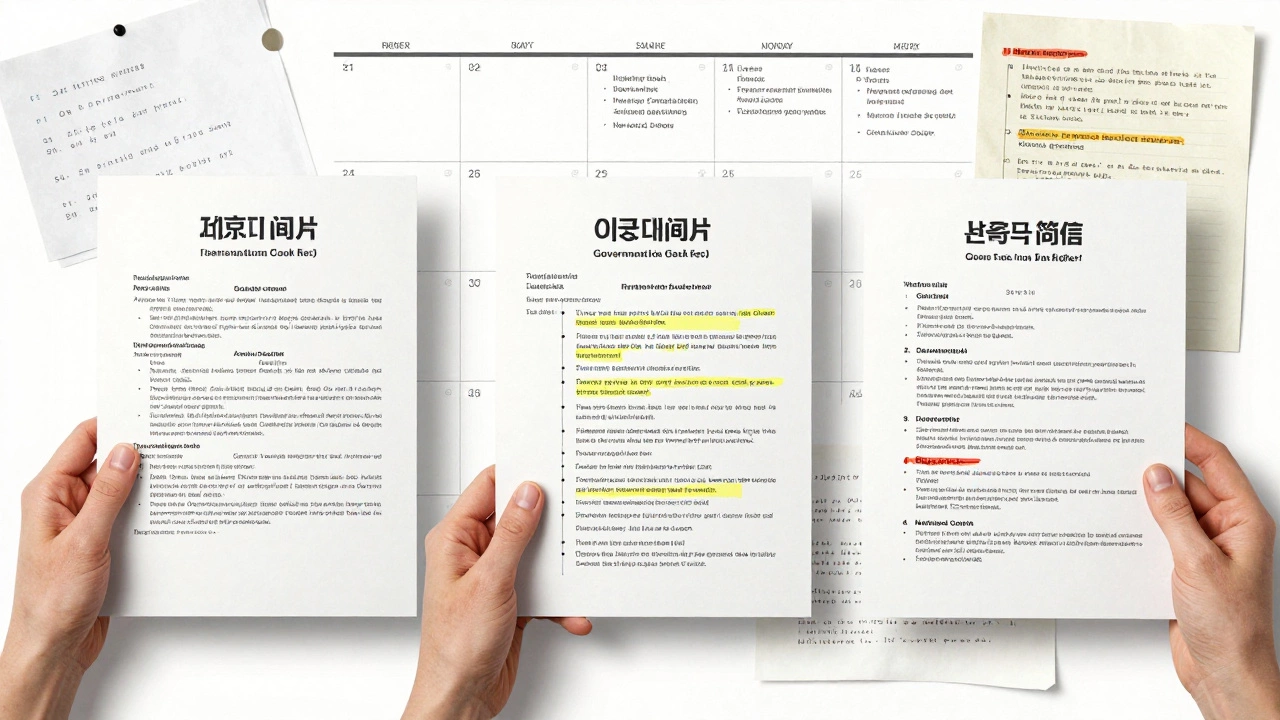
Government job postings aren’t written for humans. They’re written for automated screening systems. If your resume doesn’t include the exact phrases from the job description-like "budget oversight," "regulatory compliance," or "interagency coordination"-your application gets tossed before a human even sees it. One applicant in the UK’s Civil Service reported spending 11 hours rewriting a single application just to match the wording of the job posting. That’s not an outlier. That’s standard.
It’s not about being the best. It’s about being the most matchable.
The Application Process Is a Maze
Applying for a government job isn’t like applying to a company. There’s no LinkedIn button. No quick-form submit. You’ll need to fill out a detailed form-sometimes 10+ pages-that asks for your entire work history, education, references, and even your hobbies. Some forms require you to write essays explaining how you meet each competency.
For example, a job in the Department for Work and Pensions might ask: "Describe a time you managed a complex case under pressure." You can’t just say "I handled a tough client." You need to use the STAR method: Situation, Task, Action, Result. And you need to tie it back to government values like fairness, integrity, and public service.
And don’t forget the references. Government hiring often requires two professional references who’ve worked with you in the last five years. If you’ve been self-employed, freelanced, or worked in the private sector, you might not have the right kind of references. That’s a common reason people get stuck.
Competitive Exams Are the Real Gatekeepers
In the UK, many government roles-especially at the graduate or policy level-require you to pass a civil service exam. These aren’t easy multiple-choice tests. They’re situational judgment tests, numerical reasoning tests, and written exercises that measure how you think, not what you know.
For example, the Civil Service Fast Stream exam includes a 45-minute written exercise where you’re given a policy brief and asked to recommend a course of action. You have to show you understand how government works: balancing budgets, managing risk, consulting stakeholders, and staying within legal limits. There’s no right answer. But there are plenty of wrong ways to write it.
People who’ve passed these exams say the key isn’t studying harder-it’s studying smarter. You need to read past exam papers. You need to practice under timed conditions. And you need to understand the scoring rubric. One candidate told me they failed the exam twice before passing because they didn’t realize the assessors were looking for structured thinking, not perfect grammar.

It Takes Months-Sometimes Years
Don’t expect a response in a week. Don’t even expect one in a month. The average government hiring process takes 3 to 6 months. For senior roles, it can take over a year. That’s not a typo. You apply in January. You get an email in March saying you’ve been shortlisted. You do an assessment center in May. Then you wait. And wait. And wait.
Why so slow? Because every step has to be legally defensible. Every interview question is reviewed. Every scoring sheet is audited. There’s no room for error. And that means bureaucracy moves at the speed of molasses.
That’s why people who succeed don’t apply once. They apply repeatedly. One man in Manchester applied to 17 different government roles over three years before landing a job in the NHS. He kept track of every application, every feedback note, and every change in his approach. He didn’t get lucky. He got systematic.
Success Stories Aren’t Luck-They’re Strategy
People who get hired by the government usually do three things:
- They study the job description like a legal document-not a job ad.
- They tailor every single application, even if it means rewriting the same essay 10 times.
- They apply to multiple roles across different departments, not just the "perfect" one.
One woman in Leeds applied to roles in the Home Office, the Department for Education, and the Environment Agency-all at the same time. She didn’t get into any of the first three. But the fourth application? She got an offer. Why? Because she’d learned from the feedback on the others. She’d improved her writing. She’d sharpened her examples. She’d stopped trying to sound impressive and started trying to sound useful.
Government hiring doesn’t reward ambition. It rewards precision.
What Happens After You Get Hired?
Even if you make it through the process, the job isn’t always what you expect. Salaries are often lower than private sector equivalents. Promotion can be slow. You might work in a small office with outdated IT systems. The work can feel bureaucratic. But here’s the thing: the stability is real. You won’t get laid off because of a quarterly earnings report. You’ll get paid on time. You’ll get 25+ days of holiday. You’ll get a pension that actually works.
And if you’re good, you’ll find meaning. People who work in tax collection, housing support, or child protection say they’ve never felt more useful. They’re not changing the world with a startup. They’re fixing it, one case at a time.
So Is It Hard? Yes. But Not Impossible
Getting hired by the government is hard-but it’s not a lottery. It’s a system. And systems can be learned. If you treat it like a game with rules, not a mystery, your odds go up dramatically.
You don’t need a degree from Oxford. You don’t need connections. You don’t need to be perfect. You just need to be patient, persistent, and precise.
Start by reading the last five job postings for the role you want. Copy the language. Practice the tests. Apply to three roles this month. Then three more next month. Keep track of what works. And don’t give up after one rejection. The system is slow. But it rewards those who keep showing up.
Do I need a degree to get a government job?
No, not always. Many entry-level government roles-like administrative assistants, benefits advisors, or field officers-don’t require a degree. What matters is your ability to pass the application tests and show you can handle the responsibilities. Some roles even accept relevant work experience in place of formal education. But for higher-level roles like policy analysts or grad schemes, a degree is usually required.
How long does it take to hear back after applying?
It varies, but most applicants wait between 3 and 6 months. Some roles take longer, especially if they’re high-profile or involve security clearance. If you haven’t heard anything after 8 weeks, it’s okay to send a polite follow-up email. But don’t expect a quick reply. The system moves slowly by design.
Can I apply for government jobs if I’m not a UK citizen?
It depends on the role. Most positions require you to be a UK citizen or have the right to work in the UK. Some roles, especially in the civil service, require British nationality for security reasons. However, certain international or technical roles-like data analysts or engineers-may accept EU or other nationals with the correct visa. Always check the eligibility section in the job posting.
Are government jobs lower paying than private sector jobs?
Generally, yes-at least at the entry level. A junior policy officer might earn £28,000, while a similar role in a tech company could pay £40,000. But government jobs come with better pensions, more holiday (25-30 days), flexible hours, and job security. Over a 30-year career, the total package often beats private sector pay, especially when you factor in inflation protection and healthcare benefits.
What’s the best way to prepare for civil service exams?
Practice with past papers. The UK Civil Service publishes sample tests on their website. Focus on situational judgment, numerical reasoning, and written exercises. Time yourself. Learn the scoring criteria. Don’t just study content-study how answers are marked. Many people fail because they write too much, not because they don’t know enough. Clarity and structure beat complexity every time.
Should I apply to multiple government departments at once?
Absolutely. Don’t put all your eggs in one basket. Apply to roles in the NHS, the Department for Work and Pensions, the Home Office, the Environment Agency, and local councils. Each has its own hiring timeline and culture. You might not get into your dream role, but you could land a better one you didn’t even know existed. Plus, the experience you gain from each application makes the next one easier.
What to Do Next
Start today. Go to the Civil Service Jobs website. Look up three job postings that interest you. Copy the exact phrases they use. Rewrite your CV to match them. Do one practice test. Spend 30 minutes on it. Then do it again next week. Don’t wait for the perfect moment. The system won’t wait for you.
Government hiring isn’t about being the smartest. It’s about being the most prepared. And if you’re willing to put in the work, you’ll get there.