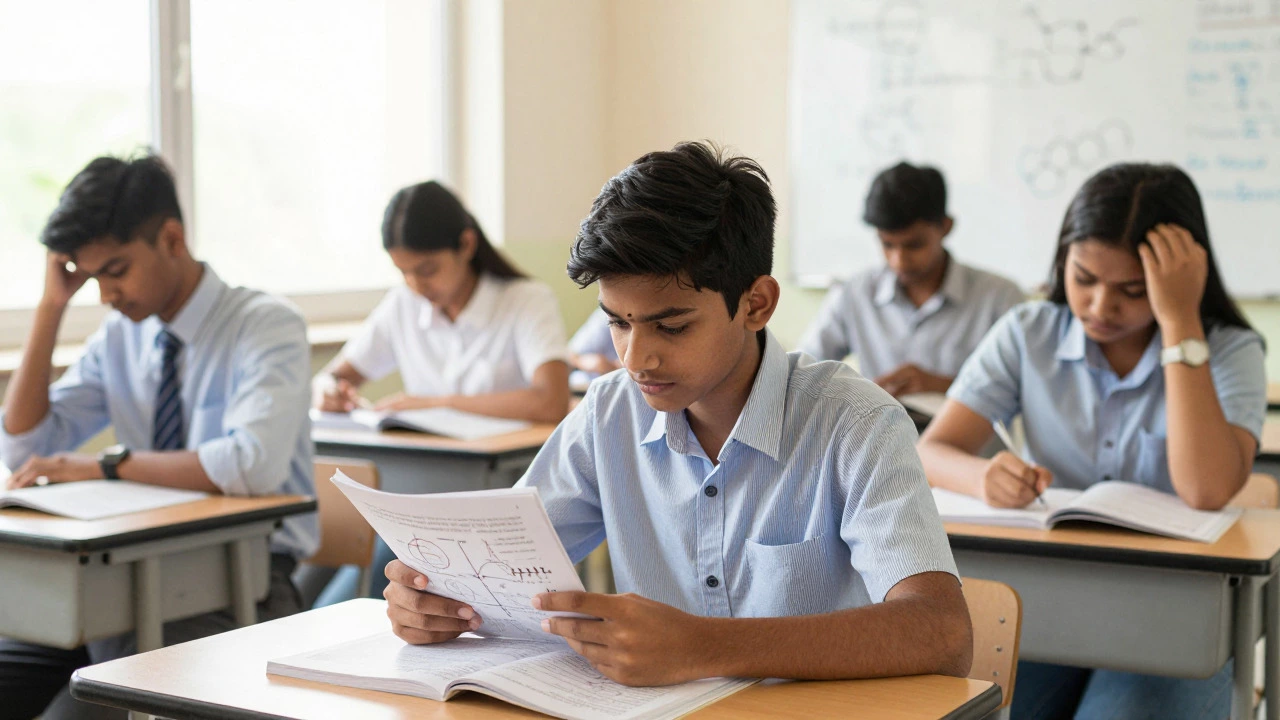
Find Your Ideal Education Board
Not sure which board fits your goals? Answer these three questions to get a personalized recommendation based on career aspirations, learning style, and future plans.
There is a persistent myth floating through Indian parent groups and student forums: that one specific education board is significantly easier than the rest. You hear it everywhere. "Just switch to CBSE, it's the easiest." But does that label actually hold water in 2026? The short answer is no. There is no single "easy" board in India. Instead, there are boards designed for different goals.
If you define "easy" as having a straightforward path to engineering or medical entrance exams like JEE Main and NEET, then Central Board of Secondary Education (CBSE) often feels like the smoothest ride. If you define "easy" as having less pressure, more creative freedom, and a focus on holistic development rather than rote memorization, then boards like ICSE or certain state boards might feel much lighter. The truth depends entirely on what your child-or you-are trying to achieve after Class 12.
The Case for CBSE: Alignment Over Simplicity
Why do so many people claim CBSE syllabus is the easiest? It comes down to alignment. The curriculum is tightly synced with the national competitive exams. When you study Physics for your Class 12 board exam under CBSE, you are essentially studying the same concepts required for JEE Main. This overlap reduces the cognitive load for students aiming for top technical institutes like IITs or NITs.
However, "aligned" does not mean "simple." The recent shift toward competency-based questions in CBSE exams has made papers trickier. Gone are the days when memorizing textbook lines guaranteed high marks. Today, application-based questions test how well you understand a concept, not just how well you can repeat it. For a student who struggles with abstract problem-solving, this new format can feel incredibly difficult.
- Syllabus Structure: Concise and focused on core STEM subjects.
- Exam Pattern: Objective-type questions have increased weightage, rewarding quick recall.
- Geographic Reach: Uniform across India, making it ideal for families moving between states.
ICSE: The Depth Challenge
On the other side of the spectrum sits Indian Certificate of Secondary Education (ICSE), administered by the Council for the Indian School Certificate Examinations. Historically, ICSE has been viewed as more rigorous. The syllabus is vast, particularly in English literature and languages. Students often complain about the sheer volume of reading required.
But is it harder? In terms of breadth, yes. An ICSE student reads more novels, writes more essays, and covers broader topics in history and geography compared to their CBSE counterpart. However, this depth builds strong communication skills and critical thinking. If your goal is to pursue humanities, law, or journalism, ICSE provides a foundation that feels less restrictive and more enriching. The "difficulty" here is mental stamina, not complex mathematical logic.
| Feature | CBSE | ICSE | State Boards |
|---|---|---|---|
| Syllabus Focus | STEM & Entrance Exams | Languages & Humanities | Varies by State |
| Exam Difficulty | Moderate (Application-based) | High (Volume-based) | Low to Moderate |
| English Proficiency | Functional | Advanced | Variable |
| Best For | Engineering/Medical Aspirants | Arts/Law/Global Universities | Local College Admissions |
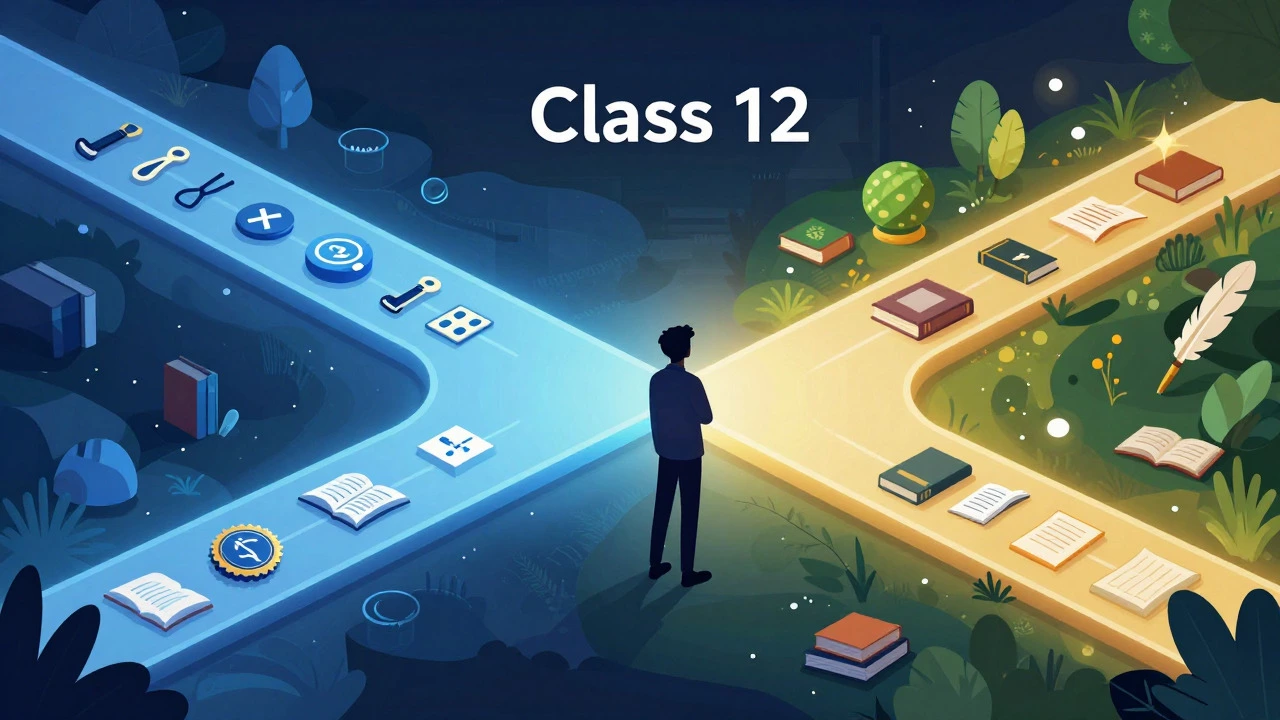
State Boards: The Local Advantage
India has numerous state boards, such as Maharashtra State Board, Tamil Nadu State Board, and West Bengal Board. These are often labeled as "easier" because the syllabus is generally shorter and the grading curve tends to be more forgiving. The language of instruction is often local, which removes the barrier of learning complex concepts in a second language for native speakers.
For a student planning to stay within their home state for higher education, a state board can be the most efficient path. The competition is localized, and the pressure to crack national-level exams immediately is lower. However, if a student from a state board wishes to move to Delhi or Mumbai for college, they may find themselves struggling with the English proficiency and conceptual depth expected by peers from CBSE or ICSE schools.
International Curricula: IB and IGCSE
Let’s not ignore International Baccalaureate (IB) and Cambridge International (IGCSE). Are they easy? Absolutely not. They are often considered the most demanding because they require internal assessments, extended essays, and community service hours alongside academic rigor. However, they are "easy" in the sense that they don't rely on a single high-stakes final exam. Your grade is built over two years. For students who perform better in continuous evaluation rather than cramming for a three-hour paper, IB/IGCSE can feel less stressful.

Defining "Easy" for Your Child
To determine the right board, you need to strip away the stigma and look at your child's learning style. Ask yourself these questions:
- What is the career goal? If it is medicine or engineering, CBSE aligns best. If it is arts or commerce, ICSE or state boards offer more flexibility.
- How does the student handle stress? Some thrive under the structured pressure of CBSE. Others crumble and perform better in the continuous assessment model of IB.
- Where will they study next? Top private colleges in India value ICSE/CBSE equally. Global universities prefer IB/IGCSE due to recognized international standards.
The notion of an "easiest" board is a trap. Every board has its own set of hurdles. CBSE tests your ability to apply knowledge quickly. ICSE tests your endurance and linguistic precision. State boards test your local adaptability. IB tests your time management and independent research skills.
Practical Tips for Navigating Board Choices
If you are currently in Class 8 or 9, switching boards is still feasible but requires careful planning. Here is how to approach it without burning out:
- Audit the Syllabus Gaps: Compare the current year's syllabus of both boards. Identify missing topics in Science and Math.
- Focus on English: Regardless of the board, English proficiency is key for higher education. If switching to CBSE, ensure your child is comfortable with technical English.
- Consult Teachers: Talk to teachers from both systems. They can give you a realistic view of the workload difference.
Ultimately, the "easiest" board is the one that matches your child's strengths. A student who loves reading will find ICSE engaging, not hard. A student who loves solving puzzles will find CBSE logical, not stressful. Choose the path that fits, not the one that sounds popular.
Is CBSE really easier than ICSE?
Not necessarily. CBSE is more aligned with competitive exams like JEE and NEET, making it "easier" for science students targeting those paths. ICSE has a larger syllabus, especially in languages, which some find more demanding but beneficial for overall communication skills.
Which board is best for government job preparation?
Any board works for government jobs since eligibility is based on graduation, not schooling. However, CBSE and ICSE provide stronger foundational knowledge in reasoning and mathematics, which helps in exams like SSC and UPSC.
Can I switch from a state board to CBSE in Class 11?
Yes, you can switch, but it requires bridging gaps in Physics, Chemistry, and Mathematics. The conceptual depth in CBSE Class 11 is significant, so extra coaching or self-study is often needed to keep up.
Are state boards recognized by foreign universities?
Yes, major state boards are recognized globally. However, students may need to take additional entrance exams like SAT or IELTS to prove their readiness for international curricula.
Does the board choice affect my chances in IIT JEE?
Indirectly, yes. CBSE students often find the JEE syllabus overlaps more with their school curriculum, reducing preparation time. Students from other boards may need to cover additional topics separately.