
JEE 2-Year Success Roadmap Tracker
Use this interactive checklist to monitor your progress across the three strategic phases outlined in the article. Click on tasks to mark them as complete.
Months 1-8
Months 9-16
Months 17-24
Subject Strategy Allocation
Remember to balance your daily study hours according to these recommended percentages:
You've heard the horror stories. Students burning out after six months of grueling study. Others who started in Class 12 and barely scraped through. So, when you ask if two years is enough for the Joint Entrance Examination (JEE), the answer isn't a simple yes or no. It's a resounding "yes," but only if you treat those 24 months like a sprinter treats a race, not a marathon runner treating a leisurely jog.
The reality is that most successful candidates don't start from scratch in Class 11. They have a foundation. But even if you're starting with zero background, two years provides the exact window needed to build concepts, practice rigorously, and master time management. The catch? You cannot afford wasted weekends or half-hearted attempts at difficult topics. This article breaks down exactly how to make those two years count, moving beyond generic advice into actionable steps that align with how top rankers actually operate.
The Myth of the Three-Year Grind
There's a pervasive belief in coaching circles that you need three years to crack JEE. Why? Because the syllabus is massive. Physics, Chemistry, and Mathematics cover roughly 60-70% of what you'll see in Class 11 and 12 curricula, plus significant depth beyond board exams. However, data from recent years shows that students who begin serious preparation in Class 11 often outperform those who start in Class 9 or 10, provided their Class 11 effort is intense and focused.
Why does this happen? Burnout. Starting too early without a clear structure leads to fatigue. By the time Class 12 arrives, many students are mentally exhausted. Two years allows you to maintain high energy levels because you know the finish line is visible. You're not looking at an endless tunnel; you're looking at a defined project. This psychological advantage is crucial. When you know you have 24 months, you can allocate resources efficiently. You don't spend six months on Rotational Motion in Physics just because it's hard; you spend three weeks mastering it, then move on.
Consider the entity of JEE Main, which serves as the gateway to National Institutes of Technology (NITs) and Indian Institutes of Information Technology (IIITs). Its pattern has shifted towards NCERT-based questions in Chemistry and more application-based problems in Math and Physics. This shift favors students who understand concepts deeply rather than those who rote-memorize formulas over three years. A two-year intensive plan forces deep understanding because you don't have time to relearn things later.
Structuring Your Two-Year Timeline
To succeed, you must divide your time strategically. Think of it in phases. Trying to do everything at once is a recipe for disaster. Here is a proven framework used by successful aspirants:
- Phase 1: Foundation Building (Months 1-8): Focus on completing the Class 11 syllabus thoroughly. Don't rush. If you don't understand Vectors now, Calculus in Class 12 will be a nightmare. Use standard textbooks like HC Verma for Physics and OP Tandon for Chemistry alongside your coaching material. Aim for conceptual clarity, not just solving problems.
- Phase 2: Integration and Expansion (Months 9-16): Start Class 12 topics while revising Class 11. This is the hardest phase. You'll feel pulled in two directions. Allocate 60% of your time to new topics and 40% to revision. Join test series now. Not to score high, but to identify gaps. If you fail a test on Thermodynamics, go back and fix it immediately.
- Phase 3: Mastery and Mock Tests (Months 17-24): Finish the syllabus by month 18. The remaining six months are for full-length mock tests, analysis, and speed building. This phase determines your rank. Many students fail here because they keep learning new things instead of perfecting what they know.
This structure works because it respects the cognitive load of learning complex scientific concepts. You can't learn Organic Reaction Mechanisms effectively if you're still struggling with Stoichiometry. Sequencing matters.

Subject-Specific Strategies for Efficiency
Not all subjects require the same approach. Treating them equally wastes time. Let's look at how to handle each pillar of the exam.
| Subject | Primary Challenge | Recommended Resource Type | Time Allocation % |
|---|---|---|---|
| Physics | Conceptual visualization and mathematical application | Problem-solving heavy (e.g., Irodov selected problems) | 35% |
| Chemistry | Vast memorization mixed with logical reasoning | NCERT text + Reference books for mechanisms | 30% |
| Mathematics | Speed and accuracy in calculation | Diverse problem sets (Cengage/Arihant) | 35% |
Notice the equal weightage between Physics and Math. Many students neglect Math until the end, thinking it's just formula application. Wrong. JEE Math requires creative problem-solving. If you wait until the last six months, you won't develop the intuition needed for tricky coordinate geometry or calculus problems. Start daily math practice from day one, even if it's just 30 minutes.
For Chemistry, specifically Organic and Inorganic, consistency beats intensity. You can't cram the Periodic Table trends in one night. Create flashcards. Review them during breaks. For Physical Chemistry, treat it like Physics-solve numericals. Don't just read the theory. The National Testing Agency (NTA) loves twisting standard questions to check if you truly understand the underlying principles.
The Role of Coaching vs. Self-Study
Should you join a coaching institute? This is the million-dollar question. If you have strong self-discipline, self-study with online resources can work. But let's be honest: most teenagers struggle with discipline. Coaching provides structure, peer competition, and regular testing. These external pressures help maintain momentum.
However, don't let coaching dictate your entire life. The biggest mistake students make is attending classes passively. You must actively engage. Take notes, ask questions, and solve the assigned homework before the next class. If you rely solely on classroom lectures, you'll fall behind. The ideal scenario is a hybrid model: attend coaching for doubt resolution and structured guidance, but dedicate 4-6 hours daily to independent study and problem-solving.
Remember, IIT JEE is not about how many hours you sit in a chair. It's about how many quality problems you solve. Ten hours of distracted studying is worth less than four hours of deep, focused work. Track your output, not just your input.
Common Pitfalls That Waste Time
Even with a good plan, certain habits can derail your progress. Recognizing these early saves months of regret.
- The Perfectionism Trap: Spending three days on one chapter because you want to understand every single derivation. Sometimes, you need to move forward and come back later. Momentum is key.
- Neglecting Weak Areas: It feels good to solve problems you already know. It feels terrible to tackle Algebra if you hate it. But your rank depends on your weakest link. Face it head-on.
- Ignoring Health: Sleep deprivation destroys memory retention. If you sleep 4 hours a day, you're not studying harder; you're studying dumber. Aim for 7 hours minimum. Exercise also boosts brain function. A 20-minute run can reset your focus better than another cup of coffee.
- Comparing Yourself to Others: Someone else might be finishing chapters faster. Who cares? Your journey is unique. Focus on your own improvement curve. Did you understand yesterday's topic today? That's progress.
Final Months: The Simulation Phase
In the last three months, stop learning new concepts unless absolutely necessary. Shift gears to simulation. Take full-length mock tests under exam conditions. Same time slot, same duration, no distractions. After each test, spend twice as much time analyzing mistakes as you did taking the test.
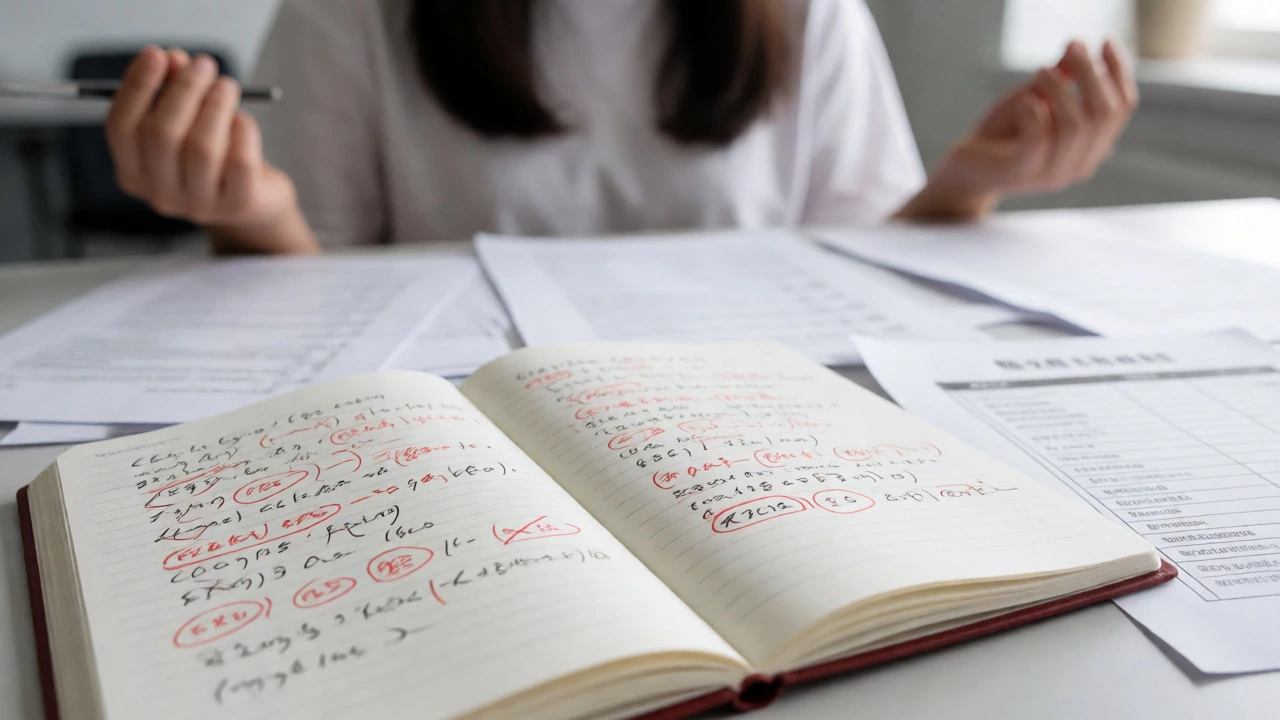
Create an error notebook. Write down why you got a question wrong. Was it a concept gap? A calculation error? Or a misread question? Review this notebook weekly. This targeted revision is far more effective than rereading textbooks. By December, you should be comfortable with the exam format and pacing. By January, you're refining strategies, not learning new physics.
Two years is enough. It's tight, it's demanding, and it requires sacrifice. But it's entirely possible. Thousands of students have done it before you. They didn't have superpowers; they had a plan and stuck to it. Now, the question isn't whether you have enough time. It's whether you're willing to use it wisely.
Can I crack JEE if I start preparing in Class 12?
Yes, but it is significantly harder. You would need to compress the Class 11 syllabus into a few months while managing Class 12 studies. It requires exceptional dedication and prior basics. Most successful candidates start in Class 11.
How many hours per day should I study for JEE?
Quality matters more than quantity. Generally, 6-8 hours of focused study outside school/coaching is sufficient for Class 11, increasing to 8-10 hours in Class 12. Consistency is key; studying 4 hours daily for a year is better than 12 hours once a week.
Is NCERT enough for JEE Chemistry?
For Inorganic and Organic Chemistry, NCERT is mandatory and often sufficient for JEE Main. For Physical Chemistry, you need additional problem-solving practice. For JEE Advanced, supplementary reference books are recommended to handle higher-level questions.
What is the best way to manage time during the exam?
Start with the section you are most confident in to build momentum. Skip lengthy calculations initially and return to them later. Always reserve the last 15 minutes for reviewing marked questions and ensuring all answers are bubbled correctly.
Do I need to take multiple mock tests?
Yes. Taking 10-15 full-length mock tests in the final six months is crucial. They help you adjust to the pressure, improve speed, and identify recurring mistakes. Analysis of these tests is more important than the number of tests taken.