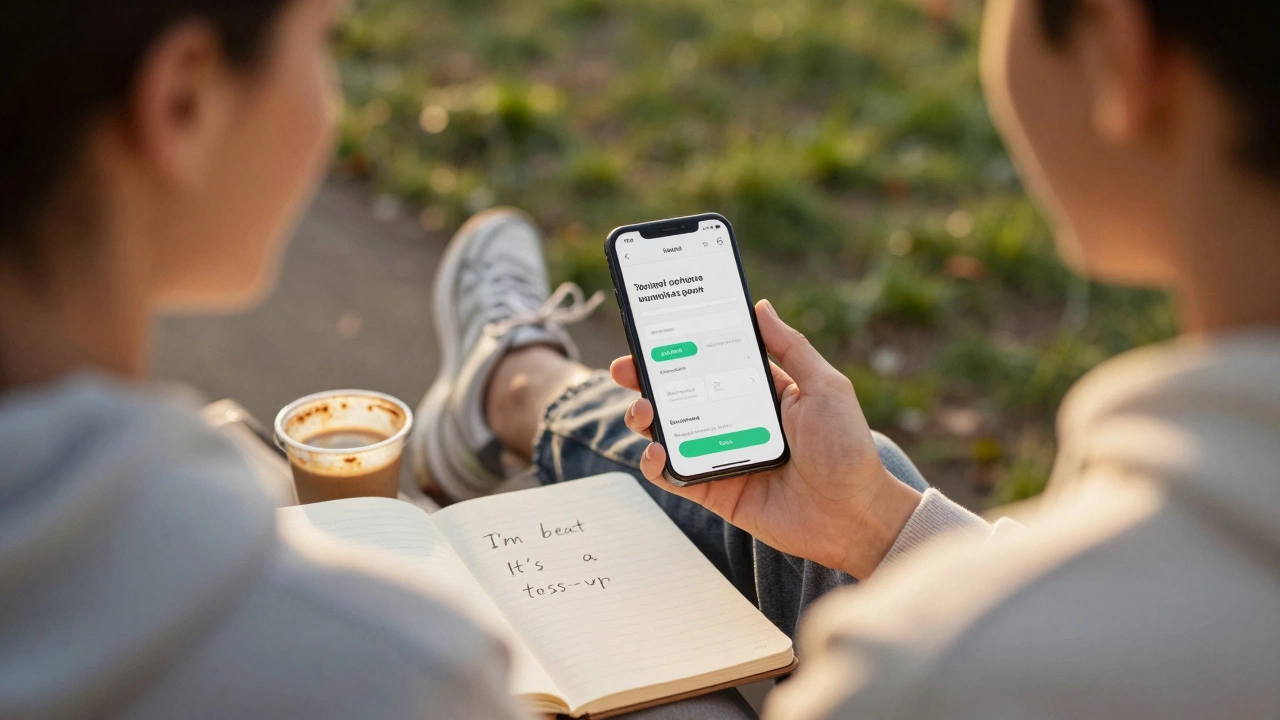
Speaking English doesn’t mean memorizing grammar rules or sounding like a textbook. It means being able to say what you mean, when you mean it, without freezing up. If you’ve ever stared at someone while trying to explain something simple - and ended up saying "uh..." five times - you know what I’m talking about. The good news? You don’t need to live in London or take expensive classes to get better. You just need to change how you practice.
Stop practicing alone
Most people think speaking English means watching videos, repeating lines, or talking to themselves in the mirror. That’s not practice. That’s rehearsal. Real speaking happens when you’re forced to respond - not just repeat. You need a partner who can interrupt you, ask follow-up questions, or correct you mid-sentence. Find someone who speaks English regularly. It doesn’t matter if they’re not a teacher. A barista who chats with customers, a coworker who’s also learning, or even a stranger on a language exchange app - they all count. The goal isn’t perfection. It’s flow.Try this: every day for 10 minutes, talk about your day out loud to someone else. Not a script. Not a rehearsed story. Just real talk. "I was late because my bus broke down," or "I tried making pasta, but it turned into glue." If they don’t understand you, that’s your cue to rephrase. If they laugh, good - now you know what sounds natural.
Listen like you’re hunting for clues
You can’t speak well if you don’t hear how people actually talk. Most learners listen to slow, clear audio from textbooks. Real English isn’t like that. People cut words together. They drop sounds. They say "wanna" instead of "want to," or "gotta" instead of "got to." You need to train your ears to catch those patterns.Start with podcasts or YouTube videos made for native speakers - not learners. Try "The Daily" from The New York Times, or "BBC 6 Minute English." Don’t use subtitles. Just listen. Then replay one short clip - 30 seconds max - and write down every word you catch. Don’t worry about grammar. Just write what you hear. Then check the transcript. You’ll be shocked how much you missed. That’s your homework: notice the gaps.
Learn phrases, not words
Don’t memorize "happy," "sad," "excited." Memorize how people use them. Instead of learning "I am happy," learn:- "I’m so chuffed!" (British for "I’m really pleased")
- "That’s a relief!" (after something stressful ends)
- "I’m beat." (means "I’m exhausted")
- "It’s a toss-up." (means "I can’t decide")
These aren’t fancy phrases. They’re everyday tools. When you hear them, write them down. Use them in your next conversation. Even if you say them wrong, you’ll remember them better than any vocabulary list. The brain remembers stories, not lists.

Speak before you’re ready
You don’t need to wait until you "know enough." That day never comes. The best speakers aren’t the ones with the biggest vocabularies. They’re the ones who just keep talking. Even if they mess up. Even if they stutter. Even if they sound silly.Here’s a trick: every time you think of something you want to say - say it out loud. Right now. "I need coffee." "My shoes are too tight." "This meeting is dragging." Don’t wait for permission. Don’t wait for perfect grammar. Just say it. Your brain learns by doing, not by waiting.
Try this challenge: say one thing you’ve never said out loud in English today. Something small. Something awkward. Something you’ve been afraid to say. Then do it again tomorrow. By the end of the week, you’ll realize you’ve said more than you thought possible.
Record yourself - and don’t cringe
Most people hate hearing their own voice. But if you want to improve, you need to hear it. Record yourself speaking for 60 seconds. Don’t edit it. Don’t re-record. Just play it back.Ask yourself:
- Did I sound nervous? (That’s okay - it happens to everyone.)
- Did I repeat the same word three times? (That’s your clue to find a synonym.)
- Did I pause too long before answering? (That’s where you need to practice thinking faster.)
Do this once a week. You’ll start noticing patterns. Maybe you always say "like" before every sentence. Maybe you never use contractions. Maybe you speak too fast and mumble. Awareness is the first step to change.
Use your phone like a language coach
Your phone is the most powerful tool you have. Download one free app that lets you talk to an AI - like ELSA Speak or Speechling. Don’t use them to quiz yourself. Use them to practice real conversations. Ask questions. "What’s the best way to ask for a raise?" "How do I say I’m not feeling well at work?" Then listen to the response. Repeat it. Try again. Do this for 5 minutes a day. You’ll build muscle memory faster than any class.Here’s a real example: a woman in Manchester started asking her phone, "How do I explain why I’m late?" She practiced 12 different versions. A week later, she walked into her boss’s office and said, "Sorry I’m late - the train was cancelled and I had to wait 40 minutes." Her boss didn’t blink. She didn’t stutter. She just said it. That’s progress.
Stop comparing yourself to native speakers
You don’t need to sound like a BBC newsreader. You need to be understood. And you will be - if you speak clearly, use simple words, and keep going. Most native speakers don’t care about your accent. They care if you get your point across.Think about this: if you called a restaurant in New York and said, "I’d like to order a pizza, please," they’d bring it. They wouldn’t ask if you pronounced "pizza" perfectly. They’d just say, "Got it."
Fluency isn’t about sounding perfect. It’s about being reliable. If people know they can count on you to communicate, they’ll listen. And that’s all that matters.
Make it part of your routine
Improving your speaking isn’t about one big effort. It’s about tiny habits. Five minutes here. Ten minutes there. No days off. No "I’ll start Monday."Here’s a simple weekly plan:
- Monday: Talk to someone for 10 minutes about your weekend.
- Tuesday: Listen to a 5-minute clip and write down what you hear.
- Wednesday: Say one awkward thing out loud.
- Thursday: Record yourself speaking for 60 seconds.
- Friday: Use your phone to ask a real-life question.
- Saturday: Watch a short video without subtitles - then explain it to yourself.
- Sunday: Rest. But think about one thing you said well this week.
You don’t need a course. You don’t need to pay for a tutor. You just need to show up - every day - and speak like no one’s listening.
How long does it take to improve English speaking skills?
Most people notice a difference in 3 to 6 weeks if they practice daily. It’s not about months or years - it’s about consistency. Speaking for 10 minutes every day builds more fluency than studying for 2 hours once a week. You’ll start feeling more confident when you realize you can get your point across without overthinking.
Should I focus on accent or clarity?
Focus on clarity. A strong accent doesn’t stop people from understanding you - but mumbling, rushing, or using wrong word order does. Speak slowly. Pause between ideas. Stress the key words. Native speakers adapt to accents all the time. They don’t adapt to unclear speech.
Is it okay to make mistakes?
Yes - and you should make them on purpose. Mistakes are how you learn. If you’re not making mistakes, you’re not pushing yourself. Every time you say something wrong and fix it, you’re building a stronger mental map of how English works. Don’t fear errors. Welcome them.
What if no one around me speaks English?
Then find someone online. Apps like Tandem, HelloTalk, or even Reddit’s r/EnglishLearning connect you with people who want to practice. You don’t need to be fluent to help someone else. Just show up. Say hello. Ask a question. You’ll be surprised how willing people are to help - especially if you’re honest about being a learner.
Do I need to learn grammar to speak better?
Not the way you think. You don’t need to memorize past perfect tense rules. But you do need to notice how native speakers structure sentences. Pay attention to word order: "I’ve been working" vs. "I worked." Listen for contractions: "I’m," "don’t," "can’t." You’ll absorb grammar naturally by hearing it used - not by studying charts.