
Want to speak English faster but don’t have time for classes or commuting? You don’t need expensive courses or a tutor to make real progress. People who improve their English speaking skills at home fast do one thing differently: they turn everyday moments into practice sessions. It’s not about hours spent studying. It’s about how you use the minutes you already have.
Start Talking to Yourself - Yes, Really
Most learners wait until they feel ‘ready’ to speak. But fluency doesn’t come from waiting. It comes from doing - even if it feels awkward. Start narrating your day out loud. While making coffee, say: ‘I’m pouring the water now. The kettle’s boiling. I’ll add sugar, but not too much.’
This isn’t just silly. It trains your mouth to form sounds without overthinking. Native speakers don’t translate in their heads. They think in English. You need to do the same. Record yourself for 60 seconds each morning. Listen back. Don’t judge. Just notice where you hesitate, stumble, or pause too long. Over time, your brain starts skipping the translation step.
Use YouTube Like a Personal Coach
Forget generic ‘English lessons’. Find channels that match your interests. Love cooking? Watch Jamie Oliver or Yotam Ottolenghi. Into tech? Try Marques Brownlee. Watch without subtitles first. Just listen. Then watch again with English subtitles. Finally, pause and repeat what they say - out loud.
Why this works: You’re learning phrases real people use, not textbook lines. You hear natural rhythm, contractions (‘I’m gonna’, ‘wanna’, ‘gonna’), and stress patterns. Mimic the tone. Copy the pauses. After two weeks, you’ll start using those phrases without even trying.
Change Your Phone and Apps to English
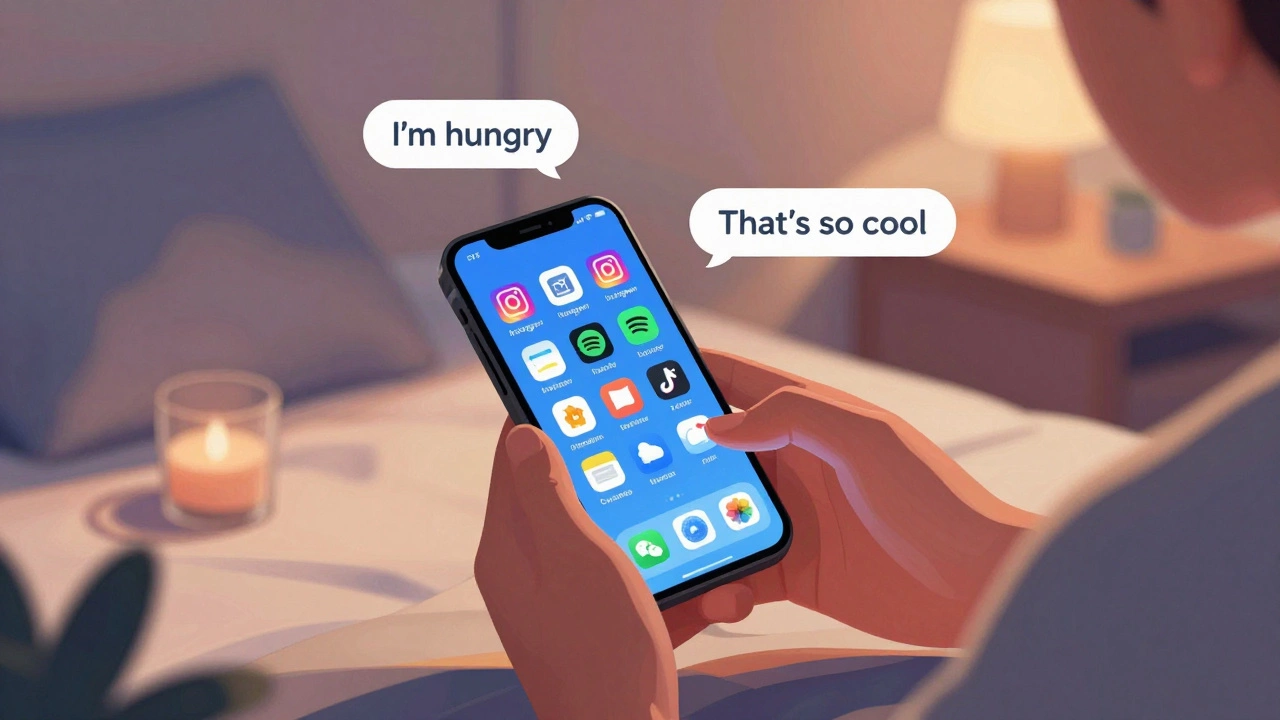
Your phone is with you 24/7. Make it a training tool. Go into Settings > Language and change everything to English. Your calendar, maps, weather app, even your music player. When you see ‘Set reminder’ instead of ‘Stellen Sie eine Erinnerung ein’, your brain starts associating actions with English words.
Same with apps. Switch Instagram, TikTok, and Spotify to English. Follow accounts that post short, clear videos - like English Addict with Mr Steve or Learn English with Emma. Don’t just scroll. Pause. Say what they just said. Even if it’s just ‘I love this song’ or ‘That’s so cool’.
Shadowing: The Secret Weapon of Fast Learners
Shadowing means speaking along with a native speaker - in real time. Find a 30-second clip from a podcast or YouTube video. Play it. Press pause after every 3-5 words. Repeat exactly what you heard. Then play it again and try to speak at the same time as the speaker. Don’t worry about understanding every word. Focus on matching the sound.
Try this with The Daily by The New York Times or 6 Minute English from BBC Learning English. Do this for 10 minutes a day. After 10 days, you’ll notice your pronunciation improves. Your rhythm gets smoother. Your brain starts predicting the next word before it’s spoken.
Join Free Online Speaking Groups
You don’t need to pay for a tutor to get feedback. Join free language exchange groups on Discord or Meetup. Look for ‘English Conversation Club’ or ‘Language Swap’. Find people who want to learn your native language. You talk in English for 20 minutes. They talk in your language for 20 minutes.
It’s low pressure. No grades. No tests. Just real talk. Many groups meet twice a week. That’s 80 minutes of speaking practice in a week - more than most people get in a month of classroom lessons. Don’t wait to be perfect. Say something. Even if it’s wrong. People in these groups are there to help, not judge.
Think in English - Not in Your Native Language
One big reason people speak slowly is because they translate. ‘I want to say… in my language… now how do I say that in English?’ That gap kills fluency.
Start small. When you see a red car, think ‘red car’ - not ‘auto rojo’ or ‘voiture rouge’. When you feel hungry, think ‘I’m hungry’ - not ‘Tengo hambre’. Keep a notebook. Write down 3 things you think about each day in English. ‘I need to call my sister.’ ‘The weather is too cold.’ ‘I’m tired but happy.’
After a week, you’ll catch yourself thinking in English without trying. That’s when speaking becomes natural.

Use Voice Assistants to Test Yourself
Ask Siri, Alexa, or Google Assistant real questions. Not just ‘What’s the weather?’ Try: ‘How do I say “I’m running late” in a formal email?’ Or: ‘Tell me a joke in English.’
They won’t always understand you - and that’s okay. It teaches you to speak clearly. It shows you which words get misheard. If Alexa doesn’t get ‘I’m looking for a quiet place to study’, you’ll learn to say ‘I need a calm spot to work’ instead.
Use this as feedback, not failure. Every miscommunication is a lesson.
Track Progress - But Not Like a Student
Don’t measure progress by grammar tests. Measure it by what you can do now that you couldn’t do before.
Ask yourself every week:
- Did I understand a movie scene without subtitles?
- Did I say something without stopping to think?
- Did I laugh at an English joke?
- Did I correct myself mid-sentence and fix it?
These are real signs of progress. If you can answer yes to even two of these, you’re moving fast.
What to Avoid
Don’t spend hours memorizing vocabulary lists. You’ll forget 90% of them.
Don’t wait to speak until you know ‘enough’. You’ll never feel ready.
Don’t compare yourself to people who grew up speaking English. You’re not trying to be them. You’re trying to be yourself - in English.
Speed comes from consistency, not intensity. Ten minutes a day, every day, beats three hours once a week.
Speak while you walk. Speak while you cook. Speak while you wait. Make English part of your life - not a task on your to-do list.
After 30 days, you’ll notice something: conversations don’t feel so scary anymore. You’ll catch yourself thinking in English. You’ll understand more on the first try. You’ll speak without fear of mistakes.
That’s not magic. That’s practice.