
English Immersion Planner & Time Estimator
Configure Your Plan
Estimated Time to Goal
-- Months
Based on -- total hours of active practice.
Your Personalized Daily Routine
Adjust settings and click Generate to see your plan.
Imagine waking up tomorrow and finally understanding every line of your favorite movie without subtitles. Or picture yourself ordering coffee in London with total confidence, no stuttering, no panic. It feels like a distant dream for many learners who have been stuck at the same level for years. But here is the truth: you do not need an expensive classroom or a move abroad to break through that barrier. You can improve your English quickly at home if you change how you interact with the language every single day.
Redefining 'Quickly' in Language Learning
First, let's get real about speed. If you are looking to become fluent in two weeks, you will be disappointed. Language acquisition is biological; it requires neural rewiring. However, "quickly" in this context means maximizing efficiency. Instead of studying passively for hours, we focus on high-impact activities that force your brain to adapt. The goal is not perfection; it is functional communication. By focusing on active usage rather than passive absorption, you can see noticeable improvements in comprehension and fluency within three to six months.
The biggest mistake learners make is treating English like a subject to be studied, like history or mathematics. It is not. It is a skill, like swimming or playing guitar. You cannot learn to swim by reading a book about hydrodynamics. You must get in the water. At home, your living room becomes the pool. Every interaction, every media consumption, and every thought process needs to shift toward using the language actively.
Creating an Immersion Environment Without Leaving Home
You might think immersion requires traveling to New York or Sydney. In reality, digital immersion is just as effective, if not more so, because it is customizable. Your environment dictates your habits. If your phone, computer, and entertainment are all in your native language, your brain has zero reason to switch gears. You need to create a bubble where English is the default setting.
- Digital Switch: Change the language settings on your smartphone, laptop, and social media accounts to English. This forces you to learn practical vocabulary related to technology and daily tasks instantly. You will learn words like "settings," "notification," and "storage" through repeated exposure and necessity.
- Media Diet: Replace 50% of your native-language content with English content. Watch Netflix shows, YouTube vlogs, or news broadcasts in English. Crucially, use English subtitles, not your native language. If English subtitles are too hard, start with audio in your native language and English subtitles to build association, then switch to both English as soon as possible.
- Ambient Sound: Play English podcasts or radio stations in the background while you cook, clean, or exercise. Even if you are not actively listening, your brain begins to tune into the rhythm, intonation, and common phrases of the language. This is known as incidental learning.
This environmental shift reduces the friction of starting to study. When English is everywhere, it stops being a "study session" and starts being part of your life. The key is consistency. Doing this for 30 minutes a day is far better than cramming for five hours once a week.
The Power of Shadowing and Active Speaking
Most learners spend 90% of their time reading and listening and only 10% speaking. This imbalance creates a huge gap between what you understand and what you can say. To fix this, you need to practice speaking from day one, even if you are alone. The technique called "shadowing" is one of the most powerful tools for rapid improvement.
Shadowing involves listening to a native speaker and repeating what they say almost simultaneously. You mimic their pronunciation, speed, and emotion. It feels awkward at first, but it trains your mouth muscles to form sounds that may not exist in your native language. Here is how to do it effectively:
- Select Material: Choose a short audio clip (1-2 minutes) with a transcript. TED Talks, podcast interviews, or movie scenes work well. Pick something slightly above your current level but still understandable.
- Listen First: Listen to the clip without speaking. Try to understand the general meaning and notice the flow of speech.
- Read Along: Read the transcript while listening. Highlight words or phrases you don't know.
- Shadow: Play the audio again. Speak along with the speaker, trying to match their timing exactly. Do not worry about mistakes; focus on the rhythm and sound.
- Record Yourself: Use your phone to record your shadowing. Compare it to the original. You will hear gaps in pronunciation that you didn't notice before.
Do this for 15 minutes daily. Over time, your accent will improve, and your speaking speed will increase because your brain learns to process sentences as chunks rather than individual words. This bridges the gap between passive knowledge and active production.

Vocabulary Acquisition Through Context, Not Lists
Memorizing long lists of isolated words is inefficient and boring. Your brain forgets them quickly because they lack context. Instead, learn words in clusters and through stories. When you encounter a new word, do not just look up the definition. Look at how it is used in a sentence. Who is saying it? To whom? What is the tone?
Use the "Sentence Mining" method. Keep a notebook or a digital app (like Anki or Notion) where you save entire sentences containing new words. Review these sentences regularly. For example, instead of memorizing the word "reluctant," learn the sentence: "She was reluctant to leave the party early." This teaches you grammar, collocation (which words go together), and nuance simultaneously.
Focus on high-frequency words first. The top 1,000 words in English account for about 80% of everyday conversation. Mastering these allows you to communicate basic ideas clearly. As you advance, expand into specific domains relevant to your interests, such as business English, medical terminology, or travel phrases. Depth in a few areas is more useful than shallow knowledge of thousands of obscure words.
Thinking in English: Breaking the Translation Habit
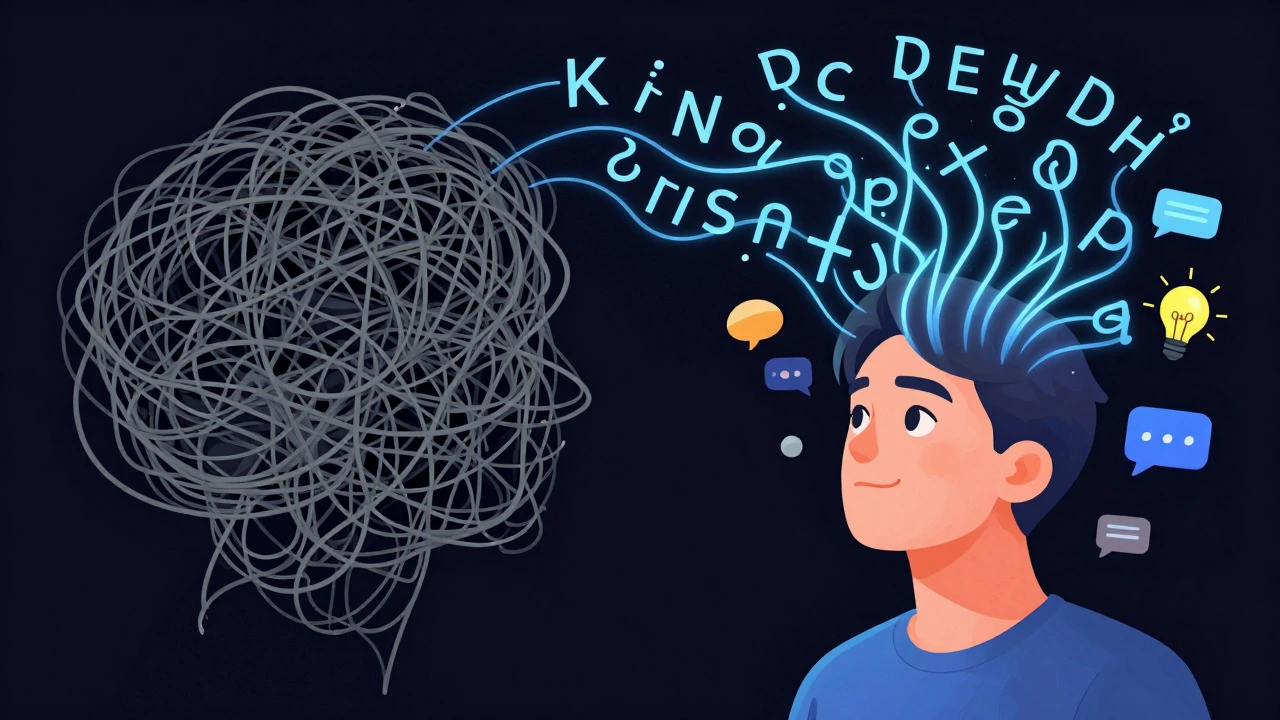
One of the biggest hurdles to fluency is translating from your native language to English in your head. This process is slow and leads to unnatural phrasing. To speak quickly and naturally, you must learn to think directly in English. This takes practice but is entirely achievable at home.
Start small. Narrate your day as you go about it. "I am making coffee. The water is boiling. I need a spoon." Say these thoughts out loud or whisper them. If you don't know a word, describe it. For example, if you forget the word "toaster," say "the machine that makes bread hot." This forces your brain to retrieve vocabulary actively and builds descriptive skills.
Another technique is the "Inner Monologue" shift. When you are waiting in line or walking, try to keep your internal dialogue in English. If you catch yourself thinking in your native language, gently switch back. At first, you will struggle with complex abstract thoughts, but simple observations will become automatic. Over weeks, this habit rewires your cognitive pathways, allowing for faster retrieval of words during conversations.
Leveraging Technology and AI Tools
We live in a golden age for language learners. Technology provides personalized feedback and endless practice opportunities. Artificial Intelligence (AI) chatbots, language apps, and speech recognition tools can simulate conversation partners available 24/7.
| Tool Type | Best For | Limitations |
|---|---|---|
| AI Chatbots (e.g., Character.AI, Replika) | Practicing casual conversation and role-playing scenarios without judgment. | May generate grammatically incorrect responses; lacks human emotional nuance. |
| Spaced Repetition Systems (Anki) | Long-term retention of vocabulary and phrases through algorithmic review. | Requires initial setup time; can feel mechanical if not used creatively. |
| Speech Recognition Apps (Elsa Speak, Speechling) | Pronunciation correction and accent reduction with instant feedback. | Can be expensive; sometimes misinterprets non-native accents. |
| Language Exchange Platforms (Tandem, HelloTalk) | Real human interaction and cultural exchange. | Requires finding compatible partners; potential for inconsistent quality. |
Integrate one or two of these tools into your daily routine. For instance, use an AI chatbot for 10 minutes of free writing practice after dinner. Use a spaced repetition app during your commute. The key is variety. Different tools target different skills: listening, speaking, reading, and writing. Combining them ensures balanced development.
Maintaining Motivation and Tracking Progress
Learning a language is a marathon, not a sprint. Motivation will fluctuate. There will be days when you feel like quitting. To stay on track, set specific, measurable goals. Instead of "get better at English," aim for "learn 5 new idioms this week" or "watch one episode of a TV show without subtitles."
Track your progress visibly. Keep a journal where you write a paragraph in English every day. After a month, read your first entry. You will likely be surprised by how much clearer and more natural your writing has become. Celebrate small wins. Understanding a joke in a sitcom or successfully ordering food online in English are significant milestones.
Finally, connect with a community. Join online forums, Reddit groups, or Discord servers dedicated to English learners. Sharing struggles and successes with others provides accountability and support. You are not alone in this journey. Millions of people are working on the same goal right now. By staying consistent, engaging actively, and immersing yourself fully, you will find that improving English quickly at home is not just possible-it is inevitable.
How many hours a day should I study to improve quickly?
Quality matters more than quantity. Aim for 30-60 minutes of focused, active practice daily. Consistency is key. Studying 30 minutes every day is far more effective than studying 5 hours once a week. Break this time into smaller chunks: 10 minutes of shadowing, 10 minutes of vocabulary review, and 10 minutes of reading or writing.
Is it possible to learn English without speaking to anyone?
You can build a strong foundation without speaking to humans, but true fluency requires output. You can practice speaking alone using shadowing techniques, recording yourself, or talking to AI chatbots. However, eventually, interacting with real people is necessary to handle unpredictable conversations and cultural nuances.
What is the best way to remember new vocabulary?
Use Spaced Repetition Systems (SRS) like Anki. These apps show you flashcards at optimal intervals to maximize memory retention. Additionally, learn words in context-full sentences or paragraphs-rather than isolated lists. Connect new words to emotions, images, or personal experiences to make them stick.
Should I watch movies with subtitles?
Yes, but use English subtitles, not your native language. This helps connect spoken sounds with written forms. If English subtitles are too difficult, start with slower-paced content like children's shows or educational videos. Gradually move to faster-paced dramas or comedies as your listening improves. Avoid native subtitles unless you are a complete beginner.
How can I overcome the fear of making mistakes?
Mistakes are essential for learning. They provide feedback on what you need to correct. Practice in low-stakes environments first, such as talking to yourself, using AI bots, or joining supportive online communities. Remember that native speakers appreciate effort and rarely judge minor grammatical errors. Focus on communication, not perfection.