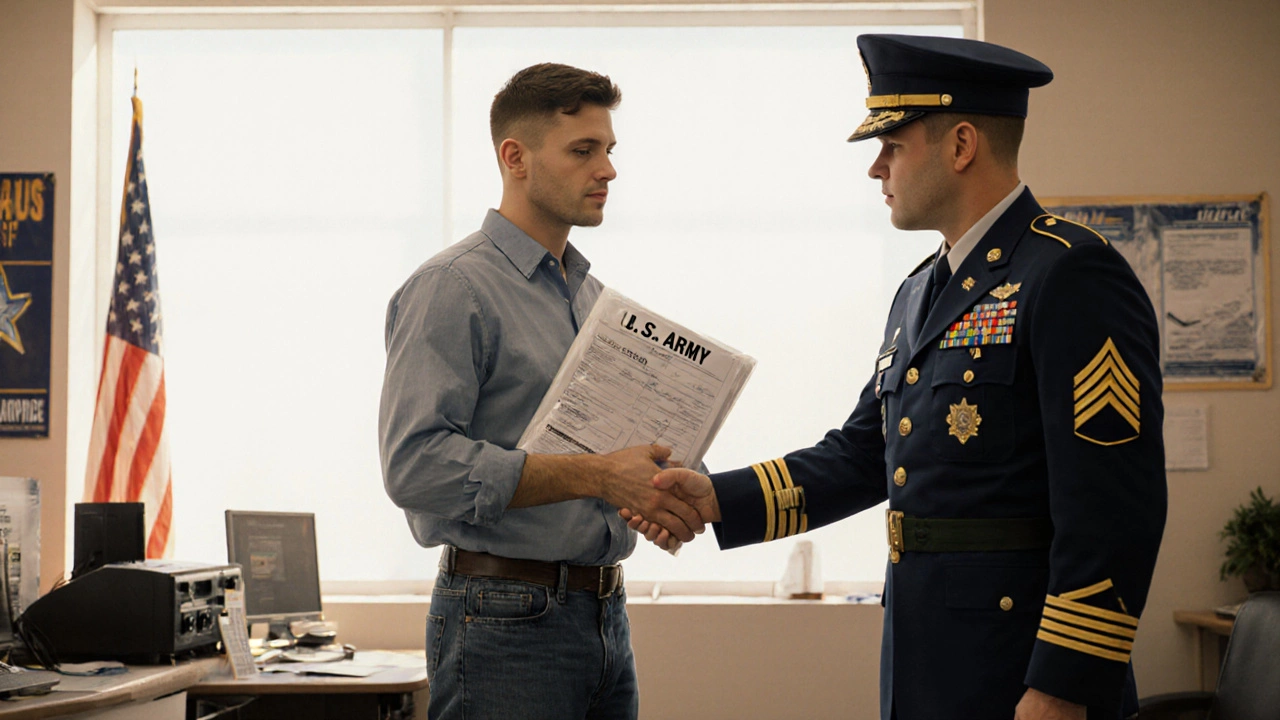
Military Enlistment Eligibility Calculator
Eligibility Calculator
Wondering if a criminal record shuts the door on a uniform? The short answer is: not always. felon military enlistment depends on the branch, the offense, and whether you can secure a waiver.
Quick Summary
- Each service branch has its own list of disqualifying offenses.
- Most non‑violent felonies can be waived if the sentence is under a certain limit.
- You must complete the Armed Forces Qualification Test (AFQT) and meet age, residency, and moral standards.
- Waiver processing can add 3‑12 months to your recruitment timeline.
- Honesty on your paperwork is non‑negotiable; lying can lead to a permanent bar.
Understanding Military Enlistment is the process by which civilians become members of the U.S. armed forces. It involves meeting physical, educational, and moral standards set by the Department of Defense. For people with felony convictions, the moral‐character screen is the biggest hurdle.
When recruiters talk about “character requirements,” they’re referring to the Uniform Code of Military Justice (UCMJ) and the moral‑conduct clauses in each service’s recruitment manual. A felony shows up on the background check, and the recruiter will compare the charge to the branch’s disqualification list.
Branch‑by‑Branch Eligibility Overview
Below is a snapshot of how the five main services treat felony convictions. The policies are updated periodically, so always confirm the latest guidance with a recruiter.
| Branch | Allowed Offenses | Maximum Sentence | Waiver Required? |
|---|---|---|---|
| U.S. Army | Most non‑violent felonies; some violent crimes with mitigating factors | Less than 5 years (incl. time served) | Yes, for most cases |
| U.S. Navy | Felonies that do not involve serious sexual or violent wrongdoing | Less than 4 years | Waiver typically required |
| U.S. Air Force | Limited; most felonies are disqualifying unless a waiver is granted | Less than 3 years | Waiver mandatory |
| U.S. Marine Corps | Very strict; only minor felonies may be considered | Under 2 years | Waiver extremely rare |
| U.S. Coast Guard | Similar to Navy; some felonies can be waived | Under 4 years | Waiver generally required |
Key takeaways from the table:
- The Army is the most flexible, often granting waivers for non‑violent offenses.
- The Marine Corps has the toughest standards; a felony usually ends the prospect.
- All branches require a waiver for any felony that exceeds the listed sentence limit.

How Waivers Work and When They Apply
A waiver is a written exception from the standard recruitment policy. It’s not a guarantee-it’s a request that goes up the chain of command, sometimes reaching the Secretary of the service.
- Initial Screening: The recruiter enters your record into the Military Entrance Processing Station (MEPS) database. The system flags disqualifying offenses.
- Documentation: You’ll need court documents, proof of completed sentence, and any rehabilitation certificates (e.g., drug‑treatment program).
- Character References: Letters from employers, clergy, or community leaders can tip the scale.
- Interview: A waiver board conducts a face‑to‑face interview to assess your remorse, stability, and future risk.
- Decision: Approved waivers are usually valid for six months; if you don’t enlist within that window, you must re‑apply.
Tips to improve your odds:
- Complete any outstanding court‑ordered programs before you apply.
- Maintain a clean record for at least two years after the conviction.
- Show steady employment or education enrollment.
- Be honest about every detail; omission is a surefire disqualifier.
Common Mistakes to Avoid in Your Application
Even after you secure a waiver, the enlistment process can trip you up if you’re not careful.
- Leaving Gaps: The AFQT score and physical‑fitness test must be completed before the waiver is processed. Don’t wait until the waiver is approved to take the test.
- Misrepresenting the Offense: Downplaying a felony as a “misdemeanor” will be caught during the background check and can lead to a permanent bar.
- Skipping the Recruiter’s Guidance: Recruiters know the current waiver thresholds. Ignoring their advice can waste months.
- Ignoring State Laws: Some states have “clean‑record” reforms that automatically seal certain felonies after a period. Verify if your conviction is still visible to federal background checks.
What to Expect After You Enlist
If you clear the waiver and sign your contract, life in the uniform begins like any other recruit.
- Basic Training: All branches have an intensive boot‑camp phase. Your prior record does not affect training content, but you’ll be under close observation for the first 90 days.
- Security Clearance: Most enlisted roles require at most a Secret clearance. A felony can limit access to certain classified jobs, but many occupational specialties remain open.
- Career Advancement: Good performance can outweigh a past mistake. Promotion boards consider conduct, not only past convictions.
- Veterans Benefits: After 24 months of active service, you become eligible for VA health care, education benefits, and home‑loan guarantees, regardless of your criminal history.
Remember, the military is a structured environment. Consistency, discipline, and a clean record going forward are the best ways to turn a second chance into a lifelong career.
Key Takeaways
- Felony convictions do not automatically bar you from the military; each service has a nuanced policy.
- The Army is the most lenient, often granting waivers for non‑violent felonies under five years.
- Waivers are essential for any disqualifying offense and can take several months to process.
- Honesty, documented rehabilitation, and stable post‑conviction behavior dramatically improve waiver chances.
- Once enlisted, your future depends on performance, not your past-stay disciplined and the military can become a powerful path forward.
Frequently Asked Questions
Can any felony be waived?
Most non‑violent felonies that resulted in a sentence under the branch‑specific limit can be waived, but violent sexual offenses, murder, and major drug trafficking are almost never approved.
How long does a waiver stay valid?
A typical waiver is valid for six months from the date of approval. If you don’t enlist within that timeframe, you’ll need a new waiver.
Do I need a high AFQT score to get a waiver?
A minimum AFQT score (often around 31) is required for all recruits. A waiver does not lower that threshold.
Will a felony affect my ability to get a security clearance?
Yes, certain felonies-especially those involving espionage, fraud, or serious violence-can prevent you from obtaining Secret or higher clearances, limiting some occupational specialties.
Is it better to apply to the Army or another branch?
If your felony is non‑violent and the sentence was under five years, the Army usually offers the highest chance of a waiver. For stricter offenses, the Navy or Coast Guard may still consider you, but the Marine Corps is the toughest.