
MBA Readiness Calculator
Your MBA Readiness Assessment
Answer these 4 questions to see how you compare to successful non-business applicants
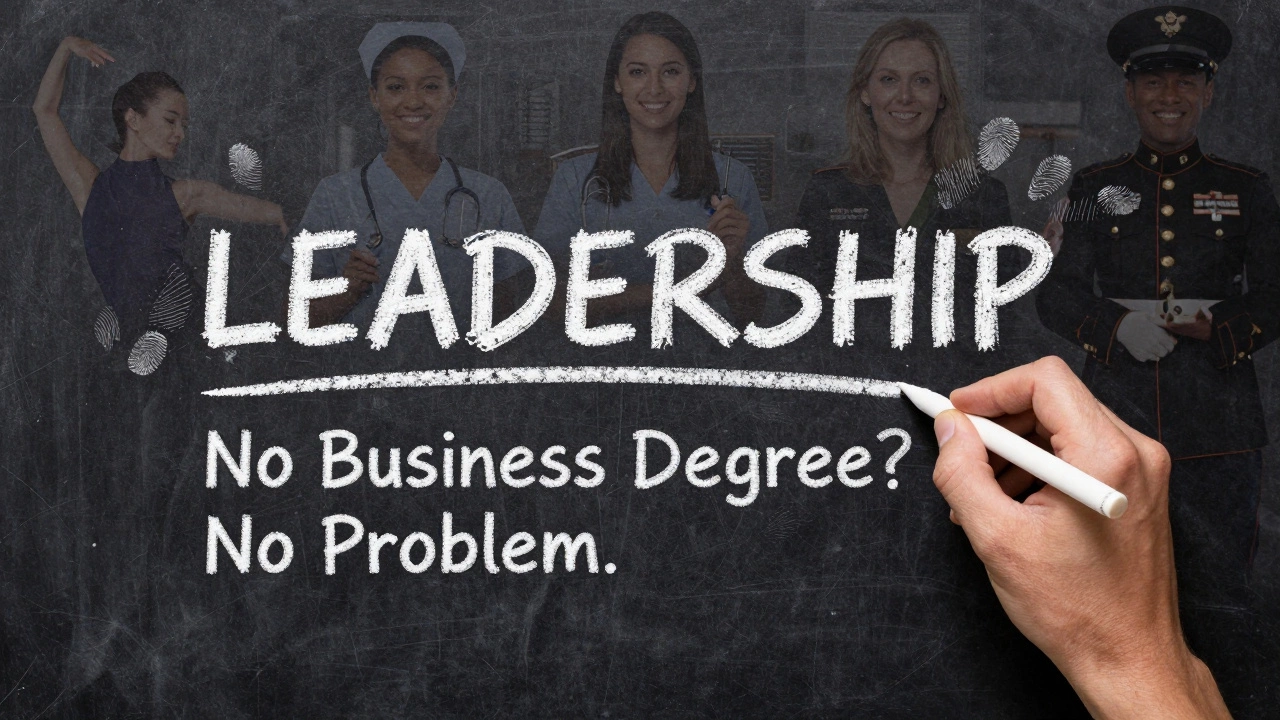
Every year, thousands of people ask: Can I get an MBA without a business degree? The answer isn’t yes or no-it’s "yes, but here’s how." You don’t need a business undergrad to get into a top MBA program. In fact, more than 40% of MBA students in the U.S. come from non-business backgrounds, according to data from the Graduate Management Admission Council. Engineers, teachers, artists, nurses, and even former military personnel are getting MBAs every year. But getting in isn’t automatic. You need to show you can handle the workload, understand business basics, and bring something unique to the table.
Why schools welcome non-business applicants
Business schools aren’t looking for clones. They want diversity. A classroom full of finance majors from the same university doesn’t spark innovation. But a classroom with a former architect, a pediatric nurse, and a freelance filmmaker? That’s where real problem-solving happens. Schools like Harvard, Stanford, and INSEAD openly say they recruit from non-traditional backgrounds because they know different perspectives lead to better outcomes.Think about it: if you’re running a healthcare startup, you don’t just need someone who knows how to read a balance sheet. You need someone who’s seen how hospitals actually work from the inside. That’s the value non-business applicants bring. Admissions committees aren’t checking boxes-they’re building teams.
What you actually need to get in
You don’t need a business degree. But you do need to prove you can handle the core MBA curriculum. That means showing competence in four areas: quantitative skills, leadership, professional experience, and business awareness.Quantitative skills matter more than you think. MBA programs are heavy on stats, finance, and data analysis. If your undergrad was in literature or theater, you’ll need to show you can handle numbers. That doesn’t mean you need a math major. It means taking a course in accounting, statistics, or Excel. Many schools accept MOOCs from Coursera or edX-like Wharton’s free "Business Foundations" specialization or MIT’s "Introduction to Finance" on edX. Completing one of these with a solid grade tells admissions you’re serious.
Leadership isn’t about having a title. It’s about influence. Did you lead a volunteer project? Organize a community event? Mentor junior staff? These count. One applicant I know was a high school English teacher who started a literacy program that reached 300 kids across three districts. That’s leadership. You don’t need to be a CEO to show it.
Professional experience is non-negotiable. Most full-time MBA programs want at least two years of full-time work. Part-time and executive programs often require five or more. Why? Because MBA learning is built on real-world context. You’ll analyze cases about pricing strategies, team conflicts, and supply chain breakdowns. If you’ve never managed a budget or led a meeting, you won’t get much out of it. But if you’ve handled client accounts, managed inventory, or even run a small side business, you’re already ahead.
Business awareness is about curiosity. Read the Wall Street Journal. Follow podcasts like "HBR IdeaCast" or "The Indicator from Planet Money." Understand what EBITDA means. Know the difference between equity and debt. You don’t need to be an expert-but you need to speak the language. If you walk into an interview and say "I don’t know what a P&L is," you’ll lose credibility before you start.
How to fill the gaps (without going back to school)
You don’t need another degree. You need strategy.- Take a pre-MBA course. Most schools list recommended prep courses on their websites. Harvard Business School Online offers "CORe"-a 10-week program in business analytics, economics, and accounting. It costs $2,500 but often waives application fees if you complete it with distinction.
- Get certified. A Google Data Analytics Certificate or a Project Management Professional (PMP) credential can show technical competence. Even a LinkedIn Learning path in Financial Accounting counts.
- Volunteer for business-related roles. Offer to help a local nonprofit with their budgeting. Join a startup’s advisory board. These aren’t just resume boosters-they’re learning labs.
- Network with current MBA students. Attend virtual info sessions. Ask them: "What did you wish you knew before starting?" Most will tell you they wished they’d brushed up on accounting basics. That’s your cue.

What your application should highlight
Your essays and interviews need to answer one question: Why are you here, and what will you add?Don’t say: "I want to switch to finance." That’s generic. Say: "I spent five years managing patient care in rural clinics and saw how poor financial planning led to canceled services. I want to learn how to build sustainable healthcare models that don’t rely on charity." That’s specific. That’s compelling.
Highlight transferable skills. If you’re a musician, talk about managing tour schedules, negotiating contracts, or budgeting for equipment. If you’re a graphic designer, talk about client management, project timelines, and profit margins on freelance gigs. These are business skills. You just didn’t label them that way.
And never apologize for your background. Saying "I don’t have a business degree, but..." makes you sound insecure. Instead, say: "My background in environmental science taught me to think systemically-that’s why I’m drawn to operations management."
Real examples of non-business MBA grads
One woman went from being a professional dancer to launching a fitness tech startup after her MBA. She had no business background-just a passion for movement and a knack for organizing rehearsals. She took a pre-MBA accounting course, volunteered with a small nonprofit to help them track donations, and wrote her MBA thesis on scaling fitness programs in underserved communities. She got into Kellogg. Now she’s raising $2M in seed funding.A former Marine became a supply chain consultant after his MBA. He didn’t know what ERP software was when he started. But he knew logistics. He took online courses in operations management and interned with a logistics firm during the summer. He graduated with a job at Amazon.
These aren’t outliers. They’re the norm.
What schools look for in your resume
Your resume isn’t about job titles. It’s about impact.Instead of: > Marketing Coordinator, XYZ Corp, 2021-2023
Write: > Marketing Coordinator, XYZ Corp, 2021-2023 > - Launched email campaign that increased lead conversion by 37% in 6 months > - Managed $50K monthly ad budget with 22% ROI > - Trained and mentored 3 junior team members
Numbers. Outcomes. Responsibility. That’s what matters. Even if your job wasn’t "business," show you drove results. That’s what MBA programs care about.
Can you get into a top school without a business degree?
Yes. But you need to be intentional. Top programs like Wharton, Booth, and Sloan don’t care about your undergrad major-they care about your potential. They want people who can think critically, lead teams, and solve real problems. Your background isn’t a weakness. It’s your edge.Just don’t assume it’ll be easy. You’ll need to work harder than someone with a finance major. But that’s not a bad thing. The people who succeed in MBA programs aren’t the ones who knew everything coming in. They’re the ones who asked questions, filled gaps, and brought something no one else could.
If you’re ready to make the leap, start today. Take one course. Talk to one alum. Write down one story from your career that shows leadership. That’s how it begins.
Do I need to take the GMAT if I don’t have a business degree?
No, you don’t need the GMAT just because you lack a business background. Many schools now accept the GRE or even waive standardized tests for applicants with strong work experience. Some programs, like NYU Stern and UCLA Anderson, offer test waivers if you’ve held a managerial role for five+ years. But if your GPA is below 3.0 or your work experience is limited, a strong GMAT score can help offset weaknesses. Focus on showing quantitative ability through coursework or certifications instead of relying on the test alone.
Can I get an MBA with a low GPA from a non-business major?
Yes, but you’ll need to compensate elsewhere. A low GPA isn’t a dealbreaker if you’ve built a strong professional record. Schools look at your entire profile. If you’ve been promoted twice in five years, led a major project, or earned a certification in financial modeling, those matter more than your undergrad grades. Take a pre-MBA course and ace it. That shows you can handle the academic rigor now. Many applicants with 2.8 GPAs get in because they prove they’ve grown since college.
Are there MBA programs designed for non-business students?
Some schools offer "bridge" tracks or foundation modules for students without business backgrounds. For example, Northwestern’s Kellogg School has a "Business Foundations" module before the core courses begin. MIT Sloan offers a pre-term workshop on accounting and finance. These aren’t remedial-they’re designed to level the playing field. Look for programs that mention "non-traditional backgrounds" or "career changers" in their admissions materials. These are the ones that will support you.
What if I’ve been out of school for 10+ years?
That’s actually an advantage. Many MBA programs are designed for mid-career professionals. If you’ve been working for a decade, you likely have more leadership experience than a 24-year-old with a business degree. Focus your application on your professional achievements, not your college years. Schools want people who can contribute to class discussions with real-world insight. Your experience is your strongest asset. Just make sure your quantitative skills are current-take a refresher course if needed.
Is an MBA worth it if I’m switching careers?
It depends on your goal. If you want to move into management, consulting, or corporate strategy, then yes-MBA is one of the fastest paths. If you’re switching into a highly technical field like data science or software engineering, an MBA might not be the best fit. But if you want to lead teams, manage budgets, or start a company, then the MBA gives you credibility, networks, and tools you can’t get elsewhere. Look at alumni outcomes: 82% of non-business MBA grads report a salary increase of at least 30% within two years of graduation, according to the 2025 GMAC survey.