English Fluency Progress Calculator
Based on the article's research showing that 30 minutes daily leads to conversational fluency in 6-12 months, and full fluency in 18-24 months.
Your Fluency Timeline
Conversational Fluency:
This means you can hold basic conversations, understand common phrases, and speak with some confidence.
Full Fluency:
You think and react naturally in English, understand complex topics, and express nuanced ideas.
Can you really become fluent in English by yourself? The short answer is yes. Thousands of people have done it-no tutors, no classrooms, no expensive courses. But it’s not magic. It’s strategy. It’s consistency. And it’s not about studying harder. It’s about working smarter.
Fluency Isn’t About Grammar Rules
Most people think fluency means knowing every verb tense, memorizing vocabulary lists, and acing grammar quizzes. That’s a trap. Real fluency is about understanding and being understood. It’s about hearing a sentence and reacting without translating. It’s about speaking without pausing to think, “Is this correct?”Think of it like learning to ride a bike. You don’t memorize the physics of balance-you just get on and try. Same with English. You don’t need to master every rule before you speak. You need to speak, listen, and repeat.
What Actually Builds Fluency
There are four core skills: listening, speaking, reading, and writing. But not all of them matter equally when you’re learning alone.Listening is your secret weapon. Your brain learns patterns by hearing language used naturally. Watch TV shows. Listen to podcasts. Don’t use subtitles at first. Just let the sounds wash over you. After a few weeks, you’ll start recognizing words. Then phrases. Then whole sentences.
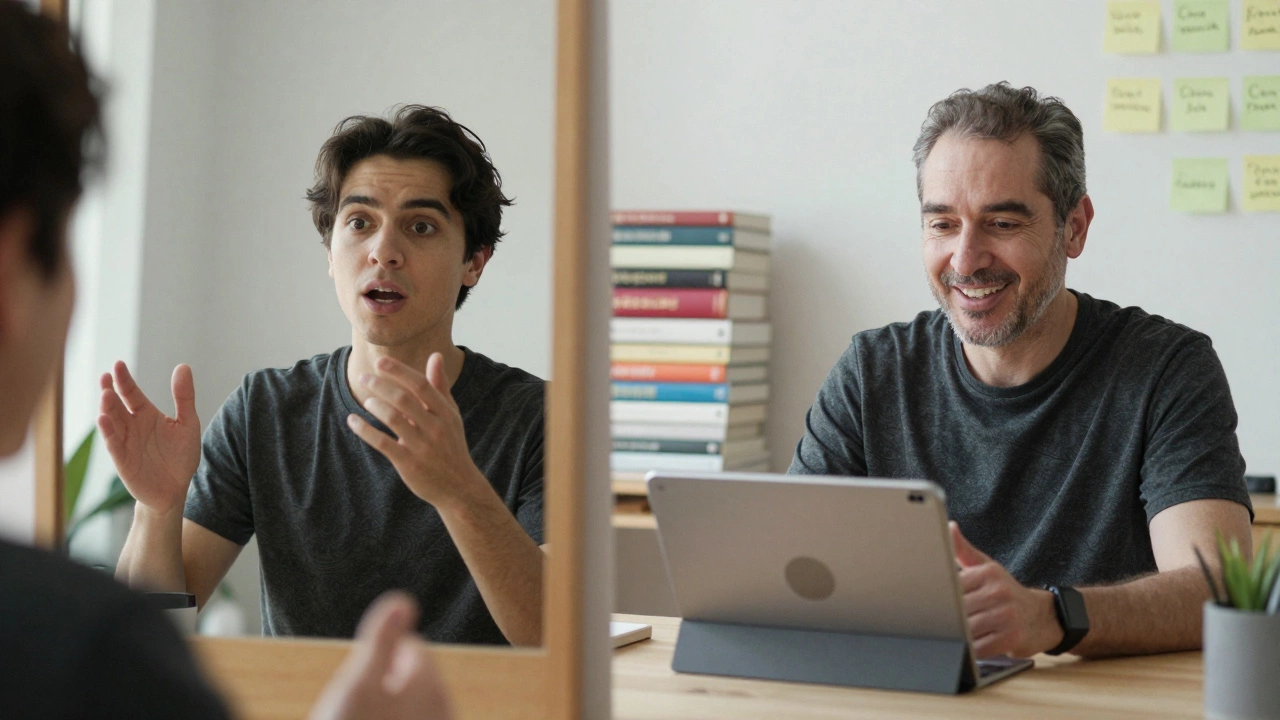
Speaking is the hardest part when you’re alone-but also the most important. You can’t get fluent without talking. Start by talking to yourself. Describe what you’re doing: “I’m making coffee.” “The sky is cloudy today.” Record yourself. Play it back. Don’t cringe. Just notice where you stumble. Then try again.
Reading helps you absorb structure. Read simple books, news articles, or even Reddit threads. Focus on content you care about. If you like sports, read about soccer. If you love cooking, read recipes in English. You’ll learn vocabulary without trying.
Writing is optional but helpful. Write short journal entries. One paragraph a day. No need for perfection. Just get your thoughts out. It trains your brain to organize ideas in English.
The Daily Routine That Works
You don’t need hours. You need 30 minutes a day, done right.- 10 minutes: Listen to a short podcast or YouTube video (no subtitles)
- 10 minutes: Speak out loud-repeat what you heard, or describe your day
- 10 minutes: Read one article or chapter of a book
Do this every day for 90 days. That’s three months. By then, you’ll notice a shift. You’ll catch words you didn’t know before. You’ll understand jokes in movies. You’ll start thinking in English instead of translating.
Tools That Actually Help (No Fluff)
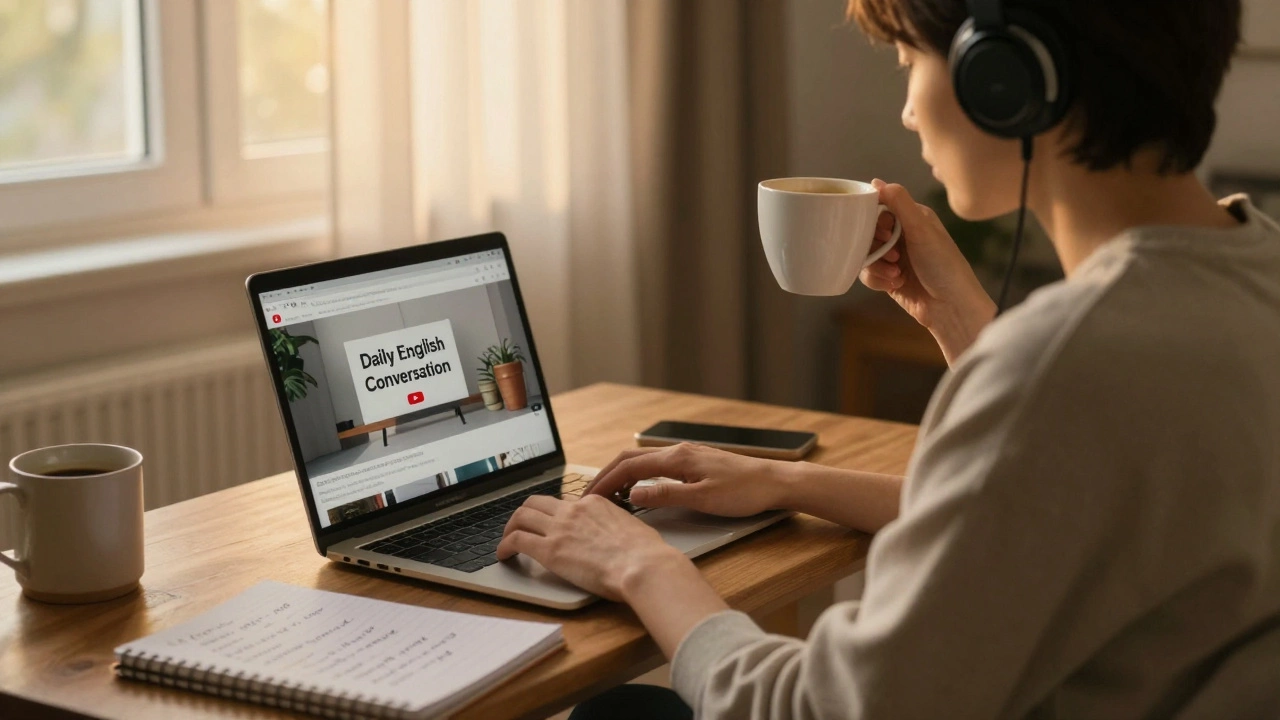
You don’t need 20 apps. Just a few good ones.- YouTube: Search for “English listening practice” or “daily English conversation.” Channels like English Addict with Mr Steve or Learn English with Emma are simple and clear.
- Podcasts: Try 6-Minute English by the BBC. Short, slow, and focused.
- Speechling: Record yourself speaking. Get feedback from native speakers for free.
- Readlang: Paste any article online. Click any word to see its meaning. It saves your vocabulary automatically.
- Language Reactor: Watch Netflix or YouTube with dual subtitles. It shows you the English and your native language side by side. You can pause and replay any part.
These tools aren’t magic. But used daily, they turn passive exposure into active progress.
Why Most People Fail (And How to Avoid It)
The biggest mistake? Waiting to feel ready. People think, “I’ll start when I know more words.” Or, “I need to fix my accent first.” That’s procrastination in disguise.Fluency doesn’t come from perfection. It comes from repetition. Every time you speak, even badly, your brain gets better. Every time you listen, even if you only catch 30% of the words, your brain is learning.
Another trap: comparing yourself to others. You don’t need to sound like a native speaker. You need to sound like someone who gets their point across. If people understand you, you’re fluent.
When You Hit a Plateau
After a few months, progress slows. That’s normal. You’re not broken. You’re just hitting the next level.Here’s what to do:
- Switch your material. If you’ve been watching kids’ shows, try news or documentaries.
- Speak with strangers. Use apps like Tandem or HelloTalk. Find someone learning your language. Exchange 15 minutes a day.
- Set a challenge. “This week, I’ll watch one movie without subtitles.” Or, “I’ll give a 2-minute speech about my favorite hobby.”
Plateaus aren’t failures. They’re signposts. They mean you’re ready for more.
Real People, Real Results
Maria, a nurse from Mexico, started learning English alone while working night shifts. She listened to podcasts during her commute. She spoke to herself while washing dishes. After 8 months, she passed her hospital’s English test and got promoted.Jamal, a mechanic from Egypt, used YouTube to learn car repair terms in English. He watched videos about engines, repeated the phrases, and started talking to online forums. Now he helps customers who speak English.
They didn’t take classes. They didn’t spend money. They just showed up every day.
You Don’t Need Permission
You don’t need a certificate. You don’t need a teacher. You don’t need to be young or smart or talented.You just need to show up. Every day. Even if it’s messy. Even if you sound silly. Even if you forget half the words.
Fluency isn’t a destination. It’s a habit. And habits are built one small action at a time.
Can I become fluent in English without speaking to anyone?
You can make serious progress without speaking to others, but true fluency requires interaction. Talking to yourself helps build confidence, but hearing real responses-like corrections, natural pauses, or emotional tone-changes how your brain processes language. If you can’t find a person, use apps like Tandem or HelloTalk. Even 10 minutes a day with a native speaker makes a big difference.
How long does it take to become fluent if I study alone?
It depends on how much time you put in and your starting level. If you study 30 minutes a day, five days a week, most people reach conversational fluency in 6 to 12 months. Full fluency-where you think and react naturally in English-usually takes 18 to 24 months. The key isn’t speed. It’s consistency. Missing a day doesn’t ruin progress. Stopping for weeks does.
Do I need to learn grammar to become fluent?
You don’t need to study grammar rules like a textbook. But you do need to absorb grammar naturally. How? By listening and reading a lot. When you hear “I have been working” enough times, your brain starts using it without knowing why. Focus on exposure first. If you’re stuck, then look up one rule at a time. Don’t study grammar to pass a test. Study it to fix a mistake you keep making.
Is it better to learn British or American English?
It doesn’t matter which one you focus on, as long as you pick one and stick with it. American English is more common in movies, music, and online content. British English is common in textbooks and formal writing. If you’re learning alone, choose based on what you enjoy. Watch American TV shows? Use American pronunciation. Read British novels? Learn British spelling. You’ll understand both eventually.
What if I forget words I learned last week?
Forgetting is normal. Your brain filters out what it doesn’t use. The solution? Use the word again. Don’t try to memorize it. Use it in a sentence. Say it out loud. Write it down. Hear it in a podcast. Repetition in context is the only way words stick. Keep a simple list of words you forget. Review it once a week. But don’t spend hours memorizing lists. Use them. That’s how you remember them.