
Want to sound more natural in English? Not just understand it, but actually speak it-without pausing, translating, or second-guessing every word? You’re not alone. Millions of learners struggle with the gap between knowing grammar and being able to use it in real conversation. The good news? There are websites built exactly for this. Not just grammar drills or vocabulary lists. Real, live, messy, human speaking practice.
Why speaking is different from reading or listening
Most English learners spend years studying vocabulary and grammar. They can read a novel, understand a TED Talk, even write an essay. But when someone asks them, "What did you do last weekend?"-they freeze. Why? Because speaking isn’t about recalling rules. It’s about muscle memory. Your mouth, tongue, and lungs need to learn how to move together fast. And that only happens when you actually talk.
Think of it like learning to ride a bike. No amount of reading about balance will help if you never get on the saddle. Same with English. You need to speak, even if you sound awkward. And the right websites make that safe, fun, and effective.
Italki: Learn from real people, not bots
Italki isn’t a course. It’s a marketplace. Over 10,000 certified teachers and community tutors from 150+ countries offer 1-on-1 video lessons. You pick your teacher based on accent, teaching style, or even hobbies. Want to sound like a British barista? Find one in London. Need to practice for a job interview in New York? There’s a tutor for that.
Lessons start at $5 an hour. You can book a 25-minute session, talk about your day, get instant feedback, and repeat. No scripts. No canned responses. Just real conversation. Teachers correct you gently-not by interrupting constantly, but by modeling the right phrase after you speak. Over time, your brain starts absorbing patterns naturally.
What makes italki different? You’re not practicing with a robot. You’re talking to someone who’s been in your shoes. Many tutors are native speakers who learned other languages themselves. They know exactly where you’re stuck.
Speaky: Practice with native speakers who want to learn your language
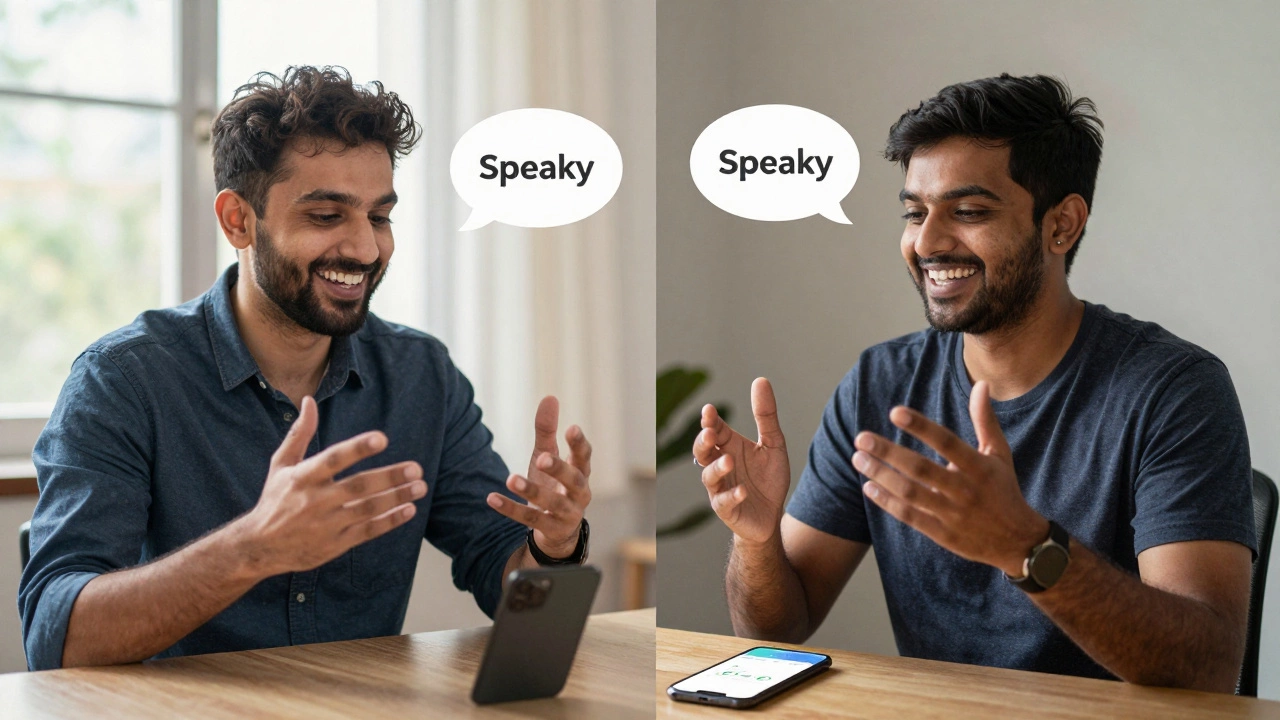
If you’re tired of paying for lessons, Speaky offers a free alternative. It’s a language exchange platform. You find someone who wants to learn your native language-and you help them while they help you.
Match with someone in Australia who wants to learn Spanish. You practice English for 30 minutes. They practice Spanish for 30 minutes. No pressure. No grades. Just mutual improvement. The app supports text, voice messages, and video calls. You can even schedule weekly chats.
Real talk: this works best if you’re consistent. One session a week won’t change much. But if you commit to three 20-minute calls a week, you’ll notice a difference in three months. People on Speaky are usually motivated. They’re not there to waste time. They’re there to improve.
ELSA Speak: Get AI feedback on your pronunciation
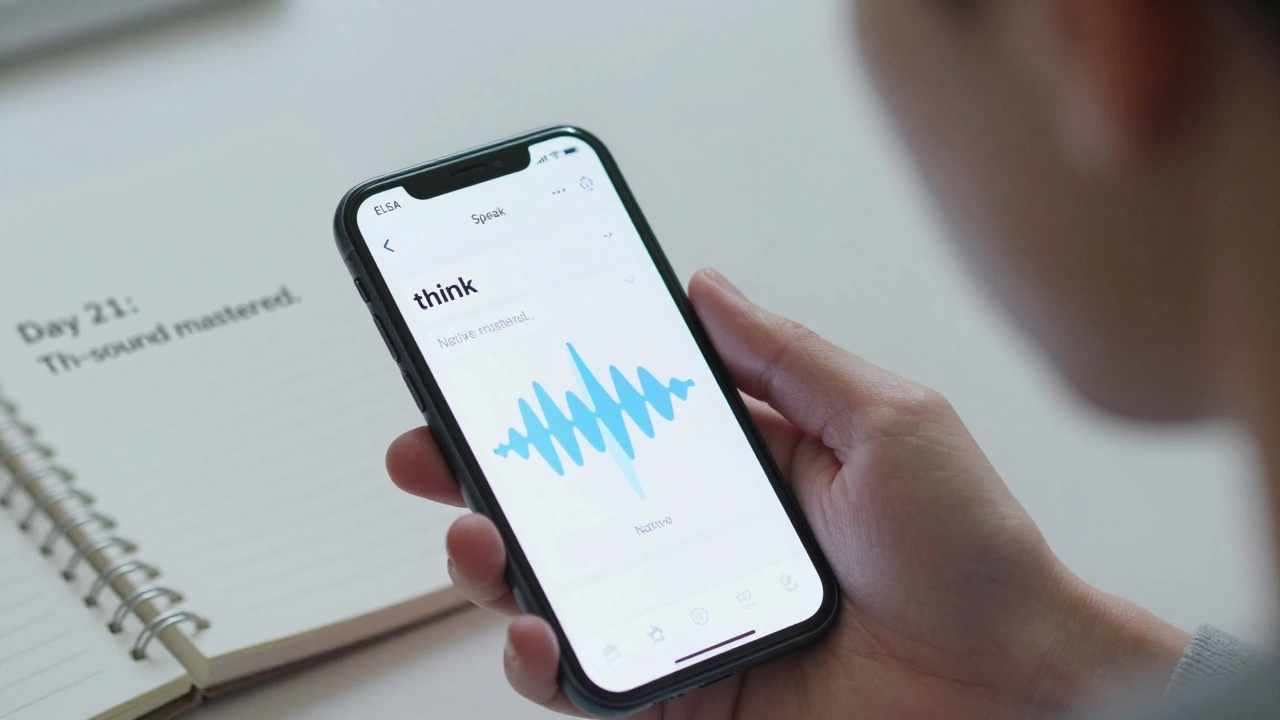
Ever say "I have a cat" and sound like "I haf a kat"? You’re not alone. Many learners carry accent patterns from their first language. ELSA Speak uses AI speech recognition to analyze your pronunciation in real time.
You repeat phrases out loud. The app highlights which sounds are off-like the "th" in "think" or the "r" in "car". It shows you a visual waveform so you can see how your voice compares to a native speaker’s. Then it gives you drills to fix it.
It’s not a replacement for human conversation. But it’s the best tool for fixing stubborn pronunciation habits. Over 3 million users have used it to improve clarity. One user from Brazil said she went from being misunderstood 7 out of 10 times to being understood almost every time-after 6 weeks of daily 10-minute sessions.
Engoo: Structured speaking practice with real-world topics
Engoo is free and packed with 500+ speaking lessons. Each one starts with a short video or article on a real topic: "How to order coffee in London," "Why do Brits say 'cheers'?", or "What’s the difference between a flat and an apartment?"
Then you answer questions out loud. The platform records your voice. You can replay it. You can compare it to the sample answer. You can even share it with tutors for feedback.
What’s great? The topics aren’t textbook. They’re things people actually talk about. You learn how to say "I’m not sure" instead of "I don’t know." You learn how to use filler phrases naturally: "Well, I guess...", "Actually, I think..."
Engoo’s lessons are designed by teachers from Cambridge and Oxford. You’re not just practicing English. You’re learning how English works in daily life.
YouTube channels that turn passive watching into active speaking
Not all websites are platforms. Some are content hubs. YouTube has dozens of channels built for speaking practice. Try these:
- English Addict with Mr Steve - Fast-paced, fun, and full of real-life phrases. He repeats sentences slowly, then quickly. You pause the video and repeat after him.
- Learn English with Emma - She breaks down how native speakers connect words. "I’m going to" becomes "I’m gonna." She shows you how it sounds-and why it matters.
- Speak English with Vanessa - Her "Shadowing Technique" lessons ask you to mimic her word-for-word. It’s like karaoke for English. Do it daily for 10 minutes, and your rhythm changes.
Don’t just watch. Pause. Speak. Record yourself. Compare. Do it again. In a month, you’ll notice your speech flows better. Not because you memorized lines. Because you trained your mouth.
How to build a speaking habit (without burning out)
Consistency beats intensity. You don’t need an hour a day. You need 10 minutes, five times a week.
Here’s a simple routine:
- Monday: 10-minute ELSA Speak session (focus on 3 tricky sounds)
- Tuesday: 15-minute italki lesson (talk about your week)
- Wednesday: Watch one YouTube video. Pause. Repeat. Record.
- Thursday: 20-minute Speaky chat (no script, just talk)
- Friday: Use Engoo to practice one topic out loud. Replay. Fix mistakes.
Weekend? No pressure. Just listen to a podcast in English while walking. Let your brain soak it in.
After 6 weeks, you’ll notice things you didn’t before:
- You don’t pause to translate in your head.
- You use phrases like "Actually," "I mean," or "You know?" naturally.
- People stop asking, "Can you say that again?"
What doesn’t work
Let’s be clear: apps that only quiz you on vocabulary won’t help you speak. Grammar drills won’t fix your rhythm. Watching Netflix with subtitles? It helps listening-but not speaking.
And don’t wait until you’re "ready." You’ll never be ready. You get better by doing, not by preparing.
One learner from Japan told me: "I waited two years to speak. Then I tried italki. First lesson? I cried. But I went back. Now I host English meetups in Osaka. All because I started before I felt ready."
Start today. Not tomorrow.
You don’t need money. You don’t need a class. You just need to open one website and press record.
Try this right now:
- Go to italki and book a $5 trial lesson.
- Or open Speaky and message one person.
- Or play a 5-minute ELSA Speak drill.
Speak out loud. Even if it’s just to your dog. The first time is always the hardest. But after that? It gets easier. And then? It becomes fun.
Can I improve English speaking skills for free?
Yes. Websites like Speaky, Engoo, and YouTube channels such as English Addict with Mr Steve offer free speaking practice. You can record yourself, shadow native speakers, and chat with language partners-all without paying a cent. The key is consistency, not cost.
How long does it take to speak English fluently?
There’s no fixed timeline, but most learners notice real progress in 3-6 months with daily practice. Fluency means speaking smoothly, not perfectly. If you speak 10-15 minutes a day, 5 days a week, you’ll start sounding more natural within 90 days. It’s not about memorizing words-it’s about training your mouth and brain to work together.
Is it better to practice with a tutor or a language partner?
Both help, but differently. A tutor gives you structured feedback, corrects grammar, and guides your progress. A language partner helps you speak naturally, without fear of judgment. The best approach? Mix both. Use a tutor once a week to fix mistakes. Use a language partner twice a week to build confidence and flow.
Do I need to live in an English-speaking country to speak well?
No. Thousands of learners speak fluently without ever moving abroad. Tools like italki, Speaky, and YouTube bring native speakers to you. What matters isn’t location-it’s exposure and practice. If you talk daily, listen actively, and don’t fear mistakes, you’ll improve anywhere.
What’s the biggest mistake people make when learning to speak English?
Waiting to be perfect before speaking. Most learners think they need to know all the grammar, all the vocabulary, before they open their mouths. But speaking isn’t about perfection. It’s about communication. The more you speak-even badly-the faster you improve. Mistakes aren’t failures. They’re data points that tell you what to fix next.