English Fluency Progress Estimator
Set Your Practice Plan
Key Recommendations
Pro Tip: Consistency beats intensity. 10 minutes daily beats 2 hours once a week.
Most learners improve fastest when:
- They schedule 3-4 sessions weekly
- They talk about real topics (not prepared scripts)
- They combine Cambly with ELSA practice
Your Fluency Timeline
Based on your settings, you can expect:
$100 in savings by switching to Cambly and ELSA combined.
- Record yourself weekly
- Ask tutors to slow down
- Write down new phrases
Want to speak English fluently but stuck in endless grammar drills and textbook exercises? You’re not alone. Millions of learners know the difference between knowing English and using it. Grammar helps you write. But speaking fluently? That’s all about real-time listening, quick thinking, and getting comfortable making mistakes. The right platform doesn’t just teach you English-it puts you in situations where you have to use it. Here’s what actually works in 2026.
It’s Not About the App, It’s About the Interaction
Many apps promise fluency in 30 days. They show you flashcards, quiz you on vocabulary, and even use AI to correct your pronunciation. But if you’ve tried them, you know: they feel like homework. Real fluency doesn’t come from repeating phrases alone. It comes from conversations that feel unpredictable-where you have to respond, adapt, and think on your feet.
Platforms that work best for speaking fluently don’t just offer lessons. They offer live interaction with real people-native speakers, tutors, or fellow learners-who react like humans, not bots. You need to hear how someone actually says “I was just about to…” instead of textbook “I was going to…”. You need to recover from a mispronounced word without panicking. That only happens in real-time dialogue.
Top Platform: Cambly - Real Talk with Native Speakers
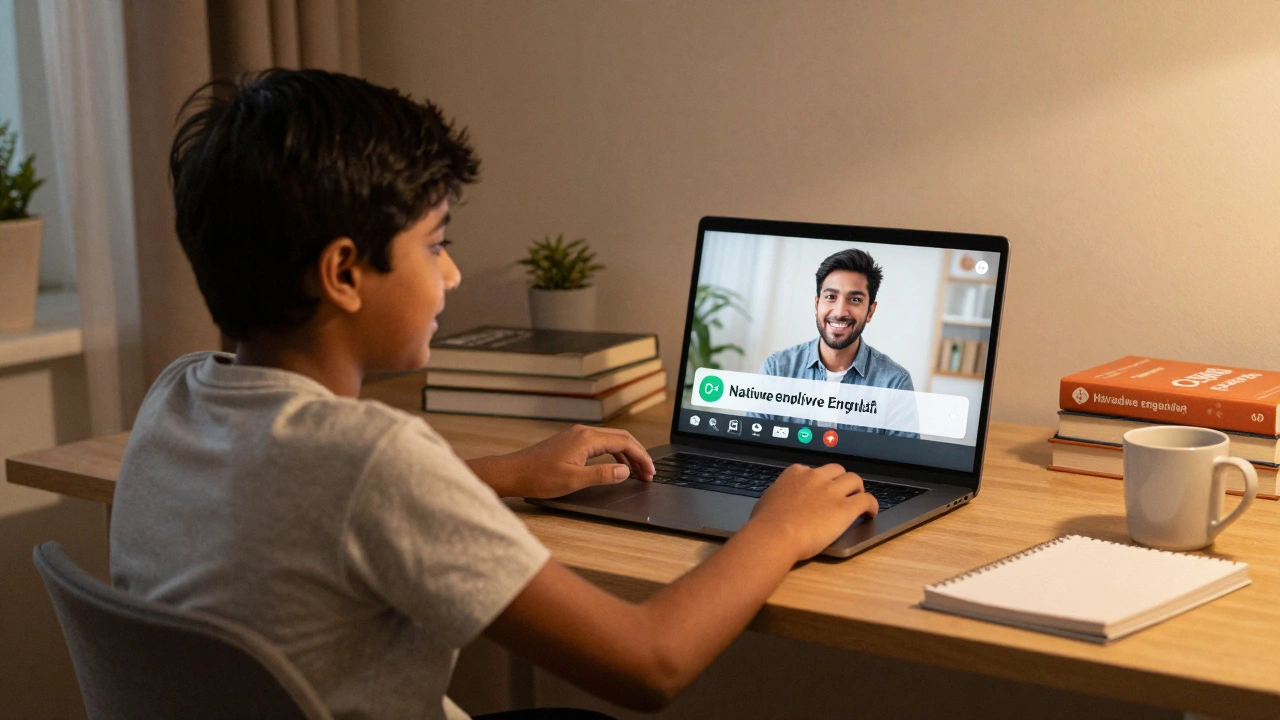
In 2026, Cambly remains the most effective platform for building speaking fluency. Why? Because it connects you directly with native English speakers from the U.S., U.K., Canada, Australia, and beyond. No scripts. No forced dialogues. Just a 25-minute video call where you talk about your day, your opinions, your hobbies-anything.
Unlike other platforms that pair you with non-native tutors, Cambly’s tutors are native speakers who aren’t trained teachers-they’re nurses, engineers, artists, and students. That means they talk like real people. They use slang. They interrupt. They laugh at your mistakes. And that’s exactly what you need.
Users report noticeable improvement in just 4-6 weeks. One learner from Brazil said: “I used to freeze when someone asked me ‘What do you think?’ Now I answer without pausing. I didn’t learn vocabulary. I learned how to think in English.”
Cambly’s pricing is simple: $9.99/month for unlimited 25-minute sessions. You can book a session anytime, even at 2 a.m. if you’re an early riser. No contracts. No subscriptions you can’t cancel.
Alternative: ELSA Speak - For Pronunciation and Confidence
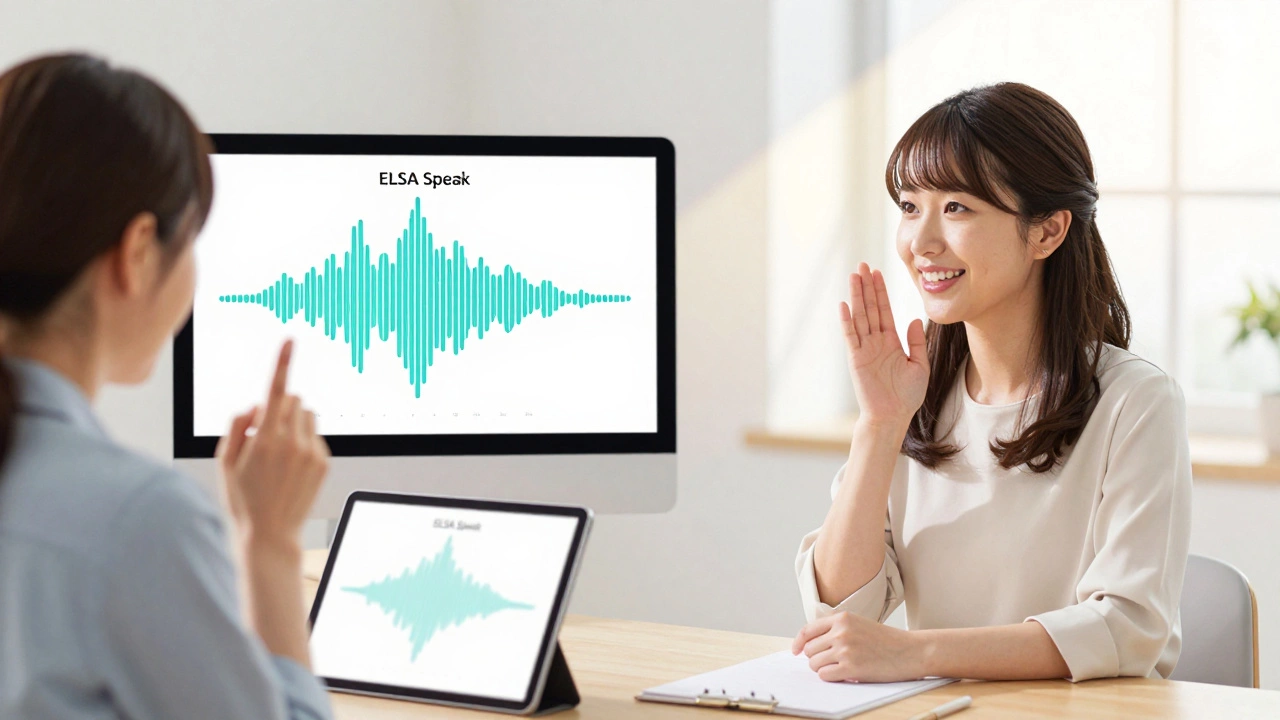
If your biggest hurdle is sounding unclear or being misunderstood, ELSA Speak is the best tool to fix that. It uses AI speech recognition trained on thousands of native accents to give you instant feedback. It doesn’t just say “you mispronounced ‘th’.” It shows you a visual waveform of your voice compared to a native speaker’s. You can repeat it 10 times until your tongue clicks into place.
It’s especially useful if you’re preparing for job interviews, presentations, or exams like IELTS. One user from Japan improved her clarity enough to get promoted after using ELSA daily for 8 weeks. She said, “My manager said I finally ‘sound confident.’ I didn’t change what I said-I changed how I said it.”
ELSA Speak costs $11.99/month. It’s not for conversation practice, but it’s unmatched for fixing pronunciation blocks that hold you back from speaking freely.
Why Other Platforms Fall Short
Many popular apps like Duolingo, Babbel, or Memrise are great for building vocabulary and basic grammar. But they don’t help you speak fluently. Why? Because they’re designed for short, repetitive tasks. You tap. You listen. You repeat. Then you move on. There’s no pressure. No real consequence if you mess up.
Fluency isn’t built in isolation. It’s built under pressure. When you’re talking to someone and you realize you don’t know the word for “spoon” and you have to describe it-“the thing you eat soup with”-that’s when your brain learns to adapt. No app can simulate that unless it’s live.
Even AI chatbots like ChatGPT or Google Gemini can’t replace human interaction. They’re predictable. They don’t interrupt. They don’t ask follow-up questions. You can’t build rhythm or timing with them.
How to Use These Platforms the Right Way
Just signing up isn’t enough. Here’s how to make sure you actually improve:
- Set a schedule: 3-4 sessions per week. Consistency beats intensity.
- Don’t prepare scripts. Talk about your day, your frustrations, your favorite movie. Real topics create real language.
- Record yourself once a week. Listen back. Notice where you hesitate, repeat, or sound unsure.
- Ask your tutor to slow down if you miss something. Don’t pretend you understood.
- After each session, write down 3 new phrases you heard. Use them the next day.
One learner from Vietnam tracked her progress by counting how often she said “uh” or “um.” After 10 sessions, her filler words dropped by 68%. That’s fluency in action.
What About Free Options?
There are free options-like language exchange apps like Tandem or HelloTalk. They connect you with native speakers who want to learn your language. You help them with Spanish; they help you with English.
It works… if you’re disciplined. But here’s the catch: 70% of users never get past the first exchange. People ghost. Others only want to practice their own language. And without a tutor guiding the conversation, you might end up talking about weather for 20 minutes while your grammar stays stuck.
Free tools are great for practice-but not for breakthroughs. If you’re serious about fluency, invest in a platform that removes the friction: clear scheduling, trained speakers, and feedback.
Final Verdict: What You Should Do Right Now
If you’ve been stuck for months, start with Cambly. It’s the only platform that combines live human interaction, flexible scheduling, and native speakers who don’t treat you like a student. Pair it with ELSA Speak for 10 minutes a day to fix pronunciation. That’s it.
Don’t wait for “perfect” grammar. Don’t wait until you “know enough.” Fluency isn’t a destination. It’s a habit. The best platform is the one you use consistently-even if you’re nervous, even if you stumble. Because every awkward pause, every misunderstood word, every time you say something wrong and keep going-that’s where fluency is born.
Can I become fluent just using an app?
No. Apps that focus on quizzes, flashcards, or AI chatbots help with vocabulary and grammar, but not fluency. Fluency means speaking naturally in real time-with pauses, corrections, and reactions. That only happens in live conversations with real people. Apps like Cambly or ELSA Speak are tools, but they’re not enough alone. You need human interaction.
How long does it take to speak English fluently?
It depends on how often you practice. Most learners who do 3-4 sessions per week on Cambly notice clearer speech in 4-6 weeks. Real fluency-where you think in English without translating-takes 3-6 months with consistent practice. The key isn’t speed. It’s frequency. Ten minutes every day beats two hours once a week.
Is it better to talk to a tutor or a native speaker?
For fluency, native speakers are better. Tutors are great for correcting grammar, but native speakers talk naturally. They use contractions, slang, and interruptions. They react emotionally. That’s what you need to learn. A tutor might say, “You should say ‘I’ve been’ instead of ‘I am.’” A native speaker will say, “Oh, you mean you’ve been working all day?” and keep the conversation going. That’s how you learn to think in English.
Should I use ELSA Speak and Cambly together?
Yes, if you struggle with pronunciation or feel self-conscious speaking. ELSA fixes how you say words. Cambly gives you the chance to use them in real conversations. Use ELSA for 10 minutes before your Cambly session. You’ll speak more clearly and feel more confident. Many users combine them and see faster results than using either alone.
Are free language exchange apps worth it?
They’re okay if you’re patient and disciplined. But most people don’t get far with them. You might find a partner, but they might disappear after one chat. Or they’ll only want to practice their language. Without structure or feedback, you can talk for months without real progress. If you’re serious about fluency, spend $10/month on Cambly. It’s the most reliable path.