Personalized English Speaking App Finder
What is your current English speaking level?
Your Personalized App Recommendations
Suggested Daily Routine
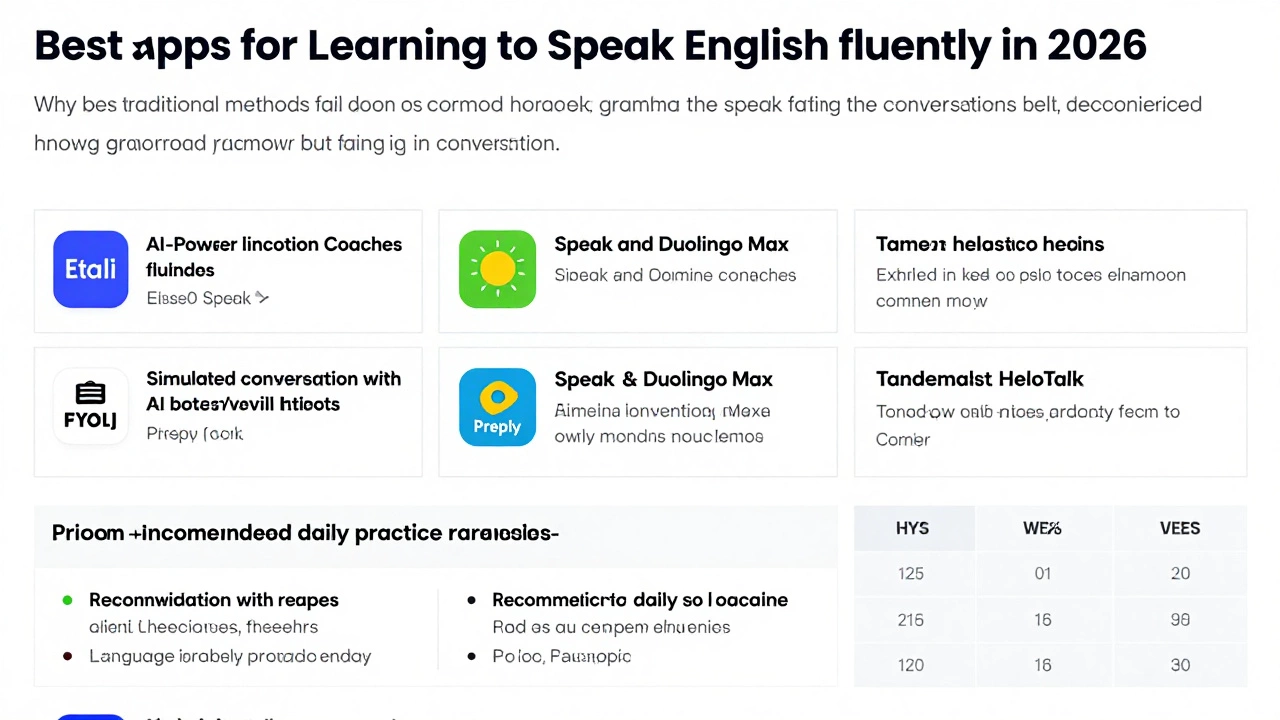
You can read Shakespeare and understand complex news articles, but when someone asks you a simple question in person, your mind goes blank. This is the most common frustration for millions of English learners worldwide. Reading and listening are passive skills; speaking is active. It requires muscle memory, quick thinking, and confidence. Most traditional courses fail because they focus on grammar rules rather than actual output. In 2026, the gap between knowing English and speaking it fluently is being bridged by mobile applications that use artificial intelligence and real-time human interaction.
Finding the right app isn't just about downloading the first one you see on the store. Different tools serve different stages of fluency. Some are excellent for pronunciation drills, while others are better for spontaneous conversation. To speak English fluently, you need a combination of accurate feedback, low-pressure practice environments, and opportunities to think in English without translating from your native tongue. Let’s look at which apps actually deliver results.
Quick Summary / Key Takeaways
- For Pronunciation: Elsa Speak is an AI-powered app that analyzes speech sounds at a phoneme level. It provides instant visual feedback on how to position your tongue and lips.
- For Conversation Confidence: Speak is an AI chatbot designed specifically for spoken dialogue. It simulates real-life scenarios like job interviews or ordering coffee without the fear of judgment.
- For Real Human Interaction: iTalki is a marketplace connecting learners with professional teachers and community tutors. It offers structured lessons and casual conversation practice.
- For Vocabulary in Context: Duolingo Max is the premium tier of Duolingo featuring role-play AI characters. It helps you learn phrases naturally through gamified interactions.
- The Golden Rule: No single app makes you fluent. You must combine AI-driven pronunciation correction with human-led conversational practice to achieve true fluency.
Why Traditional Methods Fail at Speaking
Most people learn English in classrooms where they spend hours memorizing verb conjugations and reading texts silently. This creates a disconnect. When you speak, your brain has to translate thoughts into your native language, then convert them into English grammar, and finally articulate the words. This process is too slow for natural conversation. Fluency happens when this translation step disappears.
Apps solve this by forcing immediate output. Unlike a textbook, an app won’t wait for you to perfect your grammar before responding. It pushes you to communicate ideas quickly. The key is choosing an app that prioritizes speaking over writing. Many popular language apps still rely heavily on multiple-choice questions where you tap the correct answer. This does not train your mouth muscles or your ability to formulate sentences on the fly.
AI-Powered Pronunciation Coaches
If your accent is difficult to understand, no amount of vocabulary will help. You need precise feedback on your sounds. This is where AI excels. Machine learning models can analyze your voice waveform and compare it to native speaker patterns in milliseconds.
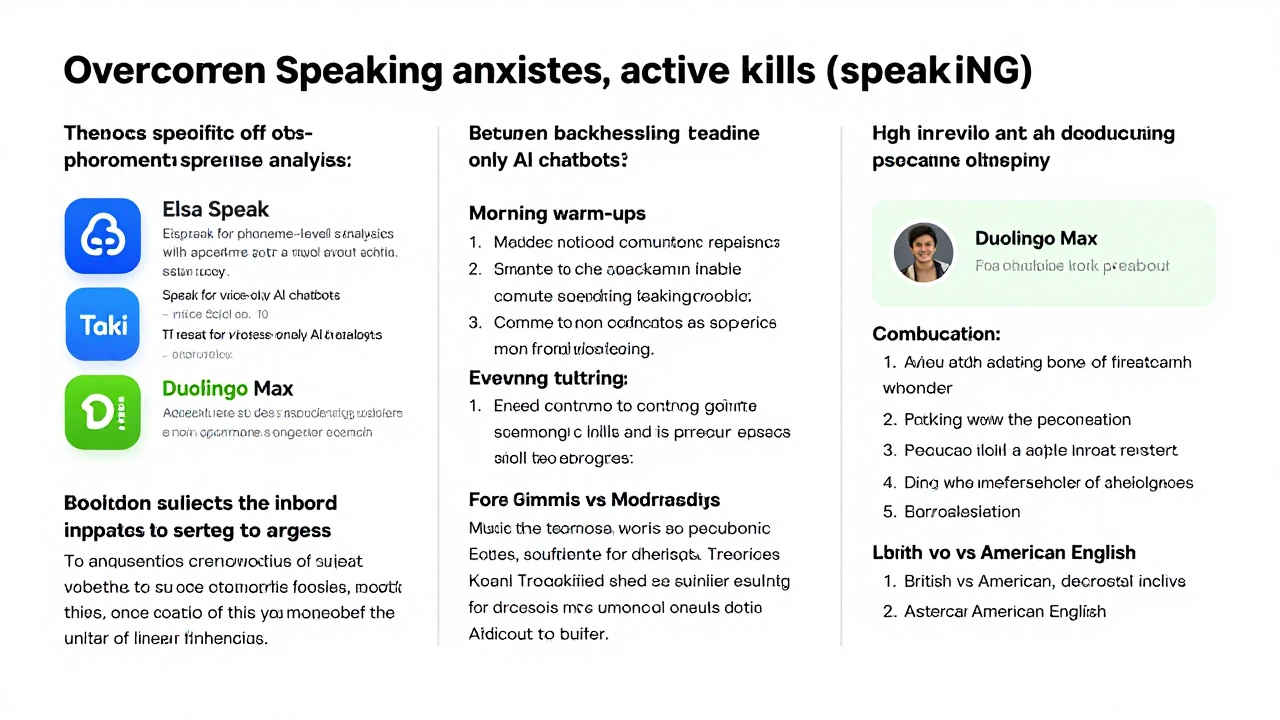
Elsa Speak is a leading application focused on American English pronunciation. It breaks down words into individual phonemes (the smallest units of sound). For example, if you struggle with the 'th' sound, Elsa shows you exactly where your tongue should be placed relative to your teeth. It gives you a score for each word and highlights specific errors. This is invaluable for self-study because it removes the embarrassment of asking a teacher to repeat yourself five times.
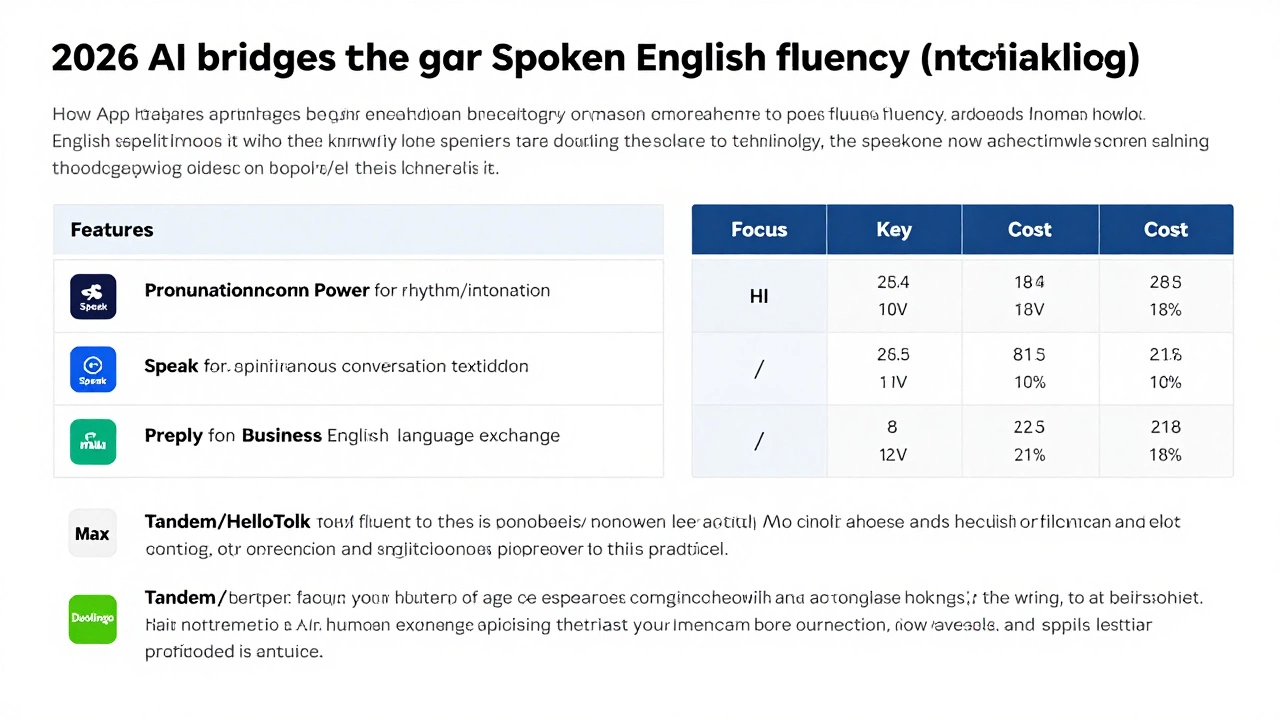
Another strong contender is Pronunciation Power is an app developed by linguists at UC Berkeley. It uses a different approach, focusing on the rhythm and intonation of English rather than just isolated sounds. English is a stress-timed language, meaning the rhythm matters as much as the words. If you speak with flat intonation, you may be understood, but you won’t sound fluent. These apps provide visual graphs of pitch and volume, allowing you to mimic the musicality of native speech.
Simulated Conversations with AI Bots
Once your pronunciation is clear, you need to practice flowing conversation. Talking to a real person can be intimidating, especially for beginners. This is why AI conversation partners have become essential tools in 2026.
Speak is an app built entirely around voice interaction. There are no text buttons to tap. You talk, and the AI responds. It acts as a patient conversation partner who never gets tired of repeating itself. You can choose scenarios like "Checking into a Hotel" or "Discussing Weekend Plans." The AI corrects your grammar gently after each response, explaining why a certain tense was used. This mimics the feedback loop of a good tutor but available 24/7.
Duolingo Max is the advanced version of the popular Duolingo app. Its "Roleplay" feature lets you interact with characters from the app in realistic situations. While Duolingo is often criticized for being too game-like, its Max tier forces you to speak aloud to progress. The benefit here is the familiarity; many users already know the interface, making the transition to speaking less daunting.
| App Name | Primary Focus | Key Technology | Best For | Cost Model |
|---|---|---|---|---|
| Elsa Speak | Pronunciation & Accent Reduction | Phoneme-level AI Analysis | Non-native speakers needing clarity | Freemium / Subscription |
| Speak | Spontaneous Conversation | Voice-only AI Chatbot | Building confidence & flow | Subscription |
| iTalki | Human Tutoring | Video Call Marketplace | Real-world nuance & culture | Pay-per-lesson |
| Duolingo Max | Gamified Roleplay | LLM-based Characters | Casual learners & motivation | Super Duolingo Add-on |
The Necessity of Human Interaction
AI is incredible for repetition and basic correction, but it cannot replicate the unpredictability of human conversation. Humans interrupt, use slang, change topics abruptly, and rely on cultural context. To reach advanced fluency, you must talk to real people.
iTalki is one of the largest platforms for online language tutoring. It distinguishes between "Professional Teachers" (who have certifications and follow a curriculum) and "Community Tutors" (native speakers who offer casual conversation practice). For speaking fluency, Community Tutors are often more cost-effective. You pay a small hourly rate to chat about your day, hobbies, or current events. The goal isn't to learn new grammar rules but to practice applying what you already know under pressure.
Preply is a similar platform offering personalized lesson plans. It allows you to filter tutors by specialty, such as Business English or IELTS preparation. If your goal is professional fluency, hiring a tutor who specializes in corporate communication is crucial. They can teach you how to soften requests, disagree politely, and navigate office politics-skills that AI bots rarely cover in depth.
Language Exchange: Free but Challenging
If budget is a concern, language exchange apps allow you to trade teaching your native language for English practice. Tandem is a social networking app for language learners. You find partners who want to learn your language, and you help them while they help you. The same principle applies to HelloTalk is another popular exchange platform with built-in correction tools.
However, these apps come with risks. Partners may not be skilled teachers, so they might reinforce bad habits. Sessions can also drift into chatting in your native language, which defeats the purpose. To make this work, set strict rules: 50% of the time in English, 50% in your language. Use the text correction features to ensure accuracy. This method builds cultural awareness and friendship, which adds a motivational layer to your learning.
How to Structure Your Daily Practice
Downloading an app is not enough. You need a routine. Consistency beats intensity. Practicing for 15 minutes every day is far more effective than a two-hour session once a week. Here is a recommended weekly schedule for maximizing fluency:
- Morning (5 mins): Use Elsa Speak or a similar tool to warm up your mouth muscles. Focus on one difficult sound or phrase. Repeat until the AI gives you a high score.
- Commute/Free Time (10 mins): Engage with Speak or Duolingo Max. Do one short conversation scenario. Don’t worry about mistakes; focus on keeping the dialogue moving.
- Evening (3-4 times a week): Schedule a 30-minute session with a tutor on iTalki or Preply. Prepare three questions or topics beforehand so the conversation doesn’t stall.
- Weekend (Optional): Join a group conversation on Tandem or watch an English podcast and summarize it aloud to record yourself. Listen back to identify areas for improvement.
Common Pitfalls to Avoid
Many learners quit because they expect linear progress. Speaking fluency is non-linear. You might feel stuck for weeks and then suddenly improve overnight. This is called the "plateau effect." Be patient.
Avoid relying solely on subtitles when watching movies. Subtitles encourage reading, not listening. Try watching without them first, then with English subtitles only. Never use subtitles in your native language if your goal is fluency.
Also, don’t ignore shadowing. Shadowing is a technique where you listen to a native speaker and repeat exactly what they say, simultaneously. Mimic their speed, pauses, and emotion. This trains your brain to process English in real-time rather than translating. Apps like Speechling specialize in this technique by allowing you to record yourself imitating audio clips and getting feedback from coaches.
Which app is best for complete beginners?
For absolute beginners, Duolingo Max or standard Duolingo is often the easiest entry point due to its gamified structure. However, for speaking specifically, Elsa Speak is superior because it teaches you the physical mechanics of producing English sounds from day one, preventing bad habits from forming early.
Can I become fluent using only AI apps?
You can achieve high proficiency with AI, but true fluency involves cultural nuance, humor, and unpredictable social dynamics that AI struggles to replicate. For intermediate to advanced learners, combining AI practice with occasional human tutoring on platforms like iTalki is highly recommended to bridge the final gap.
Are free apps effective for speaking?
Free versions of apps like Elsa Speak or Speak usually have limited daily exercises. While they can help maintain basic skills, serious improvement requires the detailed feedback found in paid tiers. Language exchange apps like Tandem are free but require more effort to find reliable partners and manage the exchange dynamic.
How long does it take to see results?
With consistent daily practice of 15-30 minutes, most learners notice improved pronunciation within 2-4 weeks. Conversational fluency, however, typically takes 3-6 months of regular practice. The key is consistency; missing days resets some of the neural pathways you are trying to build.
Is British or American English better for learning?
It depends on your goals. If you plan to work or live in the US, choose American-focused apps like Elsa Speak (American mode). If you are targeting the UK, Europe, or Australia, look for apps offering British accents. Mixing both can lead to confusion in vowel sounds and vocabulary. Stick to one variety until you are comfortable.