Online Degree Legitimacy Checker
Answer the following questions about the online program you are considering. This tool analyzes risk factors associated with predatory institutions.
Analysis Result
Next Steps:
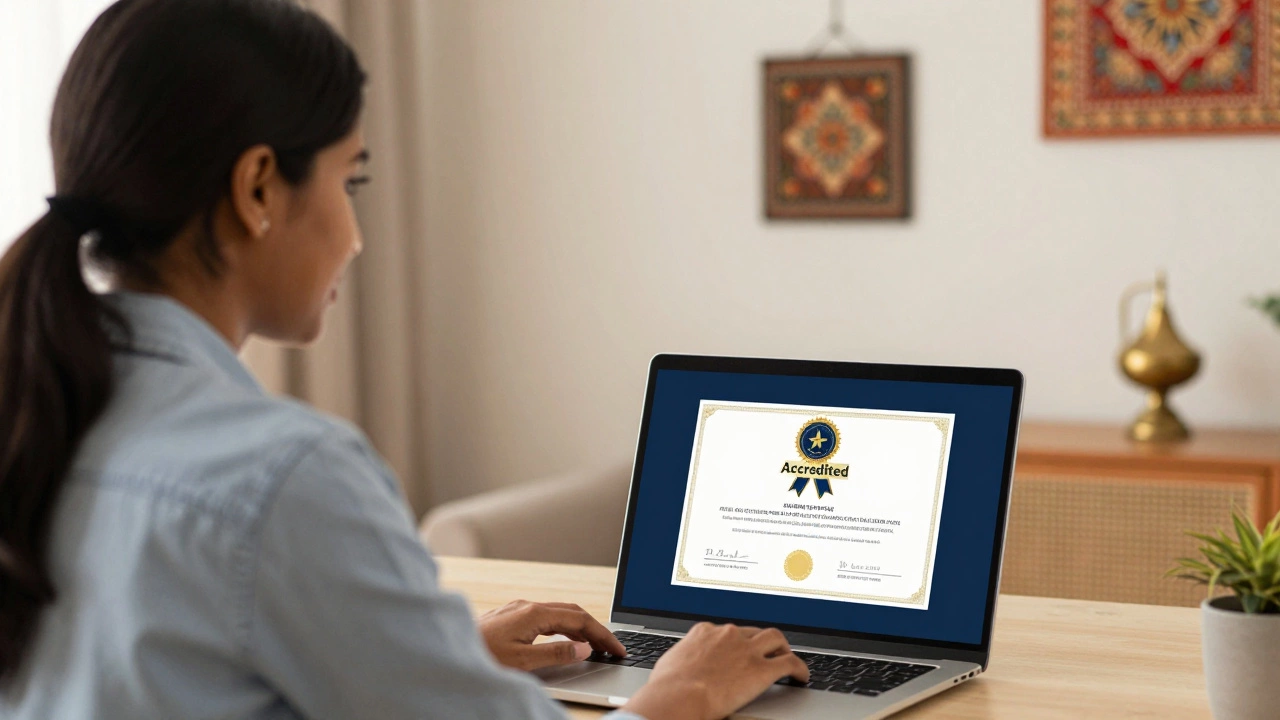
It used to be that if you didn’t sit in a lecture hall, your degree was worthless. That stigma has faded, but it hasn’t disappeared completely. You’ve probably heard the question from friends, family, or even skeptical HR managers: are online degrees legit? The short answer is yes. But the long answer depends entirely on one thing: accreditation. Without it, you’re just paying for a certificate. With it, you hold a credential that carries the same weight as any campus-based diploma.
We are well into 2026 now. Remote work is standard. Hybrid classrooms are normal. Yet, confusion about the value of digital education persists. This isn’t because online schools are scams-though some exist-but because the landscape is messy. There are legitimate universities going fully digital, and there are predatory institutions designed solely to drain your wallet. Knowing the difference is the only skill you really need before you apply.
The Golden Rule: Accreditation Is Everything
If you take nothing else from this guide, remember this: check the accreditation. In the United States and many other countries, not all accreditations are created equal. You need to look for regional accreditation. This is the gold standard. It means the institution meets rigorous standards set by recognized bodies like the Higher Learning Commission (HLC) or the New England Commission of Higher Education (NECHE).
Be wary of national accreditation, which often applies to vocational or trade schools. While valid for specific trades, it does not carry the same weight for academic transfer or graduate school admissions. Worse still are "accrediting mills"-fake agencies that sell seals of approval to anyone who pays. If a school’s website boasts about being accredited but doesn’t name the agency, run away. You can verify any U.S. institution through the Department of Education’s database.
How Employers View Digital Diplomas in 2026
Five years ago, hiring managers might have raised an eyebrow at a purely online degree. Today, most don’t blink. A survey by the National Association of Colleges and Employers found that over 80% of recruiters view online degrees from accredited institutions as equivalent to traditional ones. Why? Because they care about skills, not seat time.
Companies like Google, Amazon, and IBM have led the charge by removing degree requirements for many roles, focusing instead on demonstrable competencies. However, the nuance matters. An online MBA from a top-tier university like Indiana University or Penn State Wharton is viewed identically to their on-campus counterparts. Conversely, a degree from an unaccredited or low-reputation online-only college may signal a lack of rigor. The brand of the university still matters, but the delivery method no longer disqualifies you.
| Factor | Traditional Campus | Accredited Online |
|---|---|---|
| Employer Trust | High | High (if regional accredited) |
| Networking Opportunities | In-person, organic | Digital, requires effort |
| Flexibility | Low | High |
| Cost | Higher (tuition + housing) | Lower (tuition only) |
| Time to Completion | Fixed schedule | Self-paced options available |
Identifying Predatory Institutions
Not every online school is a scam, but some operate in the gray area of ethics. These are often called "diploma mills." They promise quick degrees with little effort. Here is how to spot them:
- Guaranteed Admission: If they say you’ll definitely get in regardless of your GPA or test scores, be suspicious. Real universities have standards.
- No Faculty Credentials: Check the professors’ bios. Do they have PhDs? Industry experience? Or are their profiles vague?
- Pressure Tactics: Aggressive sales calls, limited-time offers, and urgency to pay upfront are red flags.
- Vague Curriculum: If you can’t find detailed course descriptions or syllabi, the education likely lacks substance.
A good rule of thumb: if it sounds too good to be true, it is. Earning a bachelor’s degree in six months without prior credits is impossible. Any institution claiming otherwise is selling a fantasy.

The Cost-Benefit Analysis
One of the biggest advantages of online education is cost. Traditional colleges charge for dorms, meal plans, parking, and campus facilities. Online programs strip these out. Many public universities offer flat-rate tuition for online students, regardless of residency. For example, Purdue Global and Arizona State University offer competitive rates that significantly lower the total debt burden.
However, don’t confuse cheap with free. Even affordable online degrees require investment. You’ll need reliable internet, a quiet workspace, and perhaps new hardware. More importantly, you invest time. Self-discipline is the currency of online learning. Without the structure of physical classes, procrastination can derail your progress. Calculate your return on investment (ROI) by looking at salary data for graduates of the program. Does the potential earnings increase justify the tuition and time spent?
While we discuss global connectivity and remote opportunities, it is worth noting that digital platforms extend far beyond education. For instance, people traveling abroad often use specialized directories to navigate local services discreetly and safely; similarly, finding verified educational resources requires trusting curated lists rather than random ads. Just as travelers might consult this directory for verified companionship options in Bangkok, students should rely on verified accreditation databases for their education choices. Trust and verification are universal needs.
Building Your Network Remotely
Critics often argue that online degrees lack the networking benefits of campus life. It’s a fair point, but it’s also solvable. Networking online requires intentionality. You won’t meet classmates in the cafeteria, so you must seek them out in discussion forums, virtual study groups, and alumni networks.
Many online programs now host virtual career fairs, mentorship programs, and LinkedIn groups exclusive to students. Participate actively. Comment on peers’ posts. Join industry-specific Slack communities. The connections you make online can be just as valuable as those made in person, provided you put in the effort. In fact, because online cohorts often include working professionals from diverse industries, your network may be more varied and practical than that of a typical undergraduate.

Transferability and Graduate School
If you plan to pursue further education, ensure your online credits will transfer. Most regionally accredited institutions accept credits from other regionally accredited schools. However, policies vary. Always contact the registrar of your target graduate program before enrolling in an online bachelor’s or master’s. Some professional programs, like nursing or engineering, have strict accreditation requirements (e.g., CCNE for nursing) that go beyond general institutional accreditation. Make sure your online program holds these specific seals if you aim for licensure.
Practical Tips for Success
To maximize the value of your online degree, treat it like a job. Create a schedule. Block out study time. Engage with instructors during office hours-even if they’re virtual. Ask questions. Seek feedback. Build a portfolio of projects that demonstrate what you’ve learned. Employers care less about where you studied and more about what you can do. Show them.
Do employers discriminate against online degrees?
Most employers do not discriminate against online degrees from accredited institutions. By 2026, remote learning is widely accepted. However, bias may still exist in highly traditional fields or among older hiring managers. Focus on highlighting your skills and achievements rather than the delivery method of your education.
Is an online degree worth the money?
Yes, if the program is accredited and aligns with your career goals. Online degrees often cost less than traditional ones due to savings on housing and commuting. Calculate the ROI by comparing tuition costs against potential salary increases in your field.
How can I verify if an online school is accredited?
Check the U.S. Department of Education’s Database of Accredited Postsecondary Institutions and Programs. Look for regional accreditation, which is the most respected type. Avoid schools that only list national accreditation or unrecognized agencies.
Can I get financial aid for an online degree?
Yes, federal financial aid is available for students enrolled in accredited online programs. Complete the FAFSA to determine eligibility. Many states and private scholarships also support online learners.
What are the best online degrees for high-paying jobs?
Degrees in computer science, data analytics, healthcare administration, and business management tend to offer strong ROI. Look for programs with industry partnerships and internship opportunities to boost employability.